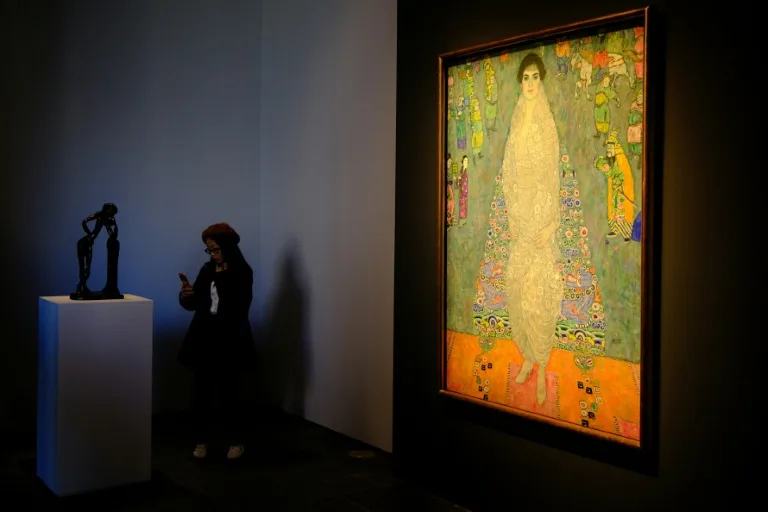
The $236.4 Million Image: Gustav Klimt Portrait with a Secret Holocaust Story Smashes Modern Art Record in New York
The Power of a Portrait: Klimt’s ‘Elisabeth Lederer’ Fetches Record-Shattering $236.4 Million in NYC Auction
In a seismic event that has reshaped the landscape of the global art market, Gustav Klimt’s magnificent Portrait of Elisabeth Lederer was sold for an astonishing $236.4 million at Sotheby’s in New York City on Tuesday. The final price not only obliterated the previous record for a work of modern art but also cemented the painting’s place as the second most expensive artwork ever sold at a public auction, trailing only behind Leonardo da Vinci’s Salvator Mundi.
The sale was the undeniable centerpiece of the highly anticipated auction of the collection of the late billionaire Leonard A. Lauder, heir to The Estée Lauder Companies, generating intense media buzz and fierce, unprecedented bidding. But the monumental price tag is only one layer of this story; the portrait itself carries a harrowing, deeply personal history—a secret of survival that ties the luminous work directly to the darkest days of the Holocaust.
A Battle of Bids: The Twenty-Minute Duel at Sotheby’s
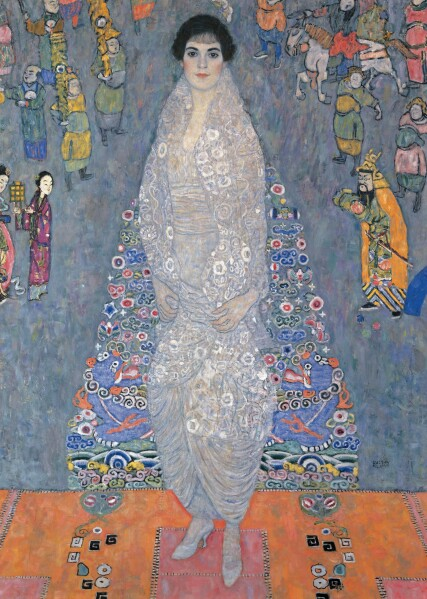
The evening at Sotheby’s was defined by opulence and high-stakes drama. The Portrait of Elisabeth Lederer, painted between 1914 and 1916, was the star lot in a collection that, in total, generated over half a billion dollars for the Lauder estate. The work, a stunning full-length portrait of the daughter of one of Vienna’s wealthiest families, had been estimated to sell for a conservative $150 million, an amount it quickly surpassed as the bidding opened.
What followed was a tense, twenty-minute bidding war, described as a duel between six determined bidders from around the globe. The hammer finally fell at the record-breaking figure, setting a new benchmark for both the Austrian Symbolist master and for modern art in general. It also became the most expensive piece ever sold by the fine art broker, Sotheby’s, worldwide. While the auction house has not yet disclosed the identity of the new owner, the monumental nature of the acquisition guarantees the piece will remain a central fixture in global art discussions for years to come.
The Image That Saved a Life: A Tale of Holocaust Survival
Beyond its artistic mastery—the delicate rendering of Elisabeth Lederer in an East Asian emperor’s cloak, set against a rich blue tapestry—the painting’s true value is interwoven with its incredible survival story.
Elisabeth Lederer was the daughter of Klimt’s main patron. The portrait was completed during a tumultuous period in Europe, right before the outbreak of World War I. However, the painting’s most critical chapter unfolded two decades later, following the annexation of Austria by Nazi Germany in 1938. The Lederer family, a prominent Jewish family in Vienna, saw their extensive art collection systematically looted by the Nazis.
Crucially, the family portraits were spared. In a twist of fate, the Nazis considered the portraits “too Jewish” in subject matter to be worth stealing, according to the National Gallery of Canada, which had previously hosted the work on loan. The painting was separated from other Klimt works in the collection, which were later tragically destroyed in a fire at an Austrian castle.
But the painting’s importance did not end there. In a desperate attempt to protect herself from persecution, Elisabeth Lederer fabricated a story: she claimed that Gustav Klimt, who had passed away in 1918 and was not Jewish, was her biological father. The meticulous detail and years Klimt spent on her portrait lent credence to her claim. With the assistance of her former brother-in-law, a high-ranking Nazi official, she successfully secured a document that asserted her descent from the acclaimed artist. This document allowed her to remain safely in Vienna until her death from illness in 1944. Thus, this single, striking image became an unlikely shield, an artistic affidavit that saved its subject’s life. The staggering price now paid for the painting represents not just its aesthetic brilliance but the profound weight of this human history.
A Defining Moment for the Modern Art Market
The record-breaking sale is a vital indicator of the health and direction of the high-end art market in the United States. Following a period of economic uncertainty, the auction, particularly the performance of the Klimt masterpiece, signals that the appetite for top-tier art remains robust among the world’s ultra-wealthy.
Leonard A. Lauder, the former owner, was a well-known connoisseur of Austrian and German Expressionism. He died earlier this year, leaving behind an impressive collection. The sale of the Portrait of Elisabeth Lederer, one of only two full-length Klimt portraits to remain in private hands and survive WWII, marks the final transfer of this cultural treasure from a private American collection into a new, undisclosed stewardship.
The Allure of the Art Market’s Sideshows
While Klimt’s portrait was the undeniable highlight, the auction night was not without its quirky, multi-million dollar sideshows—a testament to the unique nature of contemporary high-stakes collecting. Among the other headline-grabbing sales was a solid gold, fully functioning toilet—a sculpture by Italian artist Maurizio Cattelan titled America—which fetched $12.1 million. The inclusion of such a provocative piece alongside a delicate, historically significant Klimt portrait underscores the eclectic and often bewildering nature of what the world’s wealthiest collectors are willing to spend astronomical sums on.
The overall success of the Lauder collection auction, totaling hundreds of millions of dollars, demonstrates a powerful desire for works with both historical gravitas and market rarity. Other Klimt pieces from the Lauder collection, such as Flowering Meadow ($86 million) and Forest Slope at Unterach am Attersee ($68.3 million), also performed exceptionally well, further solidifying the artist’s value and influence in the contemporary market. The market’s willingness to engage in a 20-minute bidding war for a single painting suggests that for truly rare masterpieces, the ceiling on value remains practically non-existent. The Portrait of Elisabeth Lederer is now more than just an image; it is a symbol of artistic genius, a historical relic, and a financial titan in the global art economy.
Frequently Asked Questions (FAQs)
1. What is the painting that sold for $236.4 million?
The painting is Portrait of Elisabeth Lederer by Austrian Symbolist painter Gustav Klimt. It was painted between 1914 and 1916.
2. Where did the auction take place and who was the seller?
The auction took place at Sotheby’s auction house in New York City on Tuesday, November 18 (2025). The painting was sold from the estate of the late cosmetics billionaire, Leonard A. Lauder, heir to The Estée Lauder Companies.
3. Why is this sale considered a record-breaker?
The $236.4 million sale price set a new record for a piece of modern art sold at auction. It also became the most expensive artwork ever sold by Sotheby’s globally and is the second most expensive painting ever sold at auction worldwide, only behind Leonardo da Vinci’s Salvator Mundi ($450 million).
4. What is the historical significance of the Portrait of Elisabeth Lederer?
The portrait is historically significant because it played a role in saving its subject’s life during the Holocaust. Elisabeth Lederer, who was Jewish, used the close relationship suggested by the portrait to fabricate a story that Gustav Klimt was her father. This claim, combined with help from a former relative, secured her a document from a Nazi official that protected her from persecution.
5. Who is the buyer of the Klimt portrait?
Sotheby’s declined to share the identity of the buyer.
6. What other notable items were sold at the same auction?
The same auction night saw the sale of the solid gold, fully functioning sculpture/toilet, America, by artist Maurizio Cattelan, which sold for $12.1 million. Other Klimt paintings from the Lauder collection, including Flowering Meadow and Forest Slope at Unterach am Attersee, also sold for tens of millions of dollars.
Read More:

This Post Has 0 Comments