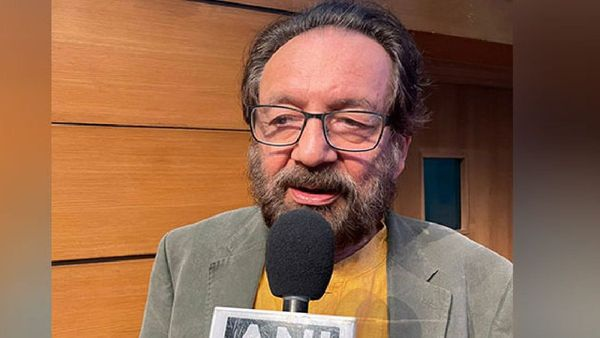
Shekhar Kapur Issues Stark Bollywood AI Warning: ‘AI-Created Stars’ Like Tilly Norwood Are Being Signed by Hollywood Agencies
Shekhar Kapur’s New Warning: Why Hollywood’s First AI Star Is a Direct Threat to Bollywood’s A-Listers
Veteran filmmaker Shekhar Kapur has once again ignited a global debate on the future of cinema, delivering a powerful and timely warning that directly challenges the traditional power structure of Bollywood. This time, his caution is not merely theoretical; it is centered on a groundbreaking development in Hollywood: the rise of a completely Artificial Intelligence-generated performer now being signed by major agencies and slated for a new OTT series.
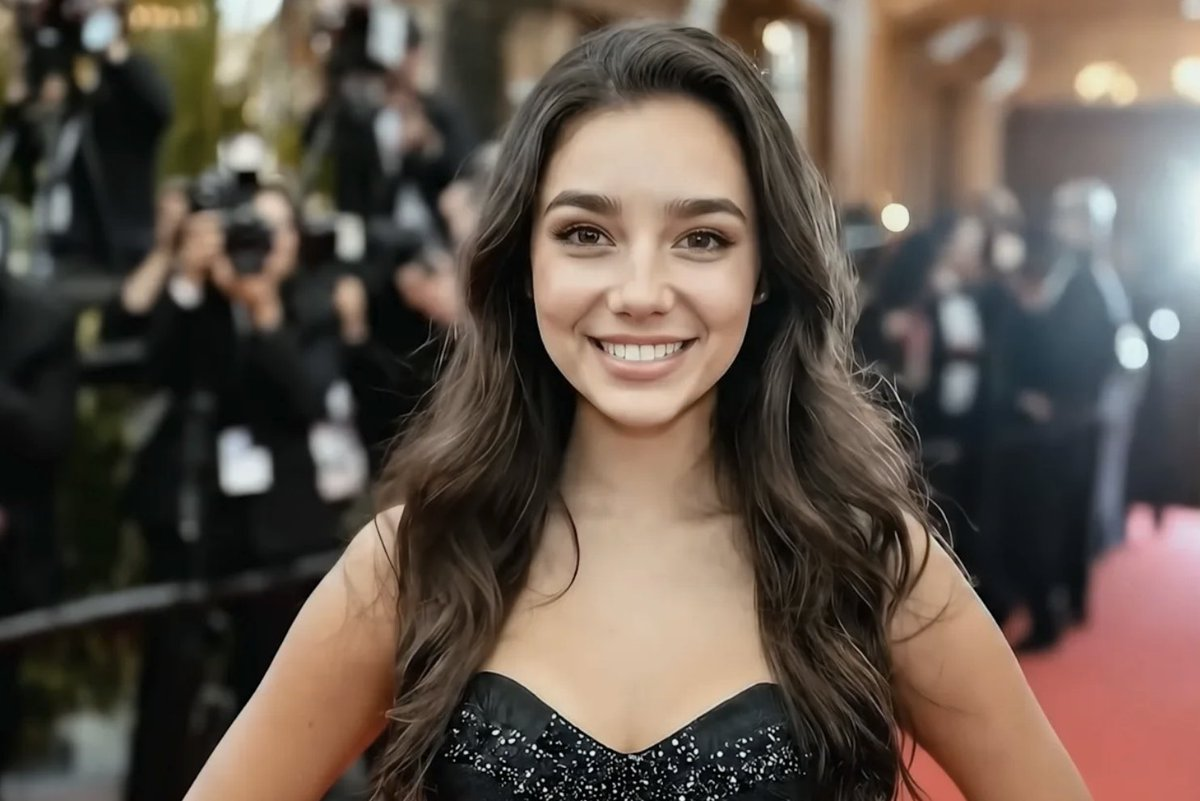
In a thought-provoking post shared on Monday, the director highlighted the rapid ascent of virtual personalities, citing the example of Tilly Norwood, an AI-created character who just had the premiere of her ‘first film’ and is already a target for ‘traditional Hollywood Agencies.’
Kapur’s message cuts to the heart of the industry’s anxiety. While acknowledging the ‘angst in the Acting Community’, he posed a direct, existential question to the Indian film industry: ‘So, what is going to happen to Bollywood?’ His conclusion is a stark ultimatum for the industry’s biggest names: the future of AI adoption in India rests squarely on the decisions of its superstar actors.
The Norwood Effect: The AI Star That Changed Everything
The most compelling element of Kapur’s latest statement is the concrete proof point: Tilly Norwood. She represents the inflection point in the AI-in-films conversation—moving from a theoretical tool for CGI backgrounds to a legitimate, marketable, and copyrightable ‘star’ competitor.
Kapur noted that Norwood, who is entirely AI-created, is not just a passing novelty; she is being actively pursued by traditional Hollywood agencies for representation and is set to feature in a new OTT series. This commercial validation is the ‘rapid growth’ Kapur warns about. The fact that a virtual persona can command the same—or greater—attention as a human actor signals a paradigm shift. For producers, an AI star is infinitely pliable, never throws a tantrum, requires no vanity van, and, crucially, can be owned and copyrighted by the filmmaker.
This shift, as Kapur observes, has profound implications. If agencies are vying to sign purely digital talent in the West, it is only a matter of time before the trend permeates the globally-connected Bollywood and South Indian film industries. The appeal is immediate, particularly for large-scale, special-effects-heavy productions.
The Bollywood Ultimatum: Exclusivity vs. Efficiency
Kapur, known for visionary classics like Mr. India and Elizabeth, did not mince words when discussing the vulnerability of the Bollywood star system. He framed the industry’s adoption of AI as a direct consequence of the existing economics of stardom.
“That depends a lot on stars themselves,” Kapur wrote, laying out the ultimatum. “The more expensive and exclusive they make themselves, the more the film makers will look for AI alternatives.” This statement is a direct commentary on the escalating remuneration of A-list actors, which often consumes a disproportionate chunk of a film’s budget, thereby increasing the financial risk for producers. By presenting an AI actor as a viable, cost-effective, and fully controllable alternative, Kapur is essentially suggesting that the stars themselves hold the key to their own obsolescence. Their demand for exclusivity and high fees makes the ‘AI alternative’ an increasingly attractive financial proposition for studios.
He further observed that the first targets for AI integration will likely be action-heavy films, including Marvel and Bollywood action flicks. He suggested that in these genres, the focus is often on costumes and limited, primal expressions (like fear or aggression), making the nuanced human performance less critical and therefore easier to replicate digitally.
The Dual-Edged Sword: Kapur’s Vision of AI as the Great Democratizer
While this latest post serves as a sharp warning about the displacement of actors, Kapur’s overall stance on AI has long been one of complex advocacy. He views Artificial Intelligence not merely as a threat, but as the ‘most democratic technology’ of our time.
In recent months, Kapur has repeatedly argued that AI’s greatest power lies in dismantling the traditional ‘gatekeepers’ of the content business. The massive budgets and studio hierarchies that once created insurmountable ‘entry barriers’ will be flushed out, he argues, because AI empowers a new generation of storytellers. He envisions a future where any filmmaker, regardless of budget or access to the elite system, can create content rivaling a ‘big budget Studio Movie’ at a ‘tiny tiny tiny fraction of your budgets.’
This perspective frames the rise of AI as an inevitable, evolutionary force—a new phase of cinema that shifts the power from the capital-rich few to the creatively-driven many. He famously stated earlier in the year that he no longer needs iconic actors like Amitabh Bachchan or Shah Rukh Khan, as he can create his own star, complete with his own copyright, which the audience would love if his storytelling were good enough. This is the revolutionary side of the warning: the threat is real, but the freedom it unlocks for independent creators is unprecedented.
The Final Frontier: The Complexity of Human Emotion
In balancing his enthusiasm for AI’s democratic potential with his concern for its disruptive force, Kapur draws a clear line in the sand—a line that, for now, protects the most nuanced performers.
He revealed he is currently working on his sequel to Masoom, a film known for its delicate portrayal of family dynamics and subtle human emotion. He used this project to illustrate where AI still fails. He noted that the technology ‘cannot capture the complexity of expressions of Shabana Azmi and Naseeruddin Shah.’
This caveat is the temporary safeguard for the acting community. AI can flawlessly recreate movement, scale, and even basic emotion, but the deep, layered, and unpredictable human emotional response—the essence of Kapur’s greatest dramatic works—remains elusive. Crucially, however, he ended the thought with two chilling words: ‘Not yet anyway.’
Kapur’s latest pronouncements, spurred by the real-world signing of an AI star, serve as a timely alarm. The future of the film industry is not in negotiating if AI will be used, but in understanding how its disruptive force will redefine the relationship between artists, money, and power. For Bollywood’s A-listers, the choice is clear: adapt to the new democratic reality or risk being replaced by a star who costs less and has no demands.
Frequently Asked Questions (FAQs)
Q1: Who is Tilly Norwood, and why is she central to Shekhar Kapur’s warning?
A: Tilly Norwood is an Artificial Intelligence-generated character/performer. She is central to Kapur’s warning because, unlike previous AI experiments, she is reportedly being signed by traditional Hollywood talent agencies and is slated to appear in an upcoming OTT (Over-The-Top) series. This move validates the commercial viability of AI-created stars, making the threat immediate and tangible to human actors globally.
Q2: Does Shekhar Kapur view AI as entirely negative for the film industry?
A: No. Kapur holds a nuanced, dualistic view. While he warns that AI-created stars will inevitably replace expensive, exclusive actors and create ‘angst’ in the acting community, he also champions AI as the ‘most democratic technology’ ever invented for content creation. He believes it will empower independent filmmakers, flush out industry ‘gatekeepers,’ and allow creators to produce big-budget quality content at a tiny fraction of the cost.
Q3: How does Kapur suggest Bollywood can adapt to the rise of AI performers?
A: Kapur suggests that the future of AI’s integration into Bollywood is dependent on the industry’s own stars. He implies that if A-list actors continue to be ‘more expensive and exclusive,’ filmmakers will be incentivized to seek out AI alternatives, which are more cost-effective and controllable. He suggests that only the genuine complexity of human emotional performance (like that of seasoned actors in dramatic roles) will remain irreplaceable for the time being.
Q4: Can an AI character be copyrighted by a filmmaker?
A: Yes, this is one of the key points Kapur has made regarding AI’s appeal to creators. He has stated that he can create his own star using AI and have the copyright to that character, freeing him from the traditional reliance on external, non-copyrightable human superstars. This is a massive shift in intellectual property control within the industry.
Q5: What aspect of acting does Kapur say AI cannot yet replicate?
A: Kapur maintains that AI currently falls short in replicating the profound, emotional complexity of seasoned actors. He specifically mentioned his upcoming sequel to Masoom, noting that AI cannot yet ‘capture the complexity of expressions of Shabana Azmi and Naseeruddin Shah,’ although he warns that this is a temporary limitation, adding, ‘Not yet anyway.’
Read More:

This Post Has 0 Comments