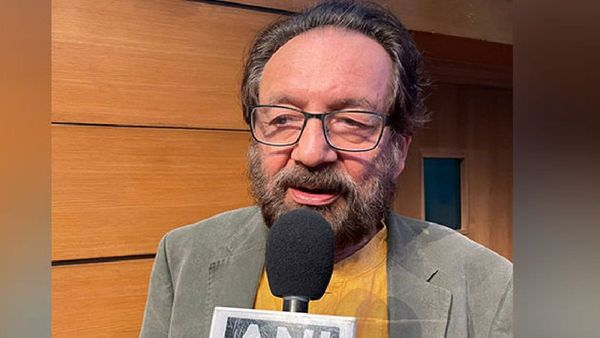
Shekhar Kapur: AI Performers are Here—Why ‘Tilly Norwood’ and OTT Deals Threaten Bollywood’s Exclusive Star System
The Digital Tsunami: Shekhar Kapur’s Urgent Warning to the Film Industry
Veteran filmmaker Shekhar Kapur, a visionary known for classics like Mr. India and Elizabeth, has once again ignited a fierce debate in the global film community. His recent, timely comments on social media have moved the discussion about Artificial Intelligence from a theoretical threat to an immediate reality, pointing specifically to the rise of commercially active, AI-generated performers who are already disrupting the traditional talent ecosystem.
The core of his urgent message, delivered this week, is a direct warning to the world’s most expensive and exclusive ‘A-listers,’ particularly those in Bollywood: their high fees and inaccessibility are creating the perfect market condition for filmmakers to seek cost-effective, readily available, and fully copyrightable AI alternatives. He stated that the more “expensive and exclusive” traditional stars become, “the more the film makers will look for AI alternatives.”
This isn’t just speculation; Kapur provided a tangible example of the new era’s leading lady: Tilly Norwood.
Meet Tilly Norwood: The Star Agencies Are Vying For
Kapur’s post highlighted a figure most of the world is only just starting to hear about: Tilly Norwood. He confirmed that this entirely AI-created character is not merely a concept but a working star of the future. According to Kapur, Tilly has already premiered her first film, and, critically, is slated to appear in a new Over-The-Top (OTT) series within the next year. Furthermore, traditional Hollywood agencies are already “vying to sign her,” a development that confirms the commercial viability and immediate professionalization of AI talent.
The filmmaker’s observation signals a fundamental shift in the entertainment business model. For studios and OTT platforms operating on tight margins and demanding constant content, a star like Tilly Norwood represents an asset free from scheduling conflicts, salary negotiations, or the complexities of a traditional celebrity’s personal life. The idea of a fully digital character that can be designed, controlled, and copyrighted by the production house—eliminating the need for profit-sharing with human talent—is a prospect too financially compelling for the industry to ignore.
Kapur’s earlier, equally provocative statements at the WAVES 2025 summit already laid the groundwork for this vision. He boldly claimed he no longer needs legendary actors like Amitabh Bachchan or Shah Rukh Khan, stating, “I’ll create my own character, my own star. And if I’m good enough, I’ll create a character that the audience will love. And then I’ll have my own star.” The emergence of Tilly Norwood proves this ambition is rapidly moving from a theoretical prediction to a directorial option.
Bollywood’s Existential Question: The Actor’s Angst
The arrival of AI stars has inevitably led to a wave of “angst in the Acting Community,” as Kapur noted. The fear is palpable, especially in a star-driven industry like Bollywood, where A-listers command exorbitant fees and wield significant control over a film’s destiny. Kapur has long argued that the massive, exclusive business models built by both Hollywood studios and top-tier Bollywood talent are on the verge of becoming defunct.
He sees the high-cost, exclusive star system as an “entry barrier” for new voices and independent filmmakers. AI, in this context, becomes a powerful force for democratization. “AI will make filmmaking more democratic,” he argues, by giving storytellers at the grassroots level the tools to create compelling, star-level characters without needing access to billion-dollar budgets or celebrity gatekeepers.
This perspective reframes AI not as a threat to creativity itself, but as a disruptive technology that challenges the economic hierarchy of cinema. It means the success of a film will depend less on the bankability of a human star and more on the ingenuity of the character and the quality of the storytelling—a return to a more meritocratic creative landscape.
The Unbreakable Human Firewall: Emotion and Masoom 2
Despite his enthusiastic embrace of AI’s democratic potential, Kapur remains grounded in the irreplaceable value of human performance. He acknowledges that while AI can replicate visuals, actions, and even basic emotions, it still falls profoundly short of capturing the nuanced “complexity of expressions” that define great, soulful acting.
He drew a poignant contrast using his own upcoming project, the sequel to his classic film Masoom. He made a definitive statement: “AI cannot capture the complexity of expressions of Shabana Azmi and Naseeruddin Shah. Not yet anyway.”
This specific caveat serves as a crucial balancing point in his argument. It suggests that while AI may dominate action films, large-scale spectacles, and films where performance is secondary to visual effects—or even those requiring simple dance sequences—it cannot yet touch the heart of true, emotionally driven drama. The human element, characterized by vulnerability, depth, and the messy unpredictability of real emotion, remains the final frontier of storytelling that machines have yet to conquer.
In Kapur’s view, the future of cinema is not a binary choice between human and machine, but rather a spectrum where AI handles the logistics and spectacle, and exceptional human actors continue to command roles that demand profound emotional resonance. For the average actor, the landscape is precarious; for the true artists, their value may become even more precious.
The Path Forward: From Threat to Opportunity
Shekhar Kapur’s commentary acts as both a prophecy and a call to action. The era of the fully digital, AI-generated celebrity, exemplified by Tilly Norwood, is here. The immediate consequences are clear: traditional A-listers face pressure to adapt their economic models or risk becoming obsolete, especially as independent and lower-budget projects gravitate toward highly affordable AI talent with fewer creative restrictions.
However, Kapur’s vision is ultimately an optimistic one for creators. AI, for him, is the ultimate democratic tool. It promises to shatter monopolies, enable unprecedented creative freedom, and shift the industry’s focus back to the power of the story rather than the cost of the star. The challenge for filmmakers now is not to fear AI, but to understand its new place as a co-creator, deciding where its efficiency best serves the narrative, and where the irreplaceable soul of a Naseeruddin Shah or a Shabana Azmi is essential to the film’s beating heart.
Frequently Asked Questions (FAQs)
Q1: Who is Tilly Norwood, and why is she important to this discussion?
A1: Tilly Norwood is a completely Artificial Intelligence (AI)-generated character and performer who has recently gained prominence in the industry. Shekhar Kapur highlighted her as a concrete example of the future, noting that she has already premiered her first film and is signed by traditional Hollywood agencies for an upcoming OTT series. She is important because she proves that AI performers are now moving from concept to commercial, working talent.
Q2: What is Shekhar Kapur’s main warning to Bollywood’s ‘A-Listers’?
A2: His main warning is that the more “expensive and exclusive” traditional A-listers make themselves, the more filmmakers will be incentivized to seek out cost-effective and accessible AI alternatives. He views the high cost and exclusivity of human stars as an outdated business model that creates entry barriers, which AI is poised to break down, thereby democratizing filmmaking.
Q3: Does Shekhar Kapur believe AI can replace all actors?
A3: No. While he believes AI can create new stars and is ideal for certain types of cinema (like action films or spectacles), he specifically states that AI currently cannot capture the “complexity of expressions” and emotional depth of seasoned, veteran human actors like Shabana Azmi and Naseeruddin Shah. He suggests the human element, particularly in nuanced, emotionally complex roles, remains irreplaceable for now.
Q4: How does AI ‘democratize’ filmmaking according to Kapur?
A4: Kapur believes AI democratizes filmmaking by significantly lowering the barriers to entry for independent and grassroots creators. Since filmmakers can create and own their own ‘AI stars’ and produce content without needing to secure massive budgets for exclusive human celebrities, the power shifts away from major studios and A-listers toward the storytellers themselves.
Q5: What is the copyright issue surrounding AI performers?
A5: Kapur points out that unlike a human actor, a director can create a fully digital character using AI and retain the copyright for that specific persona, its likeness, and performance. This gives the filmmaker and studio complete ownership over the ‘star,’ eliminating complex intellectual property and licensing issues that arise with human celebrities.
Read More:

This Post Has 0 Comments