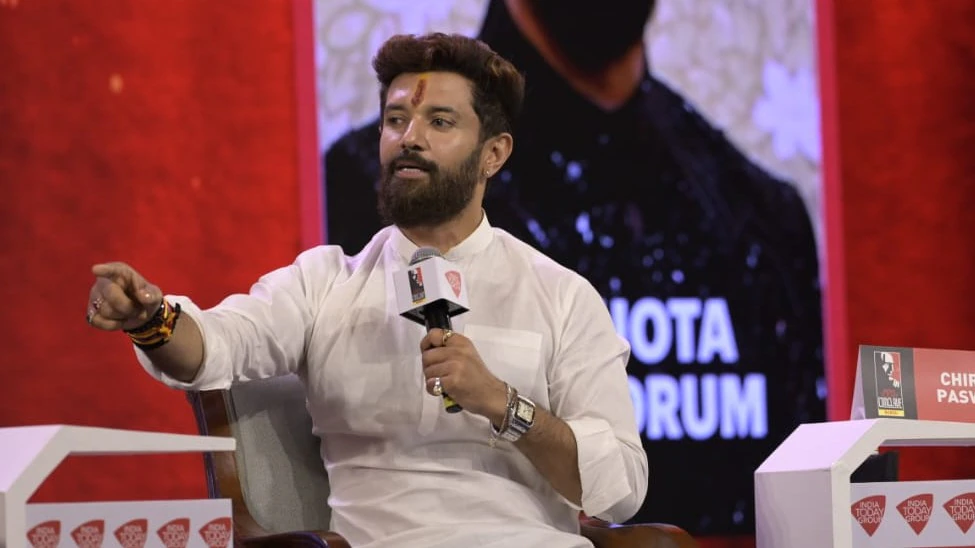
From ‘Disaster’ to Dynasty: Chirag Paswan’s Candid Reflection on Failed Bollywood Career Amid Political Superstardom
Chirag Paswan Breaks Silence: How a ‘Disaster’ on Screen Paved the Way for a Political ‘Superhit’
In a world where celebrity transitions from screen to political stage often involve a carefully curated narrative, Union Minister and Lok Janshakti Party (Ram Vilas) chief Chirag Paswan has offered a refreshingly candid—and self-deprecating—reflection on his short-lived acting career. Paswan, who has recently cemented his status as a master strategist and one of the most powerful political forces in Bihar following his party’s stunning performance in the recent state assembly elections, is openly calling his sole Bollywood outing, the 2011 film Miley Naa Miley Hum, an unmitigated ‘disaster’.
His remarks, timed perfectly with his monumental political ascendancy, create a compelling contrast between his cinematic flop and his current political superstardom, offering a deeper insight into the man behind the ‘Modi’s Hanuman’ moniker.
The Anatomy of a ‘Disaster’: Why Chirag Quit Bollywood
The 2011 romantic drama Miley Naa Miley Hum, where Paswan starred opposite fellow now-politician Kangana Ranaut, was a box-office calamity, failing to even cross the Rs 1 crore mark globally. While the public may have judged the film on its release, Paswan reveals that the critic he feared most was himself, acknowledging that he saw the writing on the wall much earlier than the audience.
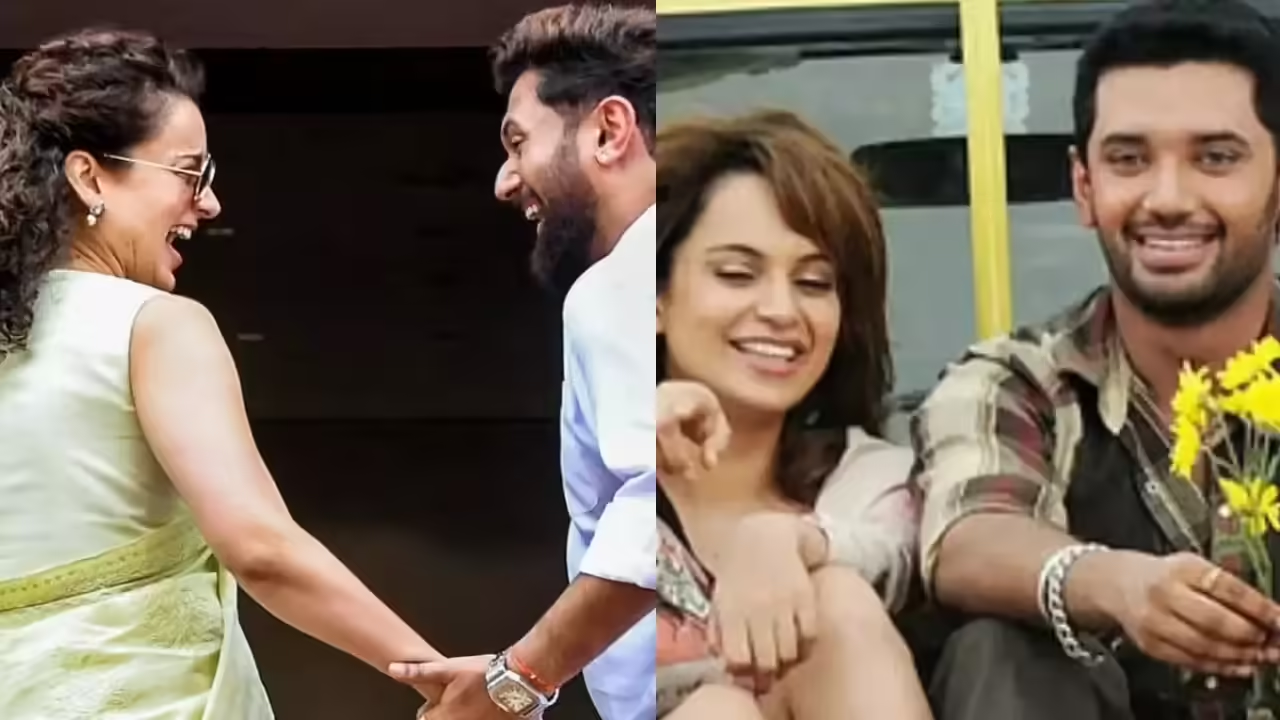
“No one from my family has ever been to Bollywood… I was the first generation who was trying to venture into it. But, very soon I realised that this is a disaster. Even before the country, I realised I am a disaster. I just came to know that I wasn’t made for this (acting),” Paswan stated in a recent interview.
His self-critique went beyond the film’s poor reception. He pinpointed a profound mismatch between his natural, inherited political style—a trait he observed in his late father, veteran Dalit leader Ram Vilas Paswan—and the regimented craft of acting. Paswan noted his struggle with the basic mechanics of filmmaking: memorizing pre-written lines and sticking to a script.
He humorously recounted an on-set struggle where he would instinctively transform a two-line dialogue into a two-page speech, a habit honed from watching his father, a political stalwart, deliver impromptu, extempore speeches on the public stage. This inability to contain his political voice within the confines of a cinematic performance served as his personal, undeniable sign that his destiny lay not in front of a camera, but on the political dais.
“I have seen my father giving speeches, standing on the stage and talking impromptu and here they are giving me dialogues that’s written and I just have to say so much,” he explained, highlighting the fundamental difference in the two crafts.
The Unexpected Political Bond: Chirag and Kangana
Despite the film’s catastrophic failure, Paswan is quick to point out the one enduring positive that emerged from the experience: his lasting friendship with his co-star, Kangana Ranaut. Both actors from the 2011 flop have, over a decade later, successfully pivoted to politics, with both now serving as Members of Parliament (MPs) under the ruling alliance, the BJP-led NDA.
Paswan cherishes this bond, jokingly remarking that even Ranaut, now a three-time National Award-winning actor and MP, would likely refuse a cinematic reunion. “Again? After one disaster!” he quipped when asked about a potential comeback. “No, not at all. And I think anybody who has seen the movie will agree with me… no director, producer, including Kangana herself, will agree to do a movie with me,” he said, showcasing a sense of humor about his own perceived limitations as an actor.
This friendship, forged in the fires of a box-office failure, now manifests as a warm, professional collegiality within the hallowed halls of Parliament, a fascinating full-circle moment for two figures who started in the glamorous yet fickle world of Bollywood.
The Turning Point: From ‘Disaster’ to Destiny’s Call
Paswan’s decision to abandon a promising life in Mumbai for the volatile world of Bihar politics was driven by something far more profound than just a failed film. His shift was rooted in a deeply personal and emotional response to the social environment.
He revealed that while he was living and working in Mumbai, the widespread humiliation and stereotyping of Biharis in other parts of the country became an increasingly painful reality. The term ‘Bihari’ was, in his words, being used as a derogatory term or a ‘cussword’.
This social injustice became the real catalyst for his career change, eclipsing the professional setback of his acting debut. Paswan chose to step out of the shadows of his father’s legacy and into the tumultuous political arena with a singular, resolute goal: to redefine the identity and restore the pride of Bihar.
His subsequent political journey has been nothing short of spectacular. Leaving a ‘disaster’ behind, Paswan entered politics, rebuilt his party, the Lok Janshakti Party (Ram Vilas), out of a familial split, and delivered a phenomenal 100% strike rate in recent elections. His strategic moves and appeal to the state’s youth have transformed him into the ‘X-factor’ in Bihar politics, culminating in his elevation to the Union Cabinet.
Chirag Paswan’s candid admission about his Bollywood failure provides a crucial missing piece to his public persona. It demonstrates that his political rise is not merely a product of dynastic inheritance, but a result of radical self-awareness, a clear-eyed acceptance of his own strengths and weaknesses, and a powerful emotional connection to a cause larger than himself. The ‘disaster’ of his film career, in this light, was not a failure but a critical redirection, clearing the path for the ‘superhit’ leader the nation is watching today.
Frequently Asked Questions (FAQs)
Q1: What was Chirag Paswan’s only Bollywood film?
A: Chirag Paswan’s only Bollywood film was the 2011 romantic drama, Miley Naa Miley Hum. He starred opposite Kangana Ranaut, with veteran actors Kabir Bedi and Poonam Dhillon playing his parents.
Q2: How successful was Miley Naa Miley Hum at the box office?
A: The film was a major box office flop. Paswan confirmed its poor performance, and reports indicate it failed to collect even Rs 1 crore at the box office globally, having an extremely short run in cinemas.
Q3: What did Chirag Paswan say about his acting performance?
A: Paswan was very candid, calling his acting attempt a “disaster.” He admitted he realized very early on that he was not cut out for the craft, struggling particularly with memorizing lines and the scripted nature of acting, which contrasted sharply with his natural ability for impromptu political oratory.
Q4: Is Chirag Paswan still friends with his co-star Kangana Ranaut?
A: Yes, Paswan has stated that the biggest and only positive takeaway from his brief acting career was his enduring friendship with Kangana Ranaut. Both are now key political figures and Lok Sabha colleagues.
Q5: What was the main reason Chirag Paswan transitioned from acting to politics?
A: While the film’s failure was a factor, Paswan has stated that the primary reason for his shift to politics was witnessing the humiliation and derogatory stereotyping faced by Biharis outside the state. He wanted to return home to change the identity and instill pride in Bihar. He entered politics in 2014, contesting the Lok Sabha elections.
Read More:

This Post Has 0 Comments