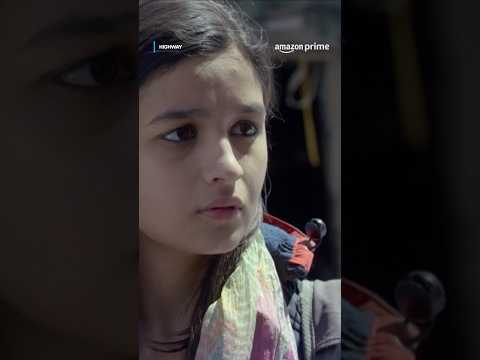
Veera Wants To Stay | Alia Bhatt, Randeep Hooda | Highway | #primevideoindia
Alia Bhatt (Veera)’s moment of realisation comes when Randeep Hooda (Mahabir) asks her to leave and never come back but …
The Road to Freedom: Why Alia Bhatt’s Veera in Highway Still Wants to Stay
Imtiaz Ali’s 2014 road drama, Highway, starring Alia Bhatt and Randeep Hooda, is more than just a film about an unconventional relationship; it is a profound exploration of personal liberation and the journey to self-discovery. The title, “Veera Wants To Stay,” captures the film’s entire emotional core: a wealthy bride-to-be, Veera Tripathi, finds true freedom not in her luxurious, suffocating Delhi home, but in the desolate, vast landscapes of a hostage-taking road trip.
The film, which remains an impactful watch, is currently available to stream on platforms like Amazon Prime Video, allowing new and old viewers in India to revisit this classic cinematic trek through the heart of India.
The Unexpected Kidnapping: A Catalyst for Change
The story begins just one day before Veera Tripathi’s (Alia Bhatt) lavish wedding. Feeling suffocated by the preparations and the life that has been meticulously planned for her, she convinces her fiancé to take her out on a late-night drive. It is during a stop at a remote petrol station that she is accidentally abducted by a group of local criminals, led by the rugged and hardened Mahabir Bhati (Randeep Hooda).
Initially terrified, Veera’s fear soon gives way to a bizarre sense of calm and excitement. Her gilded cage of an upper-class home, which masked profound childhood emotional neglect and trauma, was, in her mind, a greater prison than the back of Mahabir’s truck. The open road, the fresh air, and the journey across six Indian states—from Delhi and Haryana to the stunning mountains of Himachal Pradesh and Kashmir—become her escape.
Veera’s Revelation: The Freedom in Captivity
The core of the “Veera Wants To Stay” narrative lies in her radical psychological transformation. As the days pass, and the kidnappers continuously move her to avoid police, Veera sheds the layers of her privileged, sheltered life.
- Confronting Trauma: The true catalyst for her desire to “stay” is revealed when she confides in Mahabir about being sexually abused by her uncle as a child, an atrocity her family forced her to keep silent to save their social reputation. This act of speaking her truth, in the company of her captor, represents the first genuine release of her life.
- The Rejection of Home: When Mahabir’s plan is thrown into disarray, and he tries to leave her at a police station, Veera insists on staying with him. Her famous dialogue, “Mujhe nahin rehna inn sab ke beech” (I don’t want to live among all this), encapsulates her final rejection of the ‘home’ that symbolised repression and silence.
- A New Lease of Life: She finds peace and newfound freedom on the road, going so far as to view the abduction as a “blessing in disguise” for finally having the chance to find herself.
The Complex Bond of Mahabir and Veera
The relationship between Veera and Mahabir is the film’s most controversial and emotionally nuanced element. It is often described as a form of Stockholm Syndrome, but director Imtiaz Ali gives it deeper layers.
Mahabir Bhati, played with raw intensity by Randeep Hooda, is himself a victim of childhood trauma, having fled his home after witnessing his mother’s abuse and experiencing his own father’s violence. Their bond is formed not through love in the traditional sense, but through shared vulnerability and a mutual, unspoken understanding of having suffered at the hands of their own families and society. Mahabir, the aggressive criminal, slowly lowers his guard and begins to care for Veera, while Veera finds a sense of safety and acceptance with him that she never experienced in her own house. This unconventional journey transforms them both, with the highway becoming a space for both physical and emotional healing.
The Imtiaz Ali Vision and A.R. Rahman’s Music
Imtiaz Ali, known for films that explore travel and self-discovery, considered Highway a story that stayed with him for 15 years. The film is characterized by its technical brilliance, specifically Anil Mehta’s stunning cinematography, which captures the contrast between the chaos of their journey and the serene beauty of the landscapes they traverse, from Rajasthan’s deserts to the snow-capped peaks of the Himalayas.
The soundtrack, composed by A.R. Rahman, is integral to the film’s emotional impact. Songs like “Patakha Guddi” and “Kahaan Hoon Main” serve as the inner voice of Veera’s liberation and confusion, respectively, perfectly blending with the narration.
Highway served as a critical breakthrough performance for Alia Bhatt in only her second film, earning her the Filmfare Critics Award for Best Actress and cementing her reputation as a formidable talent. The film remains a powerful testament to the idea that sometimes, getting lost is the only way to truly find yourself.
AISEO Friendly FAQs
Q1: What is the main theme of the movie Highway?
A: The main theme of Highway is the protagonist Veera’s journey of self-discovery and liberation through an unexpected road trip, exploring her emancipation from a privileged but abusive and suffocating life. The film deals with sensitive themes like childhood trauma, emotional neglect, and finding freedom in unconventional circumstances.
Q2: Who are the main actors in Highway?
A: The main actors in Highway are Alia Bhatt, who plays the central character Veera Tripathi, and Randeep Hooda, who plays her captor, Mahabir Bhati.
Q3: Is Highway available to watch on Prime Video India?
A: Yes, Highway (2014) is currently available for streaming on Amazon Prime Video in India, as well as on other platforms such as Amazon Prime Video with Ads.
Q4: What is the significance of the title “Veera Wants To Stay”?
A: “Veera Wants To Stay” refers to Veera’s decision to actively choose not to return to her family and her former life after her kidnapping. She finds an unshakeable sense of peace, self-acceptance, and freedom on the road, making the open highway a preferable ‘home’ to her abusive and neglectful family environment.

This Post Has 0 Comments