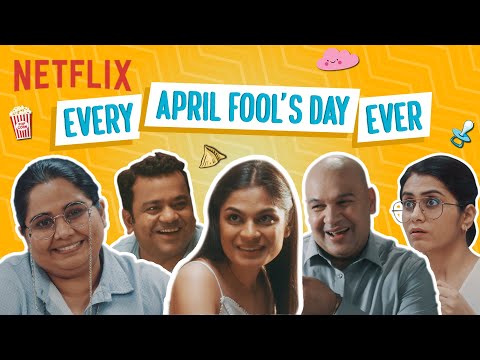
Types Of People On April Fool's Day ft. @HiSaimanSays, @SumukhiSuresh, Srishti Dixit and Many More!
Types of People on April Fool’s Day: A Comedy of Errors
April 1st rolls around once a year, not with the gentle scent of spring, but with the distinct, slightly sinister whiff of mischief. It’s the one day globally where suspicion is the default setting, and every news headline, office memo, or family announcement is treated like a potential lie, a beautiful, elaborate setup for a thunderous cry of “April Fool!”
But who makes this day what it is? The fun of the day isn’t just in the pranks themselves; it’s in the distinct personalities who either orchestrate the chaos or fall victim to it. From the digital savants of satire to the masters of middle-class relatability, let’s dive into the classic types of people you meet on April Fool’s Day, featuring the unique lens of some of India’s funniest content creators like @HiSaimanSays, @SumukhiSuresh, and Srishti Dixit.
1. The Satirical Mastermind: The Saiman Says Archetype
This type is the High-Effort Hoaxer. They don’t mess around with salt in the sugar jar. Their pranks are grand, layered, and often involve deep-dive social commentary or an elaborate media fake-out. They use their keen observation skills and a sharp, often dark, sense of humor to craft a joke that makes you question the very nature of reality.
The satirical mastermind thrives on the chaos of the internet. Their April Fool’s joke isn’t just for a friend—it’s a carefully scripted ‘reaction’ video, a seemingly legitimate but deeply absurd ‘investigative’ report, or a fake collaborative announcement that almost breaks the internet.
- Their Signature Prank: A highly detailed, logically unsound (but perfectly presented) video announcing a major platform change or the end of their content creation journey, only to be revealed with a single, perfectly placed meme at the 11-minute mark.
- The Comedian Parallel: Much like the sharp, satirical, and research-focused style of @HiSaimanSays (Saiman Says), this personality puts effort into making their jokes not just funny, but a commentary on the absurdity of online life. Their pranks have an intellectual edge, making you feel ‘roasted’ but also a little smarter for having figured it out.
2. The Highly Relatable Victim: The Srishti Dixit Archetype
The Highly Relatable Victim isn’t usually the prankster; they are the perpetually stressed, endearing target who takes the simplest prank and turns it into a full-blown existential crisis—all in the most relatable way possible.
This type’s power is their innocence and their ‘human woman’ vulnerability. They walk into every setup with wide-eyed sincerity, immediately feel personally attacked when the punchline hits, and then recount the entire chaotic experience in a way that makes everyone else feel seen. For them, an April Fool’s prank is less a trick and more an attack on their already fragile life balance.
- Their Signature Reaction: Getting pranked with a simple “Your office building is closed today due to a power cut,” and then recording a three-minute, high-energy, self-deprecating video from their car about how they drove 45 minutes and are now having an emotional breakdown over a croissant.
- The Comedian Parallel: This type perfectly encapsulates the persona of Srishti Dixit, whose comedy is rooted in the everyday struggles, middle-class aesthetic, and honest-to-a-fault reactions to life’s small-but-significant irritations. They make the best content because their misery is charmingly familiar.
3. The Sarcastic Self-Roaster: The Sumukhi Suresh Archetype
Meet the person who is simply too clever, too observant, and too self-aware to be easily pranked. The Sarcastic Self-Roaster walks into the day with a skeptical half-smile. If they are going to participate, their prank will be based on a candid, deeply personal, and yet universally relatable truth.
They’re not interested in messy practical jokes; they prefer psychological warfare. Their ‘prank’ is usually an announcement that is so true to their established, flawed persona that everyone wonders if it’s a joke or just another layer of their candid storytelling.
- Their Signature Prank: An Instagram story with sharp wit announcing they’ve finally started a wellness journey, but the “workout video” is just them struggling to get off the sofa while delivering a hilarious, self-reflective monologue on the struggles of singlehood and body image.
- The Comedian Parallel: This is the embodiment of @SumukhiSuresh’s style—bold, fearless, and using candor about the modern woman’s struggles to create comedy. Her joke is less “I got you” and more “I got me, and here’s why you can relate.” The ultimate trick is making the audience question which parts of her vulnerability are the real, raw emotion, and which are the expertly crafted setup.
4. The Classic Purist
The purist believes that the best pranks are the ones that have stood the test of time. They don’t do new-age digital hoaxes; they stick to the fundamentals.
- Modus Operandi: The ‘jelly in the shampoo bottle’ swap, the clear tape over the sink sprayer, or the infamous office keyboard prank where they swap the ‘N’ and ‘M’ keys.
- Their Motto: “If it ain’t broke, don’t fix it.” They value execution and the sheer simplicity of a perfectly timed jump scare.
5. The Eternal Pessimist (The Defender)
This person is on high alert from 12:01 AM on April 1st. They trust absolutely no one, and their entire day is spent in hyper-vigilance, anticipating a prank. They are the ones who refuse to pick up the phone, check their email twice, and wear a visible badge of skepticism.
- Their Tragic Flaw: Their intense defense often blinds them to the one genuinely funny, low-effort prank that slips through the cracks. They will spend all day guarding against a fake firing email only to be defeated by a whoopee cushion on their office chair.
- The Irony: They are the anti-prankster, yet their paranoia often makes them the biggest April Fool of all.
6. The Late-Day Fool
They try to pull a prank at 6:30 PM, long after the traditional midday cut-off for April Fool’s fun. The tradition dictates that any prank pulled after noon makes the prankster the fool, a well-known custom that originates in Western countries and is now widely referenced online.
- The Outcome: Their elaborate, well-meaning joke lands flat, and they are met not with laughter, but with a chorus of colleagues or friends chanting, “Too late! You’re the fool!” They spend the rest of the evening lamenting their poor comedic timing.
April Fool’s Day is more than just a date on the calendar; it’s a social experiment. It’s a day to see who’s on which side of the joke, who has the sharpest wit, and who will bravely (or foolishly) trust that office email about a mandatory 5:00 AM meeting. Whether you are a satirical mastermind or a perpetually confused victim, the only rule that truly matters is to keep it light-hearted, harmless, and memorable.
AISEO Friendly FAQs (Frequently Asked Questions)
Q1. What is the history behind the April Fool’s Day tradition?
A: The exact history is debated, but one popular theory suggests April Fool’s Day dates back to 16th-century France when the country switched from the Julian to the Gregorian calendar. Those who continued to celebrate the new year around April 1st were called “April fools” and became the targets of practical jokes.
Q2. Is there a time limit for playing April Fool’s pranks?
A: Yes, according to a long-standing custom, particularly in the UK and other Western cultures, pranks should only be played before noon (midday) on April 1st. If a joke or hoax is attempted after this time, the prankster is considered the “April fool” themselves.
Q3. Are April Fool’s pranks common in the digital media world?
A: Absolutely. Mass media and digital creators frequently get involved with April Fool’s pranks and hoaxes, which are typically revealed as jokes later in the day or the following day. Popular examples include major corporations announcing bizarre new products or tech channels faking new product reviews.
Q4. What kind of pranks are considered appropriate for April Fool’s Day?
A: April Fool’s Day is meant for harmless and good-natured jokes and practical jokes. Appropriate pranks are designed to spread laughter, not chaos, and should not cause any lasting distress, damage, or legal issues. Classic examples include swapping sugar and salt, simple office gags, or sending funny, fake messages.

This Post Has 0 Comments