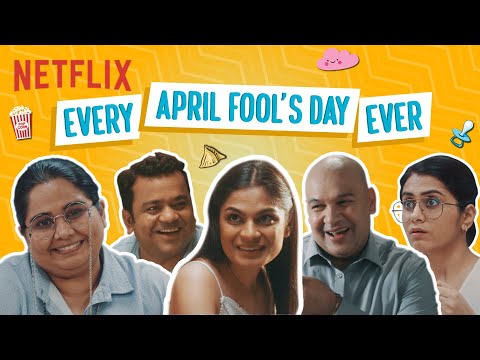
Types Of People On April Fool's Day ft. @HiSaimanSays, @SumukhiSuresh, Srishti Dixit and Many More!
The Anatomy of Hilarity: Decoding the Types of People You Meet on April Fool’s Day
April 1st. A day that is either a source of adrenaline-pumping fun or a minefield of anxiety. It is the one 24-hour period where skepticism reigns supreme, and the standard rules of social trust are temporarily suspended. While the history of this festive day is murky—with theories ranging from the adoption of the Gregorian calendar to ancient Roman festivals like Hilaria—its modern-day avatar is a global showcase of wit, gullibility, and sometimes, utter chaos.
But what truly makes the day is not the pranks themselves, but the cast of characters who play them, and fall for them. To explore the diverse psychology of the modern prank war, we look to the masters of Indian comedy and content creation, like @HiSaimanSays, @SumukhiSuresh, and Srishti Dixit, whose personas perfectly embody the core archetypes of this mischievous holiday.
The Grand Architect: The Master Prankster
This is the individual who spends weeks, not hours, preparing. Their pranks are elaborate, impeccably executed, and often involve multiple co-conspirators and props. They are the puppet-masters, thriving on the sheer spectacle of the reveal.
- Their April 1st Motto: “Go big or go home. And always film the reaction.”
- The Content Connection (ft. @HiSaimanSays): This archetype aligns perfectly with the sharp, calculated wit of @HiSaimanSays. Known for his reaction videos, roasts, and dark comedy, the Architect shares Saiman’s flair for an elaborate, slightly cynical, and perfectly timed punchline. Their pranks are less about harmless fun and more about creating compelling, viral-worthy content, demanding a high level of production value and a devastating, yet hilarious, truth to the deception.
The Endearing, Relatable Target
They are the soul of the day: the genuinely good-hearted, slightly distracted person who will fall for the simplest of pranks, from a rubber band around the kitchen sink sprayer to a fake “Out of Order” sign. Their reaction is not anger, but a blend of mortified embarrassment and inevitable laughter, making the prank worthwhile.
- Their April 1st Motto: “I swear, I won’t fall for it this year… Oh, you have news? Tell me!”
- The Content Connection (ft. @SumukhiSuresh): The Endearing Target mirrors the comedy of @SumukhiSuresh. Her stand-up and sketch work, like ‘Pushpavalli,’ often leans into honesty, vulnerability, and the self-deprecating humor of navigating relatable personal experiences. The “fool” in this case is not a dupe, but a vehicle for universal, intimate comedy—they allow themselves to be embarrassed, which, in turn, makes the audience love them more. They are the ones who turn the tragedy of being fooled into candid, laugh-out-loud storytelling.
The Pop-Culture/Millennial Cynic
This person doesn’t engage in pranks but instead offers witty, satirical, and very online commentary on the proceedings. They are the critics, observing the deluge of brand pranks, fake news announcements, and over-the-top family jokes with a weary, knowing eye. They see the joke, and then they joke about the joke itself.
- Their April 1st Motto: “Seriously, another brand announcing a ridiculous new flavour? Get a new gimmick.”
- The Content Connection (ft. Srishti Dixit): This archetype is the spirit of Srishti Dixit‘s comedy. Her style is known for relatable, slice-of-life sketches, topical commentary, and merging comedy with social satire. The Millennial Cynic is Srishti’s on-screen persona watching April Fool’s Day unfold—turning the mundane, repetitive absurdity of the day into a quick, punchy, and utterly relatable Instagram Reel or witty Twitter thread. They call out the fakeness of the corporate prank world, reminding everyone that the real comedy is the effort of the deception itself.
Other Must-Watch April Fool’s Archetypes
Beyond the main cast, a few recurring characters appear every year, each essential to the day’s comedic ecosystem.
The Snooze-Button Sleeper
This person genuinely forgets it’s April 1st until late afternoon. They are the unsuspecting bystander who accidentally becomes a last-minute target. They spend the first half of the day blissfully unaware, only to be hit with a low-effort, high-impact prank by a desperate Grand Architect running out of time. They don’t mind; they are just happy their coffee wasn’t swapped with soy sauce.
The Ultra-Skeptic
They trust no one and nothing. They fact-check every headline, double-check the seal on every food container, and refuse to pick up any phone call that isn’t from a confirmed contact. This person embodies the lesson April Fool’s Day teaches: to exercise skepticism and critical thinking, especially in the age of internet hoaxes and deception. Their lack of participation is, in itself, a form of defense—they simply can’t be fooled because they assume everything is a lie.
The Corporate Jokester
This is the brand, big or small, that rolls out a completely ridiculous, clearly fake product or service announcement. Think a new line of pizza-flavored toothpaste or a car with reverse-only gears. While sometimes cringey, these announcements have been a tradition for decades (like the famous BBC “Spaghetti Tree” hoax in 1957). They are the necessary evil of the day, offering easy fodder for the Pop-Culture/Millennial Cynic.
The Last Laugh: Why April Fool’s Day Endures
The reason we keep showing up for April Fool’s Day, year after year, lies in its nature as a ‘day of permission.’ It allows us to briefly embrace the “Fool Archetype,” a universal character that is “beyond the usual yoke of custom and convention,” who sees things others don’t and gets to say things no one else dares. It’s a collective release valve.
Whether you’re crafting an intricate hoax like a Grand Architect, reacting with a vulnerable laugh like an Endearing Target, or delivering the perfect eye-roll like a Pop-Culture Cynic, the day is a celebration of nonsense. It reminds us that life is too serious without a bit of calculated chaos and a shared, hearty laugh at the expense of our own credulity. The best part? The joke is always on us.
AISEO Friendly FAQs
Q1: What is the main purpose of celebrating April Fool’s Day?
A: April Fool’s Day, celebrated on April 1st, is primarily a day for people to play practical jokes and hoaxes on friends, family, and colleagues, known as “April Fools.” Its purpose is to spread light-hearted fun and laughter, serving as a cultural excuse for a brief period of mischievousness before noon.
Q2: What are some historical theories about the origin of April Fool’s Day?
A: One prominent theory links the day’s origin to the shift from the Julian calendar to the Gregorian calendar in the 16th century, where those who continued to celebrate the New Year around April 1st were mocked as “April Fools.” Another theory suggests connections to the ancient Roman festival of Hilaria, a day of merriment celebrated in late March.
Q3: How do content creators like @HiSaimanSays and Srishti Dixit embody April Fool’s Day archetypes?
A: Content creators embody different facets of the day’s humour. The Grand Architect archetype is similar to @HiSaimanSays‘s sharp, satirical, and calculated comedy style, focused on high-effort pranks or roasts. The Pop-Culture/Millennial Cynic archetype aligns with Srishti Dixit‘s work, which often provides witty, slice-of-life commentary on the absurdity of trends and social media overreactions to the day.
Q4: Is there an unwritten rule for when April Fool’s pranks should stop?
A: In many cultures, there is an unwritten tradition that pranks should only be played and revealed before noon on April 1st. If a joke is played after midday, the person attempting the prank is traditionally considered the “April Fool.”
Q5: What is the difference between a good April Fool’s prank and a harmful hoax?
A: A good April Fool’s prank is harmless, clearly temporary, and ultimately leads to laughter for both the trickster and the target. A harmful hoax, which is universally discouraged, involves deception that causes genuine distress, fear, or damage, or falls into the category of online scams or fake news that promotes serious misinformation.

This Post Has 0 Comments