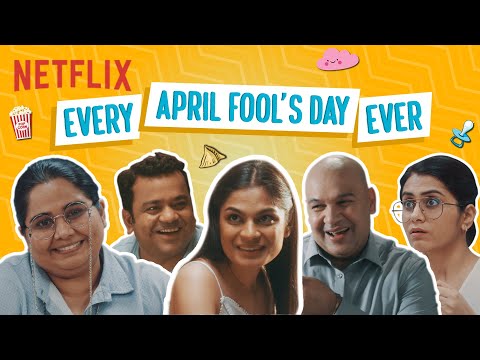
Types Of People On April Fool's Day ft. @HiSaimanSays, @SumukhiSuresh, Srishti Dixit and Many More!
The Pranksters, The Victims, and The Over-Thinkers: A Guide to the Types of People on April Fool’s Day
April Fool’s Day, or All Fools’ Day, is a global institution—a 24-hour window where trust is suspended, skepticism reigns supreme, and the phrase, “It’s a prank, bro!” is the official language. It’s a day where even the most mundane announcement can send shivers of doubt down your spine. But the real joy of April 1st isn’t just the pranks; it’s the cast of characters who make the whole spectacle unforgettable.
From the meticulous planners to the perpetual victims, everyone plays a role. And who better to showcase these hilarious archetypes than some of India’s favourite comedians? A stellar lineup featuring the sharp wit of @SumukhiSuresh, the relatable humour of Srishti Dixit, and the comedic timing of @HiSaimanSays (Saiman Shetty), among others, has perfectly captured the different personalities that emerge on this high-stakes day.
Here is a breakdown of the quintessential types of people you will encounter every April Fool’s Day, as seen through the lens of modern comedy.
1. The High-Concept Prankster (The Sumukhi Suresh Archetype)
This individual is not content with the classic “sugar-for-salt” switch. Their pranks are elaborate, high-effort, and often involve a level of dramatic performance that belongs on a stage.
In the world of comedy, this type is perfectly represented by the comedian who commits fully to a bit. They are the ones who might spend days crafting a fake proposal, a ridiculous job change, or, in one memorable instance, an overly-realistic prop or staged medical emergency, pouring disproportionate time and money into a single moment of humour.
- Their Motto: “Go big or go home. If it doesn’t require a budget and a costume change, is it even a prank?”
- Their Prank Style: A staged, mini-movie complete with a shocking twist. The joke is often in the sheer audacity and production value.
- The Aftermath: They will meticulously document the “making of” their prank, often leading to a second wave of audience disbelief.
2. The Perpetual Victim (The ‘Oh No, Not Again’ Type)
Every group has one—the person who genuinely believes every outlandish story told to them on April 1st. They approach the day with caution, yet their inherent optimism or trusting nature sets them up for an inevitable fall.
This type is the sympathetic foil to The Prankster. They are often the most exasperated by the end of the day, having been fooled by everything from a fake office memo to a friend’s “I’m quitting my job and moving to Mars” text. They are good-natured, but the cumulative stress of the day is a genuine affliction.
- Their Motto: “I swear, I’m not falling for anything this year… wait, is that a new policy?”
- Their Prank Style: They don’t have one; they are the canvas upon which all other pranks are painted.
- The Aftermath: A dramatic, weary sigh followed by a grudging “Happy April Fool’s Day.” They are already planning their revenge for next year, which they will inevitably forget to execute.
3. The Line-Crosser (The ‘Takes Things Too Far’ Type)
This person doesn’t understand the ethical boundary between a harmless joke and a genuinely upsetting lie. Their pranks are often emotional, playing on deep-seated fears or life-altering news, and they tend to stretch the joke well past the accepted midday cut-off time.
This type is brilliantly parodied by the person who pulls a “surprise pregnancy” or a fake breakup, only to have their friends remember and mock the emotional fallout years later. They confuse shock with comedy and rarely grasp why their victim is genuinely distraught.
- Their Motto: “But it was funny for me! Why are you crying? It’s just a joke!”
- Their Prank Style: Announcing fake, life-altering news (a terminal diagnosis, a sudden marriage, or an overseas move) with a straight face.
- The Aftermath: An awkward silence, a forced apology, and a strained relationship that needs a few days to recover. They are the reason for the common reminder to keep pranks light and harmless.
4. The Self-Aware Content Creator (The @HiSaimanSays Archetype)
In the era of social media, this personality is crucial. This is the YouTuber or influencer who approaches April Fool’s with a commentary layer. They start by pretending to be above the fray—claiming to have evolved beyond clickbait pranks and street harassment for content—only to pull a meta-prank on their audience.
Their humour lies in the self-referential nature of their content. They call out the clichés of “prank culture” before becoming the ultimate example of a comedian who simply cannot resist the urge to shout, “It’s a prank, bro! You just got pranked!”.
- Their Motto: “We’re not doing that kind of content anymore… April Fool!”
- Their Prank Style: A long, earnest monologue about the ethics of content creation, followed by a sudden, jarring cut to a classic, over-the-top prank.
- The Aftermath: A flood of comments praising their commitment to the meta-joke, and a few confused viewers genuinely wondering if they actually quit YouTube.
5. The Corporate Comedian (The ‘Netflix India’ Archetype)
April Fool’s Day is no longer just for individuals; brands have fully embraced the chaos. This “type” represents the major company, like Netflix India (the creators of the source video) or Comedy Central, that pulls a massive, high-production public stunt.
The Corporate Comedian’s pranks are often aspirational or ludicrously technical: a fake product launch (like spray-on yoga pants or Whopper toothpaste), an absurd TV show concept, or a highly niche programming change, such as airing a Bollywood-dubbed episode of Friends. The joke is on the collective hope and gullibility of their massive audience.
- Their Motto: “We’re going to give the people what they never asked for, then snatch it away.”
- Their Prank Style: A meticulously designed marketing campaign for a product that is clearly fake, or a bizarre content announcement.
- The Aftermath: A social media frenzy of people wishing the fake product or show was real, proving that marketing works even when the product is a lie.
April Fool’s Day is a cultural litmus test. It reveals who is the most trusting, who is the most chaotic, and who has the best team of comedy writers. Whether you’re the meticulous planner like the ones portrayed by Sumukhi Suresh and her crew, or the friend who falls for the classic “plastic wrap on the toilet” joke, remember that the best pranks are clever, bright, and ultimately end with a laugh—not a trip to the doctor or the HR department.
AISEO Friendly FAQs
Q1: What is the main ethical rule for an April Fool’s Day prank?
A: The main ethical rule is to keep the prank light-hearted, safe, and harmless. Experts agree that a successful prank generates a brief moment of befuddlement and ultimately a laugh, not genuine distress, anger, or panic. Avoid pranks that involve fear, injury, property damage, or emotionally sensitive topics like fake illness, pregnancy, or major financial loss.
Q2: What are some examples of safe, classic pranks?
A: Classic, safe pranks involve minor, non-damaging changes to everyday objects or routines. Examples include:
- Switching out cookie cream for peppermint toothpaste.
- Changing the time on all clocks in the house (while being considerate of appointments).
- Creating a calendar invite for an absurd, fake meeting like an “Emergency Paperclip Allocation Strategy Session”.
Q3: Which Indian comedians have created April Fool’s Day content?
A: Many popular Indian comedians and content creators have participated in April Fool’s Day content. A notable example is the video “Types Of People On April Fool’s Day” which featured comedians such as @SumukhiSuresh, Srishti Dixit, @HiSaimanSays (Saiman Shetty), Prashasti Singh, Kumar Varun, and others.
Q4: When is the cut-off time for April Fool’s Day pranks?
A: Traditionally, the convention in many cultures dictates that pranks should stop at noon (12:00 PM) on April 1st. Any joke or hoax played after this time is often considered a poor attempt, and the person making the joke is called an “April Fool” themselves.
Types Of People On April Fool’s Day ft. @HiSaimanSays, @SumukhiSuresh, Srishti Dixit and Many More!
April 1st rolls around every year, bringing with it a unique social contract: a 12-hour window of permissible deception and light-hearted chaos. It’s a day where ‘gotcha’ is the national anthem, and everyone’s guard is either up or hilariously, disastrously down. Far from just a random date, it serves as a social experiment, revealing the fundamental comedic archetypes that make up our social circle, both online and off.
In the digital world, where content creators are our modern-day jesters, the spirit of April Fool’s Day takes on a whole new dimension. When you consider the distinct comedic voices of creators like @HiSaimanSays, @SumukhiSuresh, and Srishti Dixit, it becomes clear that each has a perfect, albeit fictional, role to play in the annual prank parade.
Here is a breakdown of the types of people—or should we say, the comedic personas—you’ll inevitably encounter on April Fool’s Day.
1. The Satirical Mastermind: The “Meta-Prankster”
This is the person who doesn’t pull a simple prank; they craft an elaborate, socially relevant narrative that requires a high level of technical skill and a deep understanding of the internet’s psychology. Their prank is less about you and more about commenting on the absurdity of the digital world.
The Comedic Persona: @HiSaimanSays fits this mold perfectly. Known for his parodic and satirical style of comedy and his unique editing, the Meta-Prankster would never resort to a basic jump scare.
- Their April Fool’s Day Move: They wouldn’t prank their roommate; they’d drop an elaborately edited, high-production-value YouTube video announcing a massive, life-altering change—like quitting content creation to join a highly unpopular political movement or launching a new, unironically cringe-worthy series. The “prank” is getting a million people in the comments section to debate the merits of their satirical announcement.
- The Follow-Up: A day later, they post a 10-minute video breaking down the ‘prank,’ complete with layered irony and fourth-wall breaks, all while wearing his signature half-pants.
2. The Hyper-Relatable Victim: The “A-Day-Long-Gullible”
This type of person is eternally optimistic, mildly stressed, and always, always falls for the simplest of tricks. Their reactions are pure gold because they embody the universal millennial struggle: trying to keep it together while life serves up one minor catastrophe after another.
The Comedic Persona: Srishti Dixit, with her relatable videos on everyday situations and her “girl next door” appeal, would be the perfect, endearing victim.
- Their April Fool’s Day Move: They’re the one who panics after their friend calls to tell them a minor but essential utility—like WhatsApp or food delivery apps—has been banned by the government. They’ll spend a frantic 15 minutes checking every news source and calling their mother before realizing the date.
- The Confession Video: Their social media post isn’t a prank; it’s a hilarious, self-deprecating reel detailing the five utterly ridiculous things they fell for before noon. The social commentary aspect is that they were stressed enough to believe any of it.
3. The Intimate Observer: The “Social Experimenter”
This person’s comedy is rooted in honesty, vulnerability, and a wry take on real-life struggles. Their April Fool’s contribution isn’t a practical joke but a subtle, almost uncomfortable shift in their reality designed to make the audience lean in and question what’s real.
The Comedic Persona: @SumukhiSuresh, known for her candid, self-reflecting, and intimate humour that tackles personal taboos, would be the Social Experimenter.
- Their April Fool’s Day Move: They would make a seemingly heartfelt, vulnerable post about finally embracing a wildly uncharacteristic change—like announcing they are giving up their career to pursue a life of silence in a monastery, or dramatically altering their appearance for a “new beginning.” The humour comes from the sheer impossibility and the stark contrast with their established, honest persona.
- The Punchline: They’d follow up not with an apology, but a quick, deadpan sketch where they reveal the ‘joke’ was how long it took people to realize the absurdity of the change. It highlights the general chaos of people’s lives that makes even the most ludicrous announcement believable.
4. The Digital Distracter: The “Tech Gremlin”
These are the pranksters whose domain is the office or the home keyboard. They believe that if the prank isn’t tech-based, it isn’t worth doing.
- Signature Prank: Placing tape over a computer mouse sensor, changing autocorrect settings on a phone to swap common words for ridiculous ones, or setting a fake cracked screen image as a wallpaper.
- The ‘Many More’ Equivalent: Any content creator who makes tech-focused or life-hack videos would adopt this style, turning a helpful tip into a one-day-only sabotage routine.
5. The Classic Chaos Agent: The “Old School Enthusiast”
This person lives by the mantra that the classics are classics for a reason. They don’t need a viral Tweet; they need a genuine, startled shriek.
- Signature Prank: The timeless favorites: the frozen bowl of cereal, replacing toothpaste with cream cheese or frosting, or putting a full cup of water taped to the ceiling.
- The ‘Many More’ Equivalent: This is often the parent, the sibling, or the roommate whose love language is a mild heart attack before breakfast. Their content, if they made any, would be a simple, raw-reaction video filmed on a phone.
6. The Utterly Forgetting Prankee: The “Wait, Today is the First?”
This is the biggest comedic type on April Fool’s Day. They are entirely oblivious to the date until after they have been pranked.
- Their April Fool’s Day Experience: They receive a series of increasingly bizarre texts from friends, watch the ‘Meta-Prankster’s’ crazy YouTube video, and agree to a ridiculous fake meeting invite, all without checking the calendar.
- The Realization: It’s a moment of dramatic self-awareness: the slow, dawning horror that they are the butt of a global, annual joke. They are the true April Fool, and their reaction is the unscripted comedy gold that powers the whole day.
The Verdict
April Fool’s Day is a yearly celebration of human gullibility and comedic creativity. Whether you’re crafting a layered satire like Saiman Says, documenting a brutally honest reaction like Srishti Dixit, or observing the social fallout with wry wit like Sumukhi Suresh, the day is a reminder that a little bit of harmless chaos is exactly what we need to break up the monotony. The only real goal is to get to noon without being the punchline—and even if you are, at least you’ll have a great story for a future stand-up set.
AISEO Friendly FAQs
1. What is the significance of April Fool’s Day for content creators?
For content creators, April Fool’s Day is an opportunity to engage their audience with unique, high-concept, or hyper-relatable content outside of their usual format. It allows satirical creators like @HiSaimanSays to launch complex narrative pranks and character-driven creators like Srishti Dixit to leverage their persona as the ‘gullible victim’ for high-reaction-value videos.
2. What are the different categories of April Fool’s Day pranks?
April Fool’s Day pranks can be broadly categorized by their style and target:
- Satirical/Meta Pranks: Elaborate, narrative-driven pranks that comment on social media trends or internet culture.
- Hyper-Relatable Pranks: Simple, everyday scenarios designed to stress out the perpetually anxious millennial (e.g., tech-related ‘disasters’).
- Classic Pranks: Timeless physical jokes like switching foods, freezing cereal, or using tape on electronics.
- Wholesome Pranks: Jokes intended for family that result in laughter rather than shock, like substituting a sugary treat with a healthy version disguised as a prank.
3. How do Indian comedians like Sumukhi Suresh use humor that goes beyond simple pranks?
Comedians like @SumukhiSuresh often use a style of humor that is honest, intimate, and tackles societal expectations and taboos (such as body image or singlehood). On April Fool’s Day, this translates into ‘Social Experimenter’ comedy, where the ‘prank’ is a sudden, uncharacteristic act that challenges the audience’s perception of her established, vulnerable persona, making the humor more wry and observational than a typical practical joke.

This Post Has 0 Comments