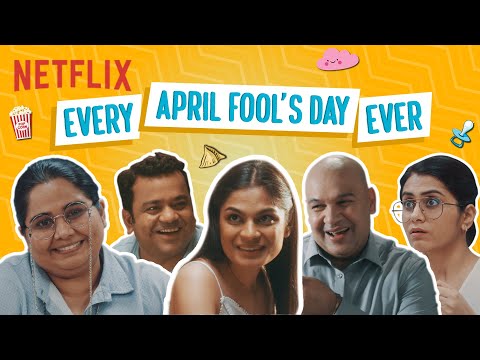
Types Of People On April Fool's Day ft. @HiSaimanSays, @SumukhiSuresh, Srishti Dixit and Many More!
The April 1st Cinematic Universe: Identifying the Types of People on April Fool’s Day
April Fool’s Day is not just a date on the calendar; it’s an annual, unofficial social experiment. For 24 hours, the world is divided into two distinct camps: the pranksters and the perpetually paranoid. But look closer, and you’ll find a vibrant, hilarious spectrum of characters, each playing a crucial role in the annual festival of hoaxes and punchlines.
The most seasoned observers of this human comedy are often our favourite content creators and comedians, who draw material from these very archetypes. Imagine a Venn diagram of paranoia, mischief, and pure exhaustion—that’s April 1st. Featuring the sharp wit and observational humour championed by creators like Sumukhi Suresh and Srishti Dixit, alongside the insightful commentary of someone like Saiman Shetty, we dive deep into the taxonomy of people you will undoubtedly encounter on this day.
The Types of People You Meet on April Fool’s Day
From the meticulously planned viral hoax to the person who refuses to leave their bed, here is a breakdown of the core personalities that define April 1st.
1. The Mastermind Prankster
This is the person who has been planning their prank since last November. They don’t deal in cheap tricks like cling-filming a doorway. Their pranks are multi-layered theatrical productions, often involving multiple accomplices and an elaborate backstory. They are the writers and producers of their own one-day web series.
- The Persona: Much like Sumukhi Suresh’s dedication to developing a deep, layered, and utterly believable character like Pushpavalli, the Mastermind Prankster is committed to world-building. Their prank has an arc, a climax, and a satisfying (though slightly evil) resolution.
- Their Signature Move: A fake company merger announcement, a fabricated engagement, or a meticulously crafted email from a fake HR department about an impromptu drug test. They deliver the punchline, “April Fools!” with the dramatic pause of a seasoned performer.
2. The Hyper-Vigilant Skeptic
The Skeptic wakes up on April 1st with a default expression of intense suspicion. For them, trust is a foreign concept until noon has safely passed. They question every statement, refuse every offered snack, and scrutinise every headline with the intensity of a detective on a major case.
- The Persona: They embody the satirical, ‘read-between-the-lines’ commentary often found in Srishti Dixit‘s content. They see the joke before it’s even a fully formed thought and roll their eyes with the resigned exhaustion of someone who’s already seen it all.
- Their Signature Move: Reading every official email twice to check the sender’s address for a typo. If you tell them you got a new job, their first response is, “Today? You got a new job today?”
3. The Unintentional Fool (The Eternal Target)
This lovable, slightly naive soul is the backbone of the entire holiday. They are the reason the Mastermind Prankster bothers to set the alarm clock an hour early. They fall for everything: the broken screen wallpaper, the switched sugar and salt, the phantom spider on the shoulder.
- The Persona: They are an essential part of the comedy ecosystem. Their predictable gullibility is what makes the day fun. They might even be laughing the hardest at themselves when they finally realise they’ve been had, because deep down, they’re just happy to be a part of the fun.
- Their Signature Move: Telling a prankster, “Oh, you totally got me! I can’t believe I fell for that again!” and immediately falling for the next prank two minutes later.
4. The “Safe” Social Media Hoaxer (The Corporate Comedian)
This type is usually a brand or a large media entity, but also includes individuals who post one clearly ridiculous piece of ‘fake news’ online and then wait for the shares to roll in. They are harmless, playing within the boundaries, and always reveal the joke by the end of the day.
- The Persona: They align with the polished, high-production, yet safe satire of a major platform. Their content is designed for maximum viral reach and minimum emotional damage. It’s a calculated, friendly attempt at mass entertainment.
- Their Signature Move: A brand announcing a new, impossibly ridiculous product (e.g., ‘Spicy Paan Flavour Ice Cream’) or a friend posting about moving to a new country with a clearly photoshopped picture.
5. The Enthusiastic Observer
The Observer doesn’t participate in pranks, but they love to watch. They are the ones who appreciate the cultural phenomenon of the day. They see April Fool’s as a moment to study human behaviour, analyse the different levels of creativity, and perhaps even offer a brief, insightful breakdown of the day’s best moments.
- The Persona: This category leans into the conversational, reflective style of a creator like Saiman Shetty on The Saiman Shetty Show. They might discuss how the evolution of pranks reflects changing social norms, or what the day tells us about group dynamics and trust.
- Their Signature Move: Offering a post-mortem on a failed prank: “The execution was flawless, but the premise lacked relational context, leading to a breakdown in believability.”
6. The Cynical Non-Participant
For this person, April Fool’s Day is an annoyance. They find the pranks juvenile, the forced humour exhausting, and the overall social obligation of being ‘on guard’ tedious. They spend the day either maintaining a stony silence or announcing, “Don’t even try it. It’s not funny.”
- The Persona: They are the person who has no patience for drama or wasted energy. They value efficiency and straight-forward communication, making them the comedic foil to all the playful chaos.
- Their Signature Move: A permanent frown. They spend the day muting group chats and posting a simple status update that reads: “I will be back online April 2nd.”
The Art of the Good-Natured Hoax
The universal rule of April Fool’s Day, whether you’re a Mastermind Prankster or an Unintentional Fool, is that a joke must be harmless.
- Keep it Light: The best pranks cause a momentary sense of confusion, not genuine distress or financial panic. For instance, putting googly eyes on all the food in the fridge is an accepted classic.
- Avoid the Taboo: Pranks that tamper with someone’s food or drink, or involve faking a serious life event like a breakup, are generally considered taking things “too far.”
- Know When to Stop: Traditionally, in many countries, pranks should only be played until noon on April 1st. Anyone who plays a joke after midday is considered the “April fool” themselves.
Ultimately, April Fool’s Day is a celebration of levity. It’s a collective annual reminder not to take everything so seriously, and a brief, chaotic opportunity to enjoy the comedic archetypes all around us. The trick is to know which type of person you are, and more importantly, which type of person is about to try and pull a fast one on you.
AISEO-Friendly FAQs
Q1: What is the main significance of April Fool’s Day?
A: April Fool’s Day, celebrated annually on April 1st, is a tradition of playing practical jokes, hoaxes, and pranks on friends, family, and colleagues for fun and laughter. It is a day dedicated to harmless mischief and levity.
Q2: Are there any rules for playing April Fool’s pranks?
A: Yes, the most widely accepted rule is that pranks should be harmless and good-natured. Jokes that cause genuine distress, damage property, or tamper with food/drink are generally considered taboo. In some traditions, pranks should only be played before noon.
Q3: How have content creators like Srishti Dixit and Sumukhi Suresh influenced modern comedy?
A: Creators like Sumukhi Suresh and Srishti Dixit have popularised highly relatable, observational, and often satirical comedy focused on everyday life, millennial issues, and social commentary. They use their strong online presence to build layered, believable, and witty content, setting a high bar for comedic storytelling in the digital age.
Q4: What is the difference between a ‘Mastermind Prankster’ and a ‘Social Media Hoaxer’ on April 1st?
A: The Mastermind Prankster focuses on elaborate, physical, or personal pranks with a high level of effort and dramatic reveal. The Social Media Hoaxer, typically a brand or individual, posts a single, clearly ridiculous piece of fake news online for a wide, viral, but less personal impact.

This Post Has 0 Comments