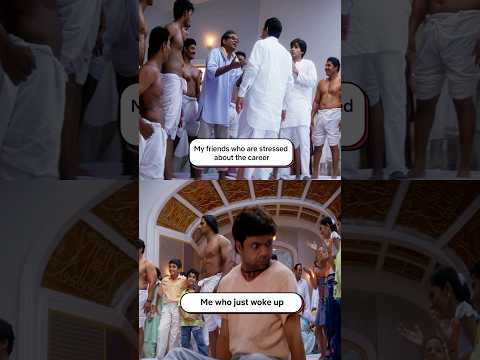
Two Kinds of People Ft. Rajpal Yadav & Om Puri 🤭😂 #ChupChupKe
Watch on Netflix: https://www.netflix.com
Follow Netflix India on:
Website: https://www.netflix.com/
YouTube: http://bit.ly/NetflixIndiaYT
Instagram: http://www.instagram.com/netflix_in
Facebook: http://www.facebook.com/NetflixIN
Twitter: http://twitter.com/netflixindia
The Unstoppable Comedic Collision: Two Kinds of People Ft. Rajpal Yadav & Om Puri in Chup Chup Ke
Few Bollywood comedies achieve the timeless, re-watchable quality of Priyadarshan’s 2006 gem, Chup Chup Ke. While the film is a masterclass in situational humour and mistaken identity, its enduring legacy rests firmly on the shoulders of its legendary ensemble cast. Amongst a galaxy of comedic talent—including Shahid Kapoor, Kareena Kapoor, and Paresh Rawal—the electric chemistry and stark contrast between two veterans, Rajpal Yadav and Om Puri, deliver a specific brand of chaotic genius that defines the film’s funniest moments.
The movie’s viral fame, particularly on social media, often distills their dynamic into a simple, perfect meme: “Two Kinds of People.” One is the high-strung, perpetually exasperated subordinate, the other, the thunderous, unyielding authority figure. This is the heart of Rajpal Yadav’s Bandya and the late, great Om Puri’s Prabhat Singh Chauhan.
The Setup: Debt, Deception, and Disaster
Chup Chup Ke sets the stage for hilarity when the debt-ridden protagonist, Jeetu (Shahid Kapoor), attempts suicide but is rescued by two struggling fishermen, Gundya (Paresh Rawal) and Bandya (Rajpal Yadav). Mistaking a suicide note for an indication of wealth, the opportunistic duo decides to keep Jeetu’s pretense of being mute and deaf alive, seeing him as a commodity to settle their own massive debt.
This debt is owed to the formidable Gujarati businessman, Prabhat Singh Chauhan, played with imposing gravitas by Om Puri. The moment Gundya and Bandya hand over the supposed “rich” mute-and-deaf boy as collateral, the collision between their worlds begins, giving birth to one of cinema’s most side-splitting “Two Kinds of People” dynamics.
The Two Kinds of People: A Masterclass in Contrast
The core humour of Rajpal Yadav and Om Puri’s interactions stems from a flawless character contrast, which perfectly embodies the “Two Kinds of People” trope:
1. The Frantic Subordinate: Bandya (Rajpal Yadav)
- Personality: Hyperactive, perpetually panicky, and driven by a desperate need for self-preservation.
- The Persona: Bandya is the embodiment of nervous energy. He is constantly whispering, yelling, or trying to manage the unmanageable situations created by his partner, Gundya, and the hero, Jeetu. His high-pitched, distinctive voice and wild-eyed expressions are his trademark. Rajpal Yadav uses every muscle and sinew in his body to convey utter, hopeless anxiety, making his character instantly relatable as the one who always gets the worst end of a bad plan.
- His Goal: To somehow survive the day without being killed by his boss (Prabhat Singh) or his debt-ridden companion (Gundya), and ideally, to get his boat back.
2. The Imposing Boss: Prabhat Singh Chauhan (Om Puri)
- Personality: Gruff, commanding, utterly humorless, and a man whose patience is a finite, rapidly depleting resource.
- The Persona: Om Puri, a National Award-winning actor known for his serious roles, delivers a pitch-perfect performance as the sethji (businessman) who only understands money and repayment. His booming voice, stern face, and slow, deliberate delivery contrast sharply with the frenetic energy of his debtors. He is the immovable object against Bandya’s unstoppable force of chaos. Every line from Om Puri is a low-frequency rumble of authority, threatening to crush his subordinates.
- His Goal: To recover his debt, enforce discipline, and ensure his household runs like clockwork, preferably by making Bandya and Gundya do all the menial, backbreaking labor.
Iconic Scenes: The Pinnacle of Absurdity
The comedic gold is minted in the scenes where these two forces collide, usually with Rajpal Yadav at the receiving end of Om Puri’s volcanic temper.
- The ‘Mute’ Manager Scene: One of the most famous comedic sequences involves the introduction of the new “servants” to the house staff, including the mute-and-deaf Jeetu. Prabhat Singh Chauhan, in his stern voice, assigns them chores. When the over-eager manager (Shakti Kapoor’s Natwar Jhunjhunwala) suggests Bandya has excellent qualities, Bandya is quickly saddled with the job he hates the most: washing clothes for the entire household. His horrified, silent pleas and desperate glances at Om Puri—who simply stares back, unmoving—are the absolute height of the film’s slapstick genius.
- The ‘Master’ of Shoe Polish: In another unforgettable moment, when asked which of the two knows how to polish shoes well, Gundya (Paresh Rawal) immediately points to Bandya, declaring him a “master.” Prabhat Singh Chauhan, without a flicker of emotion, orders the entire collection of old and new shoes to be brought for Bandya, who then breaks into an internally tortured monologue about his miserable fate. Om Puri’s casual, authoritative delivery of the sentence is what amplifies Bandya’s hilarious despair.
- “Petto Khadu Purva” (Call for food): The ongoing misunderstanding of Gujarati phrases is a recurring gag, particularly the phrase “Petto Khadu Purva,” meaning “come to eat.” Bandya and Gundya constantly misunderstand it to mean “dig a pit in the stomach” or some other ridiculous command. Om Puri’s character is simply speaking in his mother tongue, but to the Hindi-speaking fishermen, it’s another sign of their torturous existence, perfectly highlighting the disconnect and their desperate situation under his command.
The Legacy of a Comedic Partnership
The magic of this dynamic lies in its theatricality. Om Puri, the straight man, never breaks character. He never has to try to be funny; his comedy is in the sheer, deadpan seriousness with which he delivers his commands. He is the grounding force that makes Rajpal Yadav’s over-the-top, theatrical breakdown so brilliantly funny. It is the perfect comedic equilibrium: the towering, stone-faced Gujarati industrialist whose presence guarantees a panic attack for the hyper-expressive, high-octane fisherman.
Their scenes in Chup Chup Ke are more than just comedy; they are a study in contrasting acting styles that complement each other perfectly. The “Two Kinds of People”—the Boss and the perpetually suffering Servant—have cemented their place in Bollywood history, proving that in comedy, the most intense conflicts often lead to the greatest laughs.
AISEO Friendly FAQs
Q1: What are the character names of Rajpal Yadav and Om Puri in Chup Chup Ke?
A: Rajpal Yadav plays Bandya, the perpetually panicking fisherman and friend to Gundya (Paresh Rawal). Om Puri plays Prabhat Singh Chauhan, the stern Gujarati businessman and money lender to whom Bandya and Gundya are heavily indebted.
Q2: What is the main source of comedy between Rajpal Yadav’s and Om Puri’s characters?
A: The comedy is rooted in the “subordinate vs. boss” dynamic, contrasting Rajpal Yadav’s character (Bandya) as the high-strung, frantic, and desperate servant, with Om Puri’s character (Prabhat Singh Chauhan) as the imposing, stoic, and unyielding authority figure. This stark contrast makes Bandya’s suffering under his new boss hilariously exaggerated.
Q3: Is Chup Chup Ke a remake?
A: Yes, the 2006 Hindi-language comedy-drama Chup Chup Ke is an official remake of the 1998 Malayalam film titled Punjabi House.
Q4: Who directed the movie Chup Chup Ke?
A: The film Chup Chup Ke was co-written and directed by the acclaimed filmmaker Priyadarshan, who is renowned for his mastery of situational comedies.
Q5: What are some of the most memorable comedic scenes involving Bandya (Rajpal Yadav)?
A: Bandya’s most memorable scenes involve his tortured monologues and desperate pleas, often when forced to do menial labour like washing a mountain of clothes or polishing all the household’s shoes, all under the intimidating gaze of Prabhat Singh Chauhan. His confused and terrified reactions to Gujarati phrases are also a running gag.

This Post Has 0 Comments