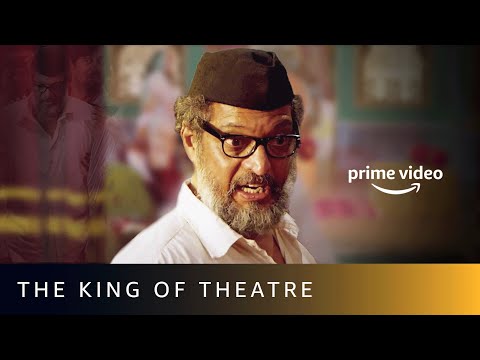
To be or not to be that is the question | Natsamrat | Nana Patekar | Amazon Prime Video
Presenting you the extraordinary scene of the ordinary man Nana Patekar aka Ganpatrao Belwalkar from the film Natsamrat.
The King of the Stage and the Tragedy of Life: Why Nana Patekar’s ‘Natsamrat’ is a Must-Watch Classic
The world of cinema often finds its deepest inspiration on the stage, but few screen adaptations capture the raw, existential power of theatre quite like the 2016 Marathi masterpiece, Natsamrat. Starring Nana Patekar in a career-defining role, the film is an emotional odyssey that confronts the central human dilemma, perfectly encapsulated in a line from Shakespeare’s Hamlet: “To be or not to be, that is the question.”
Originally a legendary 1970 Marathi play by Kusumagraj (V.V. Shirwadkar), the film adaptation, directed by Mahesh Manjrekar, uses the towering legacy of a retired Shakespearean actor to explore universal themes of family, dignity, and the devastating tragedy of old age. Though its streaming availability may fluctuate, its popular run on platforms like Amazon Prime Video cemented its status as a modern classic of Indian cinema.
Ganpatrao Belwalkar: The King Who Lost His Kingdom
The film tells the tragic story of Ganpatrao “Appa” Belwalkar (Nana Patekar), a colossal figure in the world of Marathi theatre, who is affectionately bestowed the title Natsamrat (King of Actors). Appa’s life is a magnificent tapestry woven with the dialogues and characters of legendary playwrights, especially William Shakespeare, whose works form the very fabric of his being.
The story begins with Ganpatrao’s decision to retire after a glorious career. In a burst of selflessness and a desire to live a peaceful life, he willingly signs over all his property and wealth to his children, a son, Makarand, and a daughter, Vidya. This grand, theatrical gesture of generosity marks the start of his tragic downfall.
Once retired, the Natsamrat is no longer the celebrated King of the Stage but simply an elderly man whose eccentric, theatrical ways, and love for frank, unminced words soon begin to clash with the modern sensibilities of his daughter-in-law. What starts as a small generational and cultural rift soon widens into an insurmountable gap, where Appa and his devoted wife, Kaveri, whom he lovingly calls ‘Sarkar’ (a term of respect and affection), are made to feel like a burden.
“To Be or Not to Be”: An Existential Echo
The theme of Shakespeare’s Hamlet, from which the iconic line is drawn, is not just a theatrical reference in Natsamrat; it is the very core of Appa Belwalkar’s crisis.
The famous soliloquy is Hamlet’s contemplation on whether to endure the suffering of life or to end it. For Ganpatrao, this philosophical question shifts its meaning:
- To be the Actor, or Not to be the Man: Does he remain the magnificent, articulate Natsamrat of the stage, or does he humble himself to live as the submissive, silent father and grandfather his family demands?
- To Speak the Truth, or Not to Speak: He is an artist whose entire life has been dedicated to speaking powerful, moving truths through his characters. Should he now hold his tongue and sacrifice his dignity to live under his children’s roof?
- To Be in a Home, or Not to Be (Homeless): Ultimately, his uncompromising self-respect leads him to an even more profound dilemma, as he and his wife are forced to leave and ask: “Kuni Ghar Deta Ka Ghar?” (Can someone give a shelter/home?).
The film masterfully contrasts the grand, heroic tragedies Appa played on stage with the quiet, humiliating tragedy of his own real life.
Nana Patekar: Setting a New Gold Standard
The critical and commercial success of Natsamrat rests heavily on Nana Patekar’s extraordinary performance. Critics widely hailed his portrayal as a new benchmark, a towering achievement in Indian cinema. Patekar completely immerses himself in the role, embodying the sheer physical and emotional weight of an ageing titan struggling to reconcile his majestic past with his painful present.
His delivery of the original play’s famous Marathi soliloquies, as well as the moments where his theatrical dialogue naturally spills over into his personal life, makes the emotional arc heartbreakingly real. His chemistry with veteran actor Vikram Gokhale, who plays his friend Rambhau, is another high point, showcasing a deep, shared love for the stage that transcends their personal rivalry.
Streaming Legacy on Amazon Prime Video
While streaming rights are often subject to change, Natsamrat gained immense national and international exposure through its availability on platforms like Amazon Prime Video. The platform was instrumental in presenting the Marathi drama to a broader audience who might not have had access to regional cinema otherwise, allowing Nana Patekar’s powerhouse performance and the film’s timeless themes to reach millions of new viewers. The film’s presence on major OTT services highlights its significance as one of the definitive Indian dramas of its generation.
AISEO Friendly FAQs
Q1: What is the main theme of the movie ‘Natsamrat’?
A: The main theme of the movie Natsamrat is the tragic abandonment and neglect of the elderly by their children, specifically exploring the life of a celebrated stage actor, Ganpatrao Belwalkar, who struggles to maintain his dignity and theatrical identity after retirement.
Q2: Why is the quote “To be or not to be that is the question” significant in ‘Natsamrat’?
A: The quote is significant because the protagonist, Ganpatrao Belwalkar, is a veteran Shakespearean actor who played Hamlet. The quote symbolizes his own existential crisis—the internal debate on whether to live a life of silent compromise with his family or to remain true to his proud, outspoken artistic self, ultimately facing the consequence of losing his home.
Q3: Who is the main actor in ‘Natsamrat’?
A: The main actor in the 2016 Marathi film Natsamrat is the critically acclaimed Nana Patekar, whose performance as Ganpatrao Belwalkar earned widespread praise as one of the best of his career.
Q4: Is ‘Natsamrat’ a remake?
A: Natsamrat (2016) is a screen adaptation of the iconic Marathi play of the same name, which was written by V.V. Shirwadkar (Kusumagraj) and first staged in 1970. The movie has since been remade in other languages, including Gujarati (2018) and Telugu (Rangamarthanda in 2023).

This Post Has 0 Comments