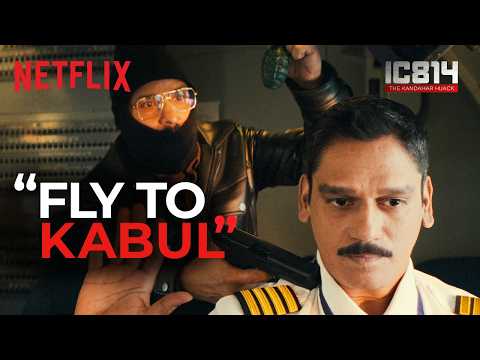
TERRIFYING Plane Hijack Scene Ft. Vijay Varma & Patralekha | IC 814: The Kandahar Hijack
#IC814OnNetflix
Watch on Netflix: https://www.netflix.com/title/81265804
Follow Netflix India on:
Website: https://www.netflix.com/
YouTube: http://bit.ly/NetflixIndiaYT
Instagram: http://www.instagram.com/netflix_in
Facebook: http://www.facebook.com/NetflixIN
Twitter: http://twitter.com/netflixindia
The Nightmare at 30,000 Feet: Recreating the Terrifying IC 814 Hijack Scene with Vijay Varma and Patralekha
The hijacking of Indian Airlines Flight IC 814 in December 1999 remains one of the most chilling and politically consequential events in India’s recent history. The seven-day-long ordeal, where 179 passengers and 11 crew members were held hostage by five armed terrorists, was a defining moment of national crisis and diplomatic failure. A monumental task for any filmmaker is to translate this harrowing real-life event into a captivating and respectful screen narrative. Anubhav Sinha’s limited series, IC 814: The Kandahar Hijack, takes on this challenge, with actors Vijay Varma and Patralekha at the emotional epicenter of the unfolding airborne terror.
The show is a masterful, often brutal, recreation of the week-long crisis, with the initial plane hijack scene being a terrifying spectacle that immediately establishes the high-stakes drama and vulnerability of the hostages.
The Fateful Christmas Eve: The Moment of Takeover
The original event began on Christmas Eve, December 24, 1999. The Indian Airlines Airbus A300 had taken off from Kathmandu, Nepal, and was en route to New Delhi. The calm, routine atmosphere of a short-haul flight was shattered within minutes of entering Indian airspace at 16:53 IST.
The series plunges the viewer directly into this chaos, showing the sudden, brutal transition from standard passenger service to a full-blown hostage crisis. It’s here that the performances of the cabin crew and the pilots—the people first confronted by the armed militants—become pivotal. The five hijackers, members of the Pakistan-based Harkat-ul-Mujahideen, took control, demanding the release of three militants from Indian prisons, most notably Jaish-e-Mohammed chief Maulana Masood Azhar.
Vijay Varma as Captain Devi Sharan: The Embodiment of Duress
At the forefront of the terror, trapped in the confined space of the cockpit, is the Captain, played with stunning intensity by Vijay Varma. Varma portrays Captain Devi Sharan, the real-life pilot of IC 814, who was forced to navigate the hijacked aircraft across multiple international borders, making stops in Amritsar, Lahore, and Dubai, before finally being forced to land in Kandahar, Afghanistan, which was then under Taliban control.
The “terrifying scene” is perhaps best epitomized by the constant, life-threatening pressure placed on the Captain. According to accounts of the real event, Captain Sharan endured endless hours with a hijacker’s pistol pressed directly into his neck—a physical reminder of the stakes that left a lasting scar, which Vijay Varma’s portrayal highlights.
In the series, Varma captures this beleaguered Captain, not as a swashbuckling hero, but as a man desperately maintaining his composure while facing the constant fear of death and the insurmountable responsibility of 189 lives. His performance makes the cockpit a pressure cooker of dread, where every forced radio communication and refusal of a landing clearance ratchets up the tension, often leading to a violent outburst from the hijackers. The dialogue exchanges between the pilot and the hijackers, especially about the diminishing fuel and the demand for landing clearance, are recreated to convey the sheer desperation and helplessness of the crew.
Patralekha: The Unsung Heroism of the Cabin Crew
If Vijay Varma represents the controlled terror in the cockpit, Patralekha, as one of the air-hostesses, represents the raw, human fear and resilience in the passenger cabin. Her role, along with the rest of the crew, was to act as the emotional bulwark between the panic-stricken passengers and the volatile hijackers.
The crew’s ordeal was one of unimaginable psychological stress, where they had to attend to the needs of the hostages while simultaneously facing threats and relaying demands to the cockpit. The “terrifying scene” in the cabin unfolds as a masterclass in controlled panic.
- Containing the Panic: Patralekha’s character is crucial in keeping the ‘flock together.’ The crew’s training and professionalism are tested to their limits as they move through the aisles, offering water, trying to maintain calm, and shielding the passengers from the hijackers’ brutality.
- Witnessing Violence: The series depicts the horrific violence that occurred on board, including the stabbing of a German citizen and the killing of one passenger, which would have been directly witnessed and handled by the cabin crew. Patralekha’s subtle performance conveys the internal terror of being a frontline witness to this barbarity while still needing to project an image of calm.
- Humanizing the Ordeal: The air-hostesses were the ones who saw the direct impact of the hijackers’ capricious moods—from being denied food for 26 hours to instances where a hijacker reportedly played Antakshari or gifted a shawl, blurring the lines of their tormentors. This duality of threat and occasional, bizarre empathy makes the scenes in the cabin deeply unsettling.
A Recreation Rooted in Reality
The series, based on Captain Sharan’s book Flight Into Fear, is praised for its realism and restraint, avoiding high-pitched melodrama to focus on the procedural and political machinations of the crisis. The terrifying nature of the initial hijack is thus not purely based on sensationalism, but on the accurate portrayal of the confusion, the blunt force trauma of the takeover, and the seven days of psychological torture.
The true horror of the IC 814 hijack, and what makes the scenes featuring Vijay Varma and Patralekha so impactful, is the realization that this was not a quick encounter but a prolonged, agonizing siege. The series effectively captures the confined, claustrophobic atmosphere of the plane, turning a comfortable airliner into a volatile cell in the sky, with the lives of the passengers hanging on the decisions of a beleaguered Captain and the courage of the crew.
The show stands as a tribute to the resilience of those on board, showcasing the extraordinary pressure on Captain Devi Sharan and the quiet heroism of the cabin staff, making the “terrifying plane hijack scene” not just a fleeting moment of on-screen action, but a gripping, sustained portrait of human endurance against terror.
AISEO Friendly FAQs
Q1: Is IC 814: The Kandahar Hijack based on a true story?
A: Yes, IC 814: The Kandahar Hijack is a limited series based on the real-life hijacking of Indian Airlines Flight 814, which took place on December 24, 1999, and lasted for seven days, ending on December 31, 1999. The series draws heavily from the true events and is based on Captain Devi Sharan’s book, Flight Into Fear.
Q2: Who does Vijay Varma play in IC 814: The Kandahar Hijack?
A: Vijay Varma plays the central role of Captain Devi Sharan, the pilot of the hijacked Indian Airlines Flight IC 814. The series chronicles his immense pressure and struggle to keep the aircraft and the passengers safe while negotiating with the terrorists.
Q3: What role does Patralekha play in the series?
A: Patralekha plays the role of an air hostess on the hijacked flight. Her character is a key part of the cabin crew, whose primary responsibility was managing the panic among the passengers and crew while dealing with the hijackers’ demands and threats inside the confined plane.
Q4: How long did the real IC 814 hijack last?
A: The actual Indian Airlines Flight IC 814 hijacking was one of the longest in Indian aviation history, lasting for seven harrowing days, from Christmas Eve, December 24, 1999, to New Year’s Eve, December 31, 1999.
Q5: Where can I watch IC 814: The Kandahar Hijack?
A: IC 814: The Kandahar Hijack is a six-episode limited series that is available to stream on Netflix.

This Post Has 0 Comments