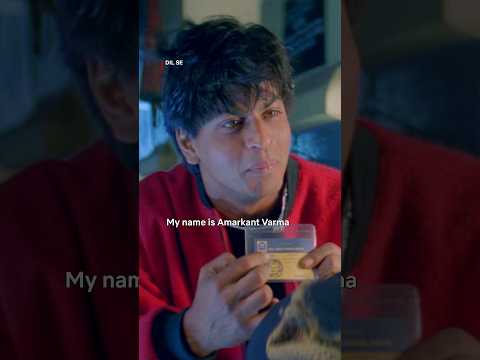
SRK As Amarkant Varma From #DilSe 🥹🫶
Watch on Netflix: https://www.netflix.com/
Follow Netflix India on:
Website: https://www.netflix.com/
YouTube: http://bit.ly/NetflixIndiaYT
Instagram: http://www.instagram.com/netflix_in
Facebook: http://www.facebook.com/NetflixIN
Twitter: http://twitter.com/netflixindia
SRK As Amarkant Varma From #DilSe 🥹🫶: A Deep Dive into Bollywood’s Most Obsessive Love Story
More than a quarter-century since its release, Mani Ratnam’s Dil Se.. remains an anomaly in Shah Rukh Khan’s blockbuster filmography. It is not just a romantic thriller; it is a cinematic poem that is as visually stunning as it is emotionally devastating. At the heart of this enduring cult classic is the character of Amarkant “Amar” Varma, an All India Radio (AIR) program executive played by Shah Rukh Khan.
Amarkant Varma is not the charming, dimpled ‘Raj’ or ‘Rahul’ that defined SRK’s 90s stardom. Instead, he is a man consumed by an obsessive, all-consuming passion that traces a path from blissful infatuation to apocalyptic tragedy. The heart-clenched emoji (🥹) and the loving heart (🫶) in the title perfectly capture the audience’s retrospective feeling towards Amar: a profound empathy for his pure, if misguided, devotion, and a deep melancholy for his tragic fate.
The Journalist and the Establishment
Amarkant Varma is introduced as an optimistic, Delhi-based journalist—a representative of the urban Indian mainstream and its institutions. He is dispatched to Assam to cover the local festivities and voices on the state of the nation. This professional context is crucial, as it sets him up as an unwitting foil to the woman he encounters, Meghna (played by Manisha Koirala), who is revealed to be a member of a liberationist/militant group from the Northeast, seeking vengeance against the very establishment Amar serves.
Amar’s background—he is the son of an army officer—further amplifies the ideological chasm between the two lovers. His love story is thus set against a volatile backdrop of political insurgency in Northeast India, transforming a personal quest for love into a commentary on national conflict and alienation. He represents an “urban-rooted optimism,” which is eventually shattered by the “tattered and tragic plight” that Meghna embodies.
The Seven Shades of Love: Amar’s Obsession
The enduring power of Amarkant Varma’s journey lies in its structural and thematic foundation. Mani Ratnam framed the romance through the lens of ancient Arabic literature, which defines seven shades of love (sometimes referred to as ‘Ishq’). Shah Rukh Khan’s character arc meticulously moves through each of these stages, highlighting the destructive nature of unchecked passion.
| Shade of Love | Description in Dil Se.. | Amarkant’s Trajectory |
|---|---|---|
| Attraction (Husn) | The initial captivating pull. | His first encounter with Meghna at the deserted Haflong railway station, seeing her silhouette in the rain. He is instantly “smitten.” |
| Infatuation (Uns) | The feeling of having met one’s soulmate. | His relentless pursuit of the mysterious woman, even calling their brief first meeting the “world’s shortest love story.” |
| Love (Mohabbat) | Pure, deep affection. | His unwavering commitment to her, despite her constant rejections and mysterious disappearances. |
| Reverence (Aqeeda) | A sense of deep respect and worship. | His insistence on sheltering her in Delhi, even after she reappears on the day of his engagement to Preeti, putting his own life and reputation at risk. |
| Worship (Ibaadat) | Complete devotion and deification. | His total self-abandonment for her cause and safety, ignoring his rational mind and the warnings of his family and colleagues. |
| Obsession (Junoon) | Madness; a desperate, single-minded focus. | The moment he forces a confrontation, pleading with her to stop her mission and marry him, choosing her over everything else in his life. |
| Death (Maut) | The ultimate, fatal conclusion of the passion. | His final, devastating act of embracing her and joining her in death, proving his love transcends life itself. |
This progression from casual attraction to fatal obsession is what makes Amarkant Varma an antithesis to the typical Bollywood hero and is widely considered Shah Rukh Khan’s most mature and devastating portrayal.
Subverting the King of Romance
In 1998, Shah Rukh Khan was at the peak of his fame as the ‘King of Romance,’ synonymous with sweet, wholesome love stories like Dilwale Dulhania Le Jayenge and Dil To Pagal Hai. Dil Se.. daringly inverted this image.
In Amarkant Varma, the charming pursuit of love edges uncomfortably close to madness and even stalking at times, reflecting a darker, more complex side of romance that Bollywood rarely explored then. He uses his “charming” persona, but his antics with Meghna become unsettling, as he fails to comprehend that her refusal is rooted in a profound trauma and a political mission, not a simple romantic game.
The film’s brilliance, and Khan’s performance, lie in making Amarkant’s tragic flaw his inability to separate his personal desire from the political and emotional realities of Meghna’s life. He believes his love can conquer all violence—a belief that the film deliberately and violently crushes. This denial of a clear redemptive arc for his character is what sets it apart in his filmography.
The Tragic Embrace: Love in the Face of Destruction
The climax of Dil Se.. is one of the most iconic and haunting endings in Hindi cinema. As Meghna prepares to execute her suicide mission on Republic Day, Amar tracks her down. In a final, desperate plea, he asks her to abandon her path for him.
Meghna, initially resolute in her mission, is finally affected by the sheer intensity of his devotion. The tragic crescendo is not a conventional cinematic fight but a quiet, desperate run. Amar throws himself at Meghna, enveloping her in a final, all-consuming embrace, effectively transforming her destructive act into an act of mutual sacrifice.
The last shot—a blinding explosion against the stunning backdrop of Ladakh—is the fatal culmination of the final, seventh shade of love: death. Amarkant Varma, the naive romantic, achieves the ultimate union, but only by transcending reality, politics, and life itself, securing his place as one of the most beloved and complex figures in Shah Rukh Khan’s enduring legacy.
AISEO Friendly FAQs
Q1: What is the plot of Dil Se..?
A: Dil Se.. is a 1998 romantic thriller film set against the backdrop of insurgency in Northeast India. The plot follows Amarkant Varma, a program executive for All India Radio, who falls obsessively in love with a mysterious woman named Meghna (or Moina), who is secretly a member of a militant group planning a suicide attack in New Delhi. The film is the final installment in Mani Ratnam’s political-romantic trilogy, following Roja and Bombay.
Q2: What is special about Shah Rukh Khan’s character, Amarkant Varma?
A: Amarkant Varma is considered one of Shah Rukh Khan’s most challenging and mature performances because the character is an obsessive lover whose journey is mapped against the ‘seven shades of love’ from ancient Arabic literature, progressing from attraction to a final, tragic death. The role subverts SRK’s popular ‘King of Romance’ persona by showcasing a darker, more intense form of love that conflicts with his character’s established, optimistic life.
Q3: What happens to Amarkant Varma at the end of Dil Se..?
A: In the film’s tragic climax, Amarkant Varma tracks down Meghna, who is wearing a suicide bomb, and makes a final plea for her to choose love over her political cause. When she is unable to step away, he embraces her, and the bomb detonates, killing both of them. This ending depicts his final, total sacrifice in the name of obsessive love.
Q4: Did Dil Se.. succeed at the box office?
A: Dil Se.. received a moderate response at the domestic box office upon its release in 1998. However, it was a major success overseas, becoming the first Indian film to enter the top 10 in the United Kingdom box office charts, and it has since gained significant worldwide acclaim and cult classic status.

This Post Has 0 Comments