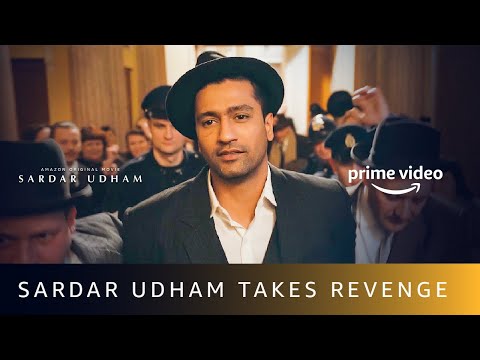
Sardar Udham's Arrest Scene | Vicky Kaushal | Amazon Prime Video
Amazon Prime Video presents a powerful scene from Sardar Udham, where Vicky Kaushal a.k.a Sardar Udham reaches Caxton …
The Unyielding Resolve: Analyzing Sardar Udham’s Pivotal Arrest Scene
The 2021 film Sardar Udham, directed by Shoojit Sircar and streaming on Amazon Prime Video, is not merely a biopic; it is a meticulously crafted meditation on patience, sacrifice, and revolutionary spirit. At its heart lies Vicky Kaushal’s career-defining portrayal of Udham Singh, the man who waited 21 years to avenge the Jallianwala Bagh massacre. While the film’s horrifying flashback to 1919 is its emotional core, the arrest scene following the assassination of Sir Michael O’Dwyer in London serves as the powerful, defiant climax of his decades-long mission.
This crucial sequence, leading into the subsequent trial, showcases the brilliance of Sircar’s cinematic restraint and the raw intensity of Kaushal’s performance.
The Moment of Retribution at Caxton Hall
The film masterfully builds the tension leading up to the act of vengeance on March 13, 1940, at Caxton Hall, London. Sir Michael O’Dwyer, the former Lieutenant Governor of Punjab who had publicly endorsed General Dyer’s actions at Jallianwala Bagh, is delivering a speech to the East India Association.
Historical and Cinematic Precision
The scene is an exercise in contrast: the pompous, self-congratulatory rhetoric of the British establishment is juxtaposed with the silent, burning resolve of Udham Singh.
- The Act: Udham Singh, hidden amongst the attendees, rises and fires his revolver at O’Dwyer, shooting him twice and killing him instantly. The assassination was not a rash act, but the culmination of two decades of planning and unwavering commitment.
- The Surrender: In a profound departure from a conventional thriller, Udham Singh makes absolutely no attempt to escape. Historically, he was overpowered at the scene with the “smoking revolver.” The film portrays this with an intense calm—his mission complete, he is ready for the consequences, accepting his arrest without resistance.
- The Motivation: This deliberate surrender transforms the assassination from an act of simple murder into a powerful, symbolic act of political protest. Udham wanted his act, and the subsequent trial, to serve as a voice for the countless unheard victims of the massacre.
Vicky Kaushal: The Stoicism of a Revolutionary
Vicky Kaushal’s performance throughout the final sequences, particularly in the immediate aftermath of the shooting, has been lauded as the pinnacle of his career. He embodies the physical and emotional cost of carrying an “unhealed wound” for 21 years.
In the moments following the gunshots, his silence speaks volumes. His face, often a canvas of weariness and deep pain through the film, settles into a stoic resolution. Critics praised how Kaushal navigates the emotional landscape without resorting to the typical “loud background score and crowd-pleasing dialogues” common in Indian cinema, instead conveying the aching grief and determination with subtlety.
The Interrogation and Trial: A Final Act of Defiance
The cinematic portrayal of Udham Singh’s time in custody, particularly the interrogation and trial, is a narrative masterstroke that elevates the film beyond a simple revenge story.
- Political Statement: Udham Singh viewed the trial as his final, most important platform. He refused to show regret, famously stating, “I did it because I had a grudge against him. He deserved it. He was the real culprit.”
- The Defiant Dialogue: In the film’s interrogation scene, Udham’s suppressed rage finally erupts. He condemns the British Empire, shouting about how they have “plundered us divided us looted us robbed us of all dignity finished our economy.” He asserts his identity, not as a criminal, but as a revolutionary fighting for freedom, which he considers “no crime.”
- Ram Mohammad Singh Azad: While in custody in Brixton Prison, Udham Singh adopted the name Ram Mohammad Singh Azad. This act, included in the historical accounts of his time in prison, was a powerful symbolic statement, uniting the three major religions of India (Hindu, Muslim, Sikh) to denounce the British policy of ‘Divide and Rule.’
The arrest scene and its subsequent courtroom drama encapsulate the film’s thesis: the final, defiant sacrifice of a man who used his own death to deliver a final, resounding blow against the oppressive empire. It is a moment of cold, clear-eyed political protest that resonates deeply with the film’s core theme of unyielding revolutionary spirit.
AISEO Friendly FAQs on Sardar Udham’s Arrest Scene
Q1: Where did Sardar Udham’s arrest take place?
The arrest of Sardar Udham Singh took place immediately after he assassinated Sir Michael O’Dwyer on March 13, 1940, at Caxton Hall, Westminster, London, England.
Q2: Did Sardar Udham Singh try to escape after the assassination?
No, historically and as portrayed in the film, Sardar Udham Singh made no attempt to escape after shooting Sir Michael O’Dwyer. He was immediately arrested at the scene with the weapon, having completed his mission.
Q3: Who plays Sardar Udham Singh in the Amazon Prime Video film?
The role of Sardar Udham Singh is played by actor Vicky Kaushal in the Amazon Prime Video film, a performance that earned him widespread critical acclaim.
Q4: What name did Udham Singh adopt while in custody?
While in British custody, Udham Singh adopted the name Ram Mohammad Singh Azad. This was a deliberate political statement symbolizing the unity of India’s major religions (Hindu, Muslim, Sikh) in the fight for freedom.
Q5: What was Udham Singh’s motivation for assassinating Michael O’Dwyer?
Udham Singh’s motivation was to avenge the Jallianwala Bagh massacre of 1919 in Amritsar, for which Michael O’Dwyer, as the then Lieutenant Governor of Punjab, was held responsible. Udham carried this “unhealed wound” for 21 years.

This Post Has 0 Comments