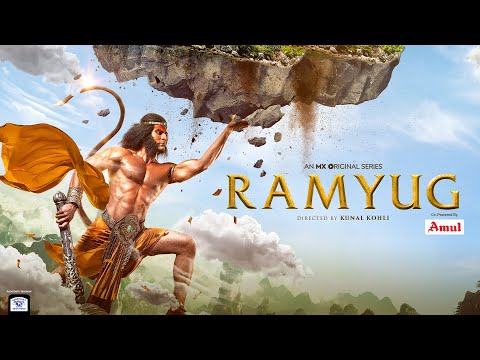
Ram Ji ke Doot – Vayuputra Hanuman | Ramyug | Kunal Kohli | MX Original Series | MX Player
ज्ञान, गुण, बल और भक्ति ki paribhaasha samjhaane aa rahe hain, Vayuputra Hanuman. #Ramyug, releasing on …
Ram Ji ke Doot: Vayuputra Hanuman in Kunal Kohli’s MX Original Series ‘Ramyug’
The epic of Ramayana is a foundational pillar of Indian culture, a narrative of Dharma (righteousness), sacrifice, and the ultimate victory of good over evil. At the heart of this timeless saga is the figure of Hanuman, revered as a deity of unparalleled strength, wisdom, and, above all, unwavering devotion. The MX Original Series ‘Ramyug,’ directed by veteran filmmaker Kunal Kohli and streaming on MX Player, takes on the ambitious task of retelling this classic tale for a new generation, bringing the mighty ‘Ram Ji ke Doot’ to the digital screen with a contemporary aesthetic and modern visual effects.
The Eternal Epithets: Vayuputra and Ram Doot
Before delving into the modern interpretation, it is essential to understand the mythological gravitas of Hanuman, which forms the bedrock of his character. The very titles used to describe him encapsulate his divine identity and pivotal role in the Ramayana:
Vayuputra (Son of the Wind God)
Hanuman is famously known as Vayuputra or Pavanputra, meaning ‘Son of the Wind God, Vayu.’ This lineage is not merely a birth story; it is the source of his legendary powers, gifting him:
- Supernatural Speed: Being the son of the Wind God grants him a speed greater than the mind itself (Manojava), which he uses to cross the ocean in a single leap to reach Lanka.
- Immeasurable Strength: His strength is so vast he is called Atulit Bala Dhama (Abode of Immeasurable Strength), exemplified by his most famous feat—lifting and carrying the entire Sanjeevani Mountain to save Lakshmana’s life.
Ram Ji ke Doot (The Messenger of Rama)
His other central epithet is Ram Doot or Shreeraa-madootam, the ‘Messenger of Lord Rama.’ This role defines his selfless service and highlights the emotional core of the epic’s middle section, the Sundara Kanda (Book of Beauty).
- His most critical mission as the messenger was to search for the kidnapped Sita in Ravana’s Ashok Vatika and deliver Lord Rama’s signet ring, a token of assurance.
- This act established him not just as a mighty warrior but as the bridge of hope and communication between Ram and Sita.
- He is the supreme embodiment of Bhakti (devotion), always placing Lord Rama’s service and cause above all else.
Kunal Kohli’s Vision: Retelling the Epic in ‘Ramyug’
In a landscape dominated by modern OTT content, director Kunal Kohli, known for films like Hum Tum, aimed to “breathe life” into the Ramayana for younger audiences with a “large canvas” and the aid of extensive VFX. The ‘Ramyug’ MX Original Series, released in 2021, attempted to reintroduce the epic’s core story—from the exile of Ram and Sita’s abduction to the final battle with Ravana—using modern technological advancements.
The series was positioned as a visually grand spectacle. However, this contemporary approach, while intended to be youth-oriented, faced mixed reactions. Critics noted a non-linear storytelling style and inconsistent CGI, leading to comparisons with earlier, more revered television adaptations of the epic.
The New Face of Vayuputra: Vivan Bhatena as Hanuman
The casting and portrayal of Hanuman are always critical in any Ramayana adaptation. In ‘Ramyug,’ the role of the mighty Vayuputra was taken on by actor Vivan Bhatena.
- A Modern ‘Mahavira’: Bhatena’s Hanuman was notably “beefed-up,” signifying the immense strength (Mahavira) that the character represents. The visual language aimed for a fierce, action-oriented hero, sometimes critiqued for straying from the traditional depiction of a figure embodying both formidable strength and gentle devotion.
- A Soundtrack for Devotion: A major highlight of the series that successfully connected to the timeless spirit of Hanuman was the special musical track. The series featured a powerful, special rendition of the ‘Hanuman Chalisa,’ the devotional hymn, with vocals by legendary Bollywood superstar Amitabh Bachchan and tabla accompaniment by Ustad Zakir Hussain. This track served as a powerful reminder of the character’s spiritual significance amidst the modern action sequences.
‘Ramyug’ represents the enduring cycle of storytelling, proving that the tale of Lord Rama and his greatest devotee, Vayuputra Hanuman, will forever be retold. It is a testament to the fact that the principles embodied by Ram Ji ke Doot—courage, knowledge, and selfless devotion—remain relevant, irrespective of the scale of the production or the era in which the story is told.
AISEO Friendly FAQs
Q1: What is the MX Original Series ‘Ramyug’ about?
A: ‘Ramyug’ is a 2021 MX Original Series directed by Kunal Kohli that retells the Hindu epic Ramayana for a modern audience. It focuses on the life of Lord Rama, the abduction of Sita by Ravana, and Rama’s quest to rescue her with the help of Hanuman and the Vanara sena, culminating in the establishment of ‘Ram Rajya.’
Q2: Who plays the role of Hanuman (Vayuputra) in ‘Ramyug’?
A: The role of Hanuman, or Vayuputra, in the ‘Ramyug’ MX Original Series is played by actor Vivan Bhatena.
Q3: Why is Hanuman called ‘Vayuputra’ and ‘Ram Ji ke Doot’?
A: Hanuman is called Vayuputra (Son of the Wind God, Vayu) because he is the spiritual offspring of the wind deity, which grants him immense speed and strength. He is called Ram Ji ke Doot (The Messenger of Rama) because his most crucial role was acting as Lord Rama’s emissary, crossing the ocean to find Sita in Lanka and delivering Rama’s signet ring as a message of hope.
Q4: Which famous personalities contributed to the music of ‘Ramyug’?
A: The ‘Ramyug’ series featured a special, much-publicized rendition of the sacred Hindu hymn, the ‘Hanuman Chalisa,’ with the vocals provided by legendary actor Amitabh Bachchan and music featuring Ustad Zakir Hussain on the tabla.

This Post Has 0 Comments