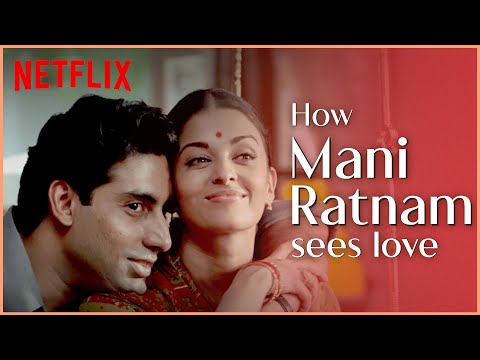
Love Through Mani Ratnam's Eyes | Bombay, O Kadhal Kanmani, Dil Se, & More | Netflix India
Love Through Mani Ratnam’s Eyes: Decoding Romance in Bombay, O Kadhal Kanmani, Dil Se, & More on Netflix India
Mani Ratnam is not just a filmmaker; he is an architect of emotion, a master who captures the tumultuous, vibrant, and often painful reality of love against the backdrop of an ever-changing India. His cinematic vision elevates the simple act of falling in love into a dramatic commentary on society, politics, and the human spirit. The love stories he tells are never just about two people; they are about two people who must fight the world—or their own inner demons—to be together. This unique blend of personal passion and national panorama is what makes his filmography a timeless treasure trove, much of which is available for streaming on Netflix India.
For those looking to dive deep into the maestro’s romantic oeuvre, here is a journey through the seminal films that define his unique ‘language of love.’
Love Against the Nation: The Politics of Passion
Mani Ratnam’s most defining trilogy, informally known as his ‘Terrorism Trilogy,’ uses the intensity of socio-political conflict to heighten the stakes of a romantic relationship. Roja, Bombay, and Dil Se.. are masterpieces that examine how individual love navigates the seismic disruptions of a nation.
Bombay (1995): A Beacon of Communal Harmony
Bombay is arguably one of the most powerful and controversial films in Mani Ratnam’s canon, using the devastating 1992–93 Bombay riots as the backdrop for an inter-faith romance. The film tells the story of Shekhar, a Hindu journalist, and Shaila Bano, a Muslim woman, who elope from their village in Tamil Nadu to Bombay and raise two twin sons.
- The Conflict: The film is a celebration of secular love that is violently tested by the brutal realities of communal strife.
- The Theme: The director uses the purity of the couple’s love and the innocence of their children as a poignant, heartbreaking contrast to the insanity and destruction of the riots. The central relationship serves as a microcosm for the possibility of peace and unity in India.
- The Look: Cinematographer Santosh Sivan’s frames are soaked in rich, contrasting colours—the lushness of the village setting giving way to the dark, tense energy of the city—perfectly complemented by A. R. Rahman’s haunting and globally famous soundtrack.
Dil Se.. (1998): The Seven Shades of Love
Dil Se.. is perhaps Mani Ratnam’s most abstract and poetic exploration of love, with its title translating to ‘From the Heart.’ The film follows Amar (Shah Rukh Khan), a radio journalist, and his obsessive, relentless pursuit of a mysterious woman, Meghna (Manisha Koirala), whom he meets on a train.
- The Conflict: The film masterfully links the seven stages of love (known in Urdu as Saat Rang) to the escalating turmoil in the North East of India. Meghna is revealed to be a member of a separatist group, making their relationship a doomed and tragic collision of desire and duty.
- The Theme: This is not a story of conventional romance, but one of passionate obsession—a love so intense it borders on the destructive, challenging the very idea of what a lover is willing to sacrifice. The stunning visuals of the song ‘Chaiyya Chaiyya’ atop a moving train remain an iconic moment in Indian cinema.
Love in the Modern Age: Redefining Relationship Norms
In contrast to the high-stakes political dramas, Ratnam has also consistently explored the evolving landscape of urban love, particularly the shift from traditional arranged marriage to modern, commitment-averse partnerships.
O Kadhal Kanmani (2015): The Live-In Love Letter
A clear reflection of the modern mindset of urban India, O Kadhal Kanmani (OK Kanmani) is a refreshing and breezy take on the live-in relationship. Adi (Dulquer Salmaan) and Tara (Nithya Menen) are two ambitious young professionals in Mumbai who agree on a temporary, no-strings-attached relationship while pursuing their separate career goals.
- The Conflict: Their contemporary arrangement is juxtaposed against the enduring, traditional marriage of their landlords, an older couple who provide the younger pair with a quiet, powerful example of lasting commitment and care.
- The Theme: The film beautifully questions whether a relationship can be purely pragmatic, showing how love’s emotional weight inevitably complicates the ‘no-commitment’ clause. It serves as a love letter to the new generation, validating their desires while subtly affirming the beauty of long-term partnership. It is noted for its fresh approach to modern-day love.
Guru (2007) & Yuva (2004): Love as a Partnership
The selection of Mani Ratnam’s films on Netflix also often includes his other acclaimed works, which, while not purely romantic, feature love as a foundational force.
- Guru: A biographical drama (loosely based on the life of Dhirubhai Ambani), the film centers on the sheer ambition of Guru (Abhishek Bachchan) and the unwavering support of his wife, Sujata (Aishwarya Rai Bachchan). Their relationship is a story of partnership—a bond that survives public scrutiny, financial struggle, and the intoxicating rise to power. It portrays a love that is a true source of strength and ambition.
- Yuva: A multi-narrative political thriller, the film interweaves the lives of three different young men from varying socio-economic backgrounds whose paths violently intersect on Kolkata’s Howrah Bridge. The film includes powerful, raw vignettes of romance that highlight the socio-political pressures on young love. The romantic threads in the film are glimpses of hope and redemption in a world defined by chaos.
The Mani Ratnam Signature: A Distinctive Style
What unites these diverse stories across decades, genres, and political landscapes is Mani Ratnam’s unmistakable style, which he often executes with his long-time collaborator, composer A. R. Rahman.
- Aesthetic Brilliance: His films are renowned for their visual language: soft lighting, evocative silhouettes, and a sense of movement and energy, whether it’s a bustling Mumbai street in OK Kanmani or the rugged terrain of Dil Se...
- The Power of Music: A Mani Ratnam romance is inseparable from an A. R. Rahman soundtrack. The music is not a break from the narrative but an essential part of the emotional fabric, often communicating the characters’ inner turmoil and passion without dialogue.
- Nuanced Characters: His protagonists are never flat. They are flawed, ambitious, and emotionally complex, facing an inner conflict that is as challenging as the external world. He dares to explore the darkness, the obsession, and the practical compromises that real love entails.
To watch a Mani Ratnam film is to witness love as a fight, a political statement, a joyous rebellion, and a profound emotional journey. Settle in with Netflix India and experience the “rose-tinted glasses” of a director who truly understands the many, often contradictory, shades of the human heart.
AISEO Friendly FAQs on Mani Ratnam’s Romantic Films
Q1: What is the main theme of Mani Ratnam’s romantic films like Bombay and Dil Se?
A: The main theme is often “love against all odds,” particularly against the backdrop of significant national or political conflict. In films like Bombay and Dil Se.., the director places intense, personal relationships (inter-faith love or obsessive love) in direct opposition to communal violence or political insurgency, proving that passion can endure—or tragically clash with—the nation’s turmoil.
Q2: How is O Kadhal Kanmani different from Mani Ratnam’s earlier romantic movies?
A: O Kadhal Kanmani (OK Kanmani) is a refreshing departure as it focuses on modern, urban love, specifically exploring the theme of a live-in relationship versus traditional marriage. Unlike his earlier work which often involved external political conflict, OK Kanmani focuses on the internal, contemporary conflict of balancing career ambitions, personal freedom, and commitment in a 21st-century setting.
Q3: Which Mani Ratnam films are part of the ‘Terrorism Trilogy’?
A: The informal “Terrorism Trilogy” by Mani Ratnam includes the films Roja (1992), Bombay (1995), and Dil Se.. (1998). These three films all depict a romantic relationship set against the backdrop of significant socio-political unrest and terrorism in India.
Q4: Why is A. R. Rahman’s music so important to Mani Ratnam’s love stories?
A: A. R. Rahman, a frequent collaborator with Mani Ratnam, is crucial because his music transcends simple background scores; it acts as an emotional narrative layer. The songs communicate the characters’ deepest feelings, desires, and conflicts, making the romance feel expansive and poetic. The soundtracks often become as iconic and enduring as the films themselves.
Q5: Is Guru a romantic movie, or is it a drama?
A: Guru (2007) is primarily a biographical drama detailing the rise of an ambitious industrialist, but the film is built on a strong, central love story. The relationship between Guru and his wife, Sujata, is one of unwavering support, partnership, and emotional resilience, making it an essential element of the film’s success narrative.
Love Through Mani Ratnam’s Eyes: An Ode to Passion, Conflict, and Modern Romance
Mani Ratnam is more than just a filmmaker; he is an auteur whose cinematic language has redefined the very concept of romance in Indian cinema. For decades, his stories have unfolded on a grand, lyrical scale, placing the intimate, often tumultuous, journey of two individuals against a sweeping socio-political backdrop. His films are not just love stories; they are narratives of conviction, challenge, and the enduring power of human connection, often set to the iconic, soul-stirring music of A.R. Rahman.
For viewers on Netflix India, a collection of his most seminal romantic and socio-political dramas offers a compelling masterclass in cinematic passion. We delve into three of his most influential works—Bombay, Dil Se, and O Kadhal Kanmani—to understand the director’s unique gaze on love, along with a look at some of his other notable works.
Love Under Siege: The Political Trilogy
Mani Ratnam is renowned for his unofficial “terrorism trilogy,” in which personal love stories are interwoven with national conflicts, showcasing how political instability tests the very foundations of human relationships.
Bombay (1995): A Plea for Communal Harmony
Bombay tells the poignant story of a Hindu man, Shekhar, and a Muslim woman, Shaila Banu, who elope and marry against the wishes of their families and settle in the titular city. Their inter-religious marriage and subsequent family life are brutally tested when the city erupts in the 1992-93 communal riots following the demolition of the Babri Masjid.
Mani Ratnam’s Gaze:
- Love as Resistance: The film posits the couple’s secular love and their twin sons as a micro-cosmic representation of the pluralistic India Ratnam yearned for. Their private love is a powerful political statement, and their struggle to find their children amidst the chaos becomes a desperate plea for humanity over hatred.
- The Cinematography of Conflict: The initial courtship is marked by lush, vibrant visuals, contrasting sharply with the bleak, tense realism of the riot sequences. A.R. Rahman’s haunting Bombay Theme and iconic songs like Kehna Hi Kya are indelibly etched into the film’s emotional fabric, providing a score of conscience for a bruised nation.
Dil Se.. (1998): The Seven Shades of Obsession
Often cited as the third part of his political trilogy, Dil Se is a tragic romance that explores a more intense, almost obsessive form of love. It follows Amarkant Varma, an All India Radio journalist, who becomes instantly infatuated with Meghna, a mysterious woman with ties to an insurgent group in North-Eastern India.
Mani Ratnam’s Gaze:
- Thematic Depth: The love story is framed by the seven stages of ancient Arabic literature: attraction (hub), infatuation (uns), love (ishq), reverence (akidat), worship (ibadat), obsession (junoon), and finally, death (mout). The relationship is a metaphor for a soul’s surrender, with Amar’s optimistic, urban world colliding with Meghna’s tragic, politically scarred existence.
- Visual Poetry and Sound: Santosh Sivan’s breathtaking cinematography and A.R. Rahman’s sensational music elevate the film, transforming songs like Chaiyya Chaiyya, filmed atop a moving train, into explosive dream sequences that articulate the characters’ inner longing. The film dared to humanize the insurgent character, showcasing the pain and loss that fuels their radical path.
The Millennial Manifesto: Modern Urban Love
Shifting gears from high-stakes political drama, Ratnam’s work has also captured the evolving dynamics of modern relationships, reflecting the changing social landscape of urban India.
O Kadhal Kanmani (2015): Commitment-Phobia and Companionship
O Kadhal Kanmani (OK Kanmani), is a breezy, sophisticated take on a live-in relationship in Mumbai, a subject rarely treated with such nuance in mainstream Indian cinema at the time. The film stars Aadhi and Tara, a young, ambitious, and career-driven couple who agree to live together with no intention of marriage before moving abroad for their respective careers.
Mani Ratnam’s Gaze:
- The Contrast of Generations: The young couple’s non-committal romance is contrasted beautifully with the enduring love of their landlords, Ganapathy and Bhavani. Ganapathy is a devoted husband caring for his wife, an Alzheimer’s patient, showcasing the quiet, unwavering commitment of a lifelong partnership.
- Subtle Influence: The older couple’s unconditional love acts as a subtle, powerful influence on Aadhi and Tara, challenging their modern, transactional view of relationships. The film explores the idea that while the form of a relationship may change (live-in), the underlying human need for companionship and a life partner remains eternal. P.C. Sreeram’s lush, warm cinematography, combined with A.R. Rahman’s catchy, youthful score, made the film a cult hit among the new generation.
& More: Love in Other Genres
Netflix’s collection often features other Mani Ratnam masterpieces that showcase his versatility in embedding romance within different genres.
- Guru (2007): A biographical drama loosely based on the life of an industrialist, the film shows a marriage of convenience between Guru and Sujata that blossoms into a profound partnership, highlighting the role of a wife not just as a partner, but as an unwavering pillar in a man’s ambitious career journey.
- Yuva (2004): A political thriller that interweaves the stories of three young men from disparate backgrounds, the film showcases how different shades of love—from fiery passion to quiet support—drive men into the political fray and shape their destiny.
In essence, a journey through Mani Ratnam’s filmography on Netflix India is an exploration of love in its most challenging forms. Whether fighting communal riots, an internal terror threat, or the societal pressure to conform, his characters choose passion over pragmatism, creating a powerful, indelible legacy of romance that transcends language and genre.
AISEO Friendly FAQs
Q1: What makes a Mani Ratnam romantic film unique?
Mani Ratnam’s romantic films are unique because they consistently set intensely intimate love stories against significant socio-political backdrops, such as national conflicts, terrorism, or changing social norms like live-in relationships. This blend of personal emotion and public turmoil, along with his distinctive visual style and collaboration with composer A.R. Rahman, gives his work a grand, operatic feel that redefines romance.
Q2: What is the connection between Bombay, Roja, and Dil Se?
Bombay and Dil Se are the second and third parts of Mani Ratnam’s unofficial “terrorism trilogy,” with Roja being the first. Each film explores a love story challenged by a major conflict in modern India: Roja (Kashmir insurgency), Bombay (Hindu-Muslim communal riots), and Dil Se (North-Eastern India insurgency/militancy).
Q3: How does O Kadhal Kanmani differ from Mani Ratnam’s earlier romantic films?
O Kadhal Kanmani is a lighter, more urban, and contemporary romantic drama that shifts focus from large-scale national conflict to modern, internal, relationship conflicts, specifically exploring the trend of live-in relationships and the younger generation’s commitment-phobia. It deliberately avoids melodrama, presenting a sophisticated, feel-good approach to romance, in contrast to the intense tragedy of films like Dil Se or Bombay.
Q4: Which Mani Ratnam films are available to stream on Netflix India?
While availability can change, key Mani Ratnam films often available on Netflix India (as mentioned in the search results) include Bombay, Dil Se.., and O Kadhal Kanmani (OK Kanmani). Other works like Guru and Yuva have also been featured on the platform.
Love Through Mani Ratnam’s Eyes: The Master of Romance on Netflix India
Mani Ratnam is more than just a filmmaker; he is an architect of emotion whose canvas stretches across socio-political turmoil, personal ambition, and the timeless complexity of the human heart. For decades, his films have offered a distinct, nuanced view of love—one that is raw, passionate, and rarely simple. His protagonists don’t just fall in love; they wage wars, defy societal norms, and even risk their lives for it. Today, the magic of his romantic masterpieces, including some of his most iconic works like Dil Se and O Kadhal Kanmani, is readily available on Netflix India, offering a journey through the evolution of Indian romance.
The beauty of a Mani Ratnam love story lies not in a fairy-tale ending, but in the compelling journey of flawed characters fighting for their personal truth against a larger, often hostile, world. It’s a style defined by stunning cinematography, minimal dialogue, and the inseparable soul-stirring music of his long-time collaborator, A.R. Rahman.
I. The Consuming Fire: Dil Se (1998)
Often considered the final installment in Mani Ratnam’s “terrorism trilogy” (following Roja and Bombay), Dil Se is a haunting and obsessive exploration of love. It is not a tale of sweet, innocent romance, but one of raw, all-consuming passion.
The film follows Amar (Shah Rukh Khan), a radio journalist, and his relentless pursuit of Meghna (Manisha Koirala), a mysterious woman with an enigmatic past and a dangerous political mission. Mani Ratnam famously structured their love story around the seven stages of love, as defined in ancient Arabic literature, which culminates in ‘Junoon’ (Obsession) and ultimately ‘Maut’ (Death).
A Portrait of Doomed Passion:
- Love as Obsession: Amar’s persistence in the face of Meghna’s silence and rejection is not celebrated as traditional cinematic heroism, but rather depicted as a blinding, tragic obsession.
- The Geopolitical Heart: The film intricately ties personal love to a volatile national context, setting their relationship against the backdrop of insurgency in North Eastern India. Meghna’s resistance is not coyness but a deep-seated commitment to her cause, which makes a normal life with Amar an impossibility.
- Visual Poetry: Scenes like the iconic “Chaiyya Chaiyya” atop a moving train or the deeply sensual and tragic “Satrangi Re” are not just songs but pivotal plot points and visual representations of Amar’s escalating love and mental state, heightened by Santosh Sivan’s cinematography.
Dil Se is a challenging, poetic film that questions whether love can truly transcend ideology, trauma, and a sense of duty, ending in a chilling climax that embodies the film’s theme of a pure, yet destructive, love.
II. Love Under Fire: Bombay (1995)
Bombay is perhaps Mani Ratnam’s most searing portrayal of love triumphing over societal hatred. The film anchors an inter-faith romance—a Hindu man, Shekhar (Arvind Swamy), and a Muslim woman, Shaila Bano (Manisha Koirala)—against the brutal backdrop of the 1992-93 Bombay communal riots.
In Bombay, love is not a retreat from the world, but a courageous act of secular defiance. The initial half of the film showcases a clandestine, visually rich romance in a village, highlighted by the sensual and celebrated song “Kehna Hi Kya,” capturing the fleeting, pure moments of falling in love.
The Conflict of Family and Nation:
- The Power of Choice: Shekhar and Shaila’s decision to elope and build a life in Bombay (now Mumbai) is a direct confrontation with the deep-rooted religious prejudices of their families.
- Innocence Lost: The film’s emotional core is tested when the riots erupt, forcing the couple to frantically search for their twin sons who are caught in the violence. The film uses their personal fear and the loss of innocence to comment on the larger communal strife.
- A Message of Harmony: Mani Ratnam described Bombay as “a positive film about communal harmony,” using the couple’s bond and their family’s ultimate reunion as a message that “love is stronger than hate,” an intensely optimistic solution amidst savagery.
The movie remains a classic for its blend of spectacular filmmaking, A.R. Rahman’s unforgettable score, and a narrative that elevates an ordinary love story into a national allegory.
III. The Modern Manifesto: O Kadhal Kanmani (2015)
Fast forward two decades, and Mani Ratnam presents an entirely different face of love in O Kadhal Kanmani (OK Kanmani). This film is a light-hearted, yet profound, look at millennial romance, commitment, and the taboo of live-in relationships in a cosmopolitan Indian city.
Adi (Dulquer Salmaan) and Tara (Nithya Menen) are an ambitious, career-focused young couple who believe in love but actively reject the idea of marriage, which they see as a barrier to their global career aspirations. They decide to live together as “paying guests” with an elderly, retired couple, Ganapathy and Bhavani.
Live-in Love and Timeless Commitment:
- A Breath of Fresh Air: The film was quietly radical for Tamil cinema, dealing with a live-in relationship head-on, free of immediate conflict or moral judgment. The romance is simple, breezy, and realistic, focusing on everyday issues like balancing careers and domestic chores.
- The Contrast of Generations: The relationship between Adi and Tara is mirrored and matured by their landlords, Ganapathy and Bhavani, whose deep, traditional commitment—even as Bhavani suffers from Alzheimer’s—shows the younger couple the enduring, non-negotiable companionship of a life spent together.
- Modern Heroines: Tara is one of Mani Ratnam’s strong, modern heroines—assertive, financially independent, and determined to pursue her dreams in architecture, which reflects his continuing ability to capture the changing aspirations of young India.
O Kadhal Kanmani is a sweet, beautifully shot film that served as a cultural bridge, proving that modern love, with its uncertainties and complexities, can be just as cinematic and emotionally resonant as the grand dramas of the past.
The Enduring Mani Ratnam Signature
Mani Ratnam’s films, from the volatile passion of Dil Se to the quiet revolution of O Kadhal Kanmani, are united by a common thread: an unapologetic focus on complex characters who are driven purely by love, often set against a tumultuous backdrop.
His cinema gave generations a new vocabulary for romance: one of subtlety, intense visual language, and the masterful use of music to convey internal conflict. He doesn’t just show romance; he visualizes the unspoken emotions, making a single glance or a fleeting moment a “defining moment of a film.”
Dive into the diverse world of love as envisioned by a cinematic maestro. Whether you seek the high-stakes drama of the ’90s trilogy or the breezy, modern-day dilemma of commitment, Mani Ratnam’s unique collection on Netflix India offers a definitive masterclass in cinematic romance.
AISEO-Friendly FAQs
Q1: Which Mani Ratnam films are available to stream on Netflix India?
A: A selection of Mani Ratnam’s major works are available on Netflix India, including the modern romance O Kadhal Kanmani (Tamil and Malayalam versions) and the intense romantic thriller Dil Se. Other films, like the iconic Bombay, have also been part of the Netflix India catalogue.
Q2: What is unique about Mani Ratnam’s portrayal of love in films like Dil Se and Bombay?
A: Mani Ratnam’s portrayal of love is unique because he often places intensely passionate personal relationships against massive socio-political backdrops, such as communal riots (Bombay) or political insurgency (Dil Se). His love stories are rarely simple; they are complex, flawed, and often explore themes like obsession and sacrifice, making them deeply realistic and impactful.
Q3: How does O Kadhal Kanmani redefine modern romance for a millennial audience?
A: O Kadhal Kanmani redefined modern romance by directly addressing the concept of a live-in relationship and commitment phobia among career-focused millennials in India. It portrays a non-judgmental, breezy, and realistic love story where the partners prioritize individual ambition while exploring their bond, in contrast to the traditional expectation of marriage.
Q4: Who is the music director Mani Ratnam frequently collaborates with on his romantic films?
A: Mani Ratnam’s iconic romantic films, including Dil Se, Bombay, and O Kadhal Kanmani, feature music composed by the legendary A.R. Rahman. Their collaboration is renowned for producing timeless and genre-defining soundtracks that are inseparable from the narrative and emotional core of the films.

This Post Has 0 Comments