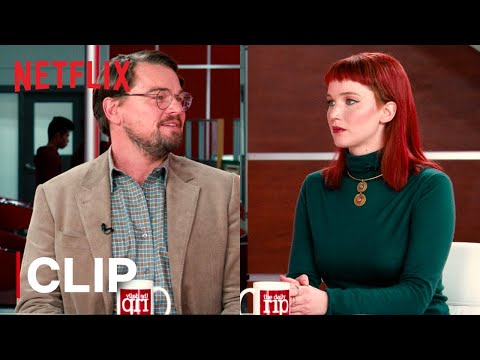
Leonardo DiCaprio & Jennifer Lawrence's Interview Goes Wrong! | Don’t Look Up | Netflix India
The Interview That Didn’t Go Wrong (But Was Meant To): Deconstructing the Viral Buzz Around Leonardo DiCaprio & Jennifer Lawrence’s Don’t Look Up Press
The internet loves a scandal, and few things generate buzz like a high-profile interview “going wrong,” especially when A-list stars like Leonardo DiCaprio and Jennifer Lawrence are involved. The title—”Leonardo DiCaprio & Jennifer Lawrence’s Interview Goes Wrong! | Don’t Look Up | Netflix India”—is a perfect piece of clickbait, promising a dramatic clash between the two megastars during their press tour for the Netflix dark comedy, Don’t Look Up.
However, the real story is far more nuanced, and in a way, much more interesting. The viral chatter doesn’t refer to a disastrous real-life press junket, but rather to a combination of a scene within the movie and a single, lighthearted anecdote that perfectly encapsulates the film’s message about a media-obsessed world.
The Real ‘Interview Gone Wrong’: The Morning Show Scene
The most direct inspiration for the dramatic headline is likely a memorable, deeply uncomfortable sequence in the film itself, which was highlighted in a promotional feature for Netflix India. In the movie, astronomy student Kate Dibiasky (Jennifer Lawrence) and her professor Dr. Randall Mindy (Leonardo DiCaprio) discover a planet-killer comet hurtling toward Earth and are sent on a frantic media tour to warn humanity.
Their pivotal moment comes when they appear on the incredibly polished and vapid morning show, The Daily Rip, hosted by the overly cheerful duo, Brie Evantee (Cate Blanchett) and Jack Bremmer (Tyler Perry).
The segment is a masterclass in tone-deaf media interaction and is the definition of an interview that “goes wrong” for the scientists:
- Kate’s Rage: Lawrence’s character, Kate Dibiasky, is frustrated by the hosts’ trivializing of an extinction-level event. Her raw, panicked attempts to communicate the severity of the comet are met with uncomfortable smiles and a dismissal of her “unhinged” behavior. She ends up shouting, “We’re trying to tell you that the entire planet is about to be destroyed!” only to be mocked by the public.
- Randall’s Transformation: DiCaprio’s Dr. Mindy attempts to keep his composure, but his initial scientific caution is soon replaced by panic and, later, a desperate attempt to become “media savvy” to get the message across.
- The Media’s Distraction: The hosts are more concerned with keeping the “bad news light” and quickly pivot to celebrity gossip, specifically the relationship drama of pop star Riley Bina (Ariana Grande), completely marginalizing the world-ending scientific discovery.
Netflix India even produced a popular “Shot by Shot” video where DiCaprio and Lawrence broke down this specific “Morning Show Freakout” scene, discussing its improvisational elements and the deliberate awkwardness, which is likely where the sensationalized title originated. The “wrong interview” was not a publicity disaster, but a powerful, planned sequence central to the film’s satire.
Jennifer Lawrence’s Lighthearted “Hell” Anecdote
Another moment that was highly publicized and could feed into the narrative of a difficult press tour was Jennifer Lawrence’s self-deprecating comment about her co-stars. During a promotional interview, Lawrence joked that one particular day of filming a car scene with DiCaprio and Timothée Chalamet was “the most annoying day of my life” and “hell.”
The context, however, was anything but scandalous:
- The Cause of the ‘Misery’: Lawrence clarified that Chalamet was simply over-excited to be out of the house after the pandemic lockdown, and DiCaprio had chosen a song to play in the car that she found particularly irritating.
- An Expression of Chemistry: The anecdote, far from suggesting animosity, actually highlights the easy, improvisational, and high-energy atmosphere on the set, something DiCaprio himself praised, calling Lawrence’s ability to improvise and be “so in the moment” amazing.
The media’s immediate focus on the word “hell” transformed a simple, funny, behind-the-scenes story into a misleading headline about co-star friction.
Beyond the Buzz: The Core Message of Don’t Look Up
The sensational headlines, whether misinterpreting an in-movie scene or a lighthearted anecdote, ironically prove the film’s central point: in the age of social media and relentless news cycles, urgent truth is easily overshadowed by distraction and trivial drama.
Don’t Look Up, directed by Oscar-winner Adam McKay, is a scathing black comedy that uses the impending comet as a clear allegory for the climate crisis and the modern world’s general inability to deal with major, inconvenient truths.
The film explores how science gets “politicized” and “marginalized” in the mainstream news cycle. DiCaprio, a long-time climate activist, said he was drawn to the film because it gave a voice to climate scientists who struggle to convey the urgency of their findings to a distracted public. Lawrence echoed this sentiment, calling it “sad and frustrating” to watch people who dedicate their lives to the truth be turned away because “people don’t like what the truth has to say.”
The star-studded cast, which also includes Meryl Streep, Jonah Hill, Cate Blanchett, and Mark Rylance, gave McKay the gravitas to tackle such a monumental theme with dark humor, forcing the audience to “look up” at the existential threats being ignored in favor of the latest viral trend.
Ultimately, the viral headlines about an “interview going wrong” for DiCaprio and Lawrence are a perfect, meta-commentary on the movie itself. The world that Don’t Look Up satirizes—one where a minor celebrity squabble eclipses a world-ending threat—is the very world that generated the misleading headline. The interview didn’t go wrong; it simply became another example of the very thing the movie was created to criticize.
AISEO-Friendly FAQs
Q: Was there a real-life catastrophic interview between Leonardo DiCaprio and Jennifer Lawrence during the Don’t Look Up press tour?
A: No, there was no reported catastrophic interview. The viral titles likely refer to two events: the fictional, disastrous Morning Show interview scene within the film, which the actors discussed in a Netflix India promotional video, and a lighthearted anecdote where Jennifer Lawrence jokingly referred to a day of filming with DiCaprio and Timothée Chalamet as “hell.”
Q: What is the Don’t Look Up scene that is often mistaken for a real interview going wrong?
A: The scene is when the two main characters, astronomers Dr. Randall Mindy (DiCaprio) and Kate Dibiasky (Lawrence), appear on a morning show called The Daily Rip to warn the public about a planet-killing comet. The hosts trivialize their discovery and focus on celebrity gossip, causing Lawrence’s character to have a very public meltdown.
Q: Why did Jennifer Lawrence say filming with Leonardo DiCaprio and Timothée Chalamet was ‘hell’?
A: Jennifer Lawrence’s comment was a joke about a specific day of filming a car scene. She explained that her co-stars were very energetic and that a song Leonardo DiCaprio chose to play in the car was annoying her, which she framed as “misery” in a humorous, exaggerated way.
Q: What is the main message of the Don’t Look Up movie?
A: Don’t Look Up is a dark comedy and a political satire. The film uses the impending comet as an allegory for the climate crisis, criticizing the media, the government, and the public for ignoring scientific truth and urgency in favor of trivial distractions, political expediency, and social media trends.

This Post Has 0 Comments