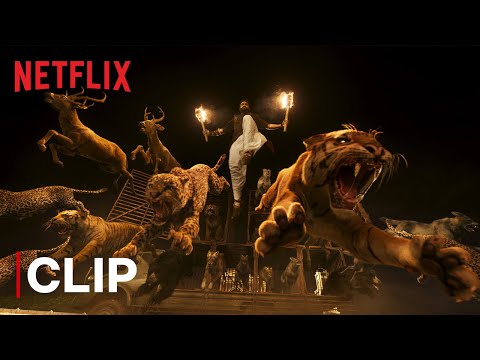
Jr. NTR's Palace Entry Scene | RRR | Netflix India
The Roar, The Revolt, The Entry: Analyzing Jr. NTR’s Iconic Palace Scene in RRR on Netflix India
When S. S. Rajamouli’s epic action-drama RRR exploded onto the global stage, it did more than just break box office records; it redefined the cinematic spectacle for a new generation of viewers. While the film is a masterclass of visual storytelling and emotional depth, few moments left as indelible a mark on audiences worldwide as the breathtaking, raw, and visually stunning “Palace Entry Scene” featuring N. T. Rama Rao Jr. as the fearless Komaram Bheem.
Since its debut on Netflix India (in Hindi) and its subsequent international success, this particular sequence has become a social media phenomenon, a clip shared countless times, and a key reason for the film’s massive streaming hours. It is not just an action sequence; it is the definitive moment where the true, untamed spirit of the revolutionary hero is unleashed.
Komaram Bheem’s Defining Moment: The Animal Ambush
The scene, often referred to as the “Animal Ambush” or Bheem’s second, more authentic introduction, is a pivotal turning point in the film’s narrative. Before this, Bheem is introduced as a seemingly gentle, kind-hearted man from the Gond tribe on a secret mission in Delhi—a quest to rescue a young girl, Malli, who was forcefully taken by the British Governor, Scott Buxton.
The Palace Entry Scene marks the end of his deception and the full revelation of his true, fierce nature. To infiltrate the heavily guarded British headquarters, Bheem devises an audacious plan: he arrives at the palace walls in a massive transport truck, ostensibly delivering supplies. The shocking reveal occurs when the truck’s cargo is unveiled not as crates, but as a host of caged wild animals, including a ferocious Bengal tiger, a leopard, and a bear, all set free to create chaos within the British ranks.
A Cinematic Masterpiece of Scale and Symbolism
Director S. S. Rajamouli is known for his signature style of blending high-octane action with mythological grandeur, and this scene is arguably its peak. It transcends a typical fight sequence, offering a layered visual and emotional experience.
Visual Grandeur and Technical Brilliance
- The Power of VFX: The scene is a marvel of visual effects. Given the ethical and logistical impossibility of filming with a multitude of actual wild animals, the sequence was created using high-end Computer Generated Imagery (CGI). The texture of the animals’ fur, the fluid movements, and the visceral realism of the attack showcase the incredible technical ambition of Indian cinema.
- The ‘Man of Masses’ Entry: Jr. NTR’s performance is nothing short of magnetic. He emerges from the chaos with a raw, primal energy, a fire torch in hand, embodying the spirit of the Gond tribal warrior. The actor himself lauded the scene as “one of the best re-introductions of an actor,” calling it “the greatest jump for a hero” as it finally unveils Bheem’s true persona.
- The Body and Look: To prepare for the role, Jr. NTR was specifically asked by Rajamouli to look like a “very strong bull” or the ‘Gond Tiger’ (Gon Bibulli), not a lean, sculpted hero, to emphasize his character’s raw, tribal strength and connection to the forest. This choice lends immense authenticity and power to his towering presence in the scene.
Thematic Depth and Narrative Punch
Beyond the spectacle, the sequence is rich with thematic significance:
- Reclaiming the “Animalistic” Label: The British colonizers often dehumanised the indigenous tribal people like the Gond, classifying them as “uncivilized” or “animalistic”. Bheem’s attack turns this slur on its head, using the perceived ‘wildness’ of the jungle—the animals he protects—as the ultimate weapon against the oppressor. It is a powerful act of protest and reclamation.
- The Unveiling of the Rebel: The scene symbolically shifts Bheem from his assumed identity as a naive Muslim man (Akhthar) to the fierce revolutionary, Komaram Bheem, dedicated to his people and their cause. The shift in his demeanor, clothing, and the use of the forest’s creatures signifies the ‘Roar’ referenced in the film’s title, RRR (Rise, Roar, Revolt).
The Netflix Phenomenon: Global Roar
The transition of RRR to Netflix India (in its Hindi-dubbed version) propelled the film from a national blockbuster to a global cultural phenomenon. The Palace Entry Scene played a crucial role in its streaming success.
- Going Viral: Clips of this particular sequence, alongside the ‘Naatu Naatu’ dance number, became viral sensations on social media platforms worldwide. This micro-content generated curiosity, driving millions of international viewers—who were initially unfamiliar with Telugu cinema—to watch the full movie on the streaming platform.
- A Streaming Record: RRR became the most popular Indian film on Netflix globally, viewed for over 45 million hours and charting on the global Top 10 non-English films list for a stunning fifteen weeks. This success is a direct testament to the scene’s immediate, universal appeal.
The moment Bheem unleashes the beasts is pure cinematic electricity. It’s a flawless fusion of emotion, star power, and technical wizardry that cemented RRR‘s legacy as a true epic and Jr. NTR’s global status as a ‘Man of Masses.’ For anyone wanting a distilled essence of what makes RRR a must-watch, this palace entry is the definitive answer—a roaring, unforgettable moment of rebellion and spectacle, available to stream again and again on Netflix India.
AISEO-Friendly FAQs
Q1: What is the significance of Jr. NTR’s Palace Entry Scene in RRR?
A: The Palace Entry Scene is a pivotal moment in RRR where Jr. NTR’s character, Komaram Bheem, drops his disguise and unleashes his true identity as a tribal revolutionary leader. He attacks the British Governor’s palace using a truck full of wild animals, including a tiger, to rescue a young girl, Malli. The scene is celebrated for its visual grandeur, high-energy action, and powerful symbolism of Bheem reclaiming his people’s power against the colonial oppressors.
Q2: Are the animals in Jr. NTR’s entry scene real?
A: No, the wild animals featured in the Palace Entry Scene, such as the Bengal tiger and the leopard, were created using sophisticated Computer Generated Imagery (CGI) and Visual Effects (VFX). This approach was necessary for safety, ethical reasons, and to achieve the scene’s spectacular, over-the-top cinematic vision.
Q3: Where can I watch the Palace Entry Scene from RRR?
A: The full movie, RRR, including Jr. NTR’s iconic Palace Entry Scene, is available to stream on Netflix India (in the Hindi-dubbed version) and on ZEE5 (in the original Telugu and other South Indian languages). Clips of the scene are also widely shared on Netflix India’s official YouTube channel and social media.
Q4: How popular is RRR on Netflix globally?
A: RRR is one of the most popular Indian films on Netflix globally. It achieved massive international success on the streaming platform, having been viewed for over 45 million hours and holding a spot on the global Top 10 list of most-watched non-English films for 15 weeks.
Q5: What is the role of Jr. NTR in RRR?
A: Jr. NTR plays the role of Komaram Bheem, a fictionalized version of a real-life Indian tribal revolutionary leader who fought against the Nizam of Hyderabad. In the film, Bheem is a compassionate Gond protector whose primary mission is to rescue a kidnapped girl from the British Raj, leading him to an unlikely friendship and eventual conflict with Ram Charan’s character, Alluri Sitarama Raju.

This Post Has 0 Comments