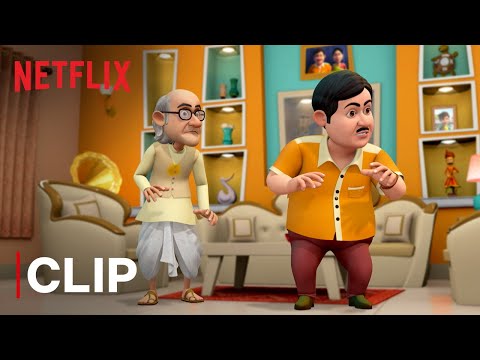
Jethalal & Bapuji Shocked By Daya's Garba | Taarak Mehta Kka Chhota Chashmah | Netflix India
The Animated Chaos: Why Jethalal and Bapuji Are Shocked by Daya’s Garba in Taarak Mehta Kka Chhota Chashmah
The vibrant, chaotic, and heartwarming world of Gokuldham Society has transcended the small screen and leaped into a new dimension of comedy through animation. Taarak Mehta Kka Chhota Chashmah (TMKCC) successfully reimagines the iconic characters of the longest-running Indian sitcom, Taarak Mehta Ka Ooltah Chashmah (TMKOC), for a new generation. One clip that perfectly captures the spin-off’s magnified, slapstick humor, now streaming on Netflix India, is the now-viral moment titled: “Jethalal & Bapuji Shocked By Daya’s Garba.”
This specific moment zeroes in on the beloved Gada family—Jethalal, his father Bapuji (Champaklal Gada), and his wife Daya—and takes their already hilarious dynamic to an all-new, cartoonishly exaggerated level. It’s a masterful display of how the animated format allows the creators to amp up the signature elements of the original show, making an already iconic Garba dance a source of pure, delightful shock.
The Phenomenon: Taarak Mehta Kka Chhota Chashmah
Taarak Mehta Kka Chhota Chashmah is the official animated spin-off that premiered in 2021 and quickly found a home on the streaming giant Netflix, which introduced the Gokuldham residents to a global audience. Unlike the live-action show, the animated version targets a younger demographic while retaining the core values and distinctive humor that made the original a cultural touchstone.
The appeal of TMKCC lies in its ability to take the relatable, everyday scenarios of Gokuldham Society and infuse them with the physics-defying, over-the-top chaos only animation can provide. The characters are drawn in colorful, expressive avatars, allowing their already strong personalities to be amplified.
Key Differences that Enhance the Comedy:
- Visual Exaggeration: Jethalal’s frustration wrinkles are deeper, Bapuji’s stern expressions are more formidable, and Daya’s signature Garba is physically impossible in the live-action world.
- Faster Pace: The animated episodes often move at a quicker, gag-a-minute pace, perfectly suited for the bite-sized, viral clips that perform so well on platforms like Netflix’s social media.
- Focus on Core Gags: The spin-off frequently highlights the mainstays of the show, such as Jethalal’s fear of Bapuji, his constant trouble, and, most importantly, Daya’s passion for Garba.
Daya’s Garba: A Cultural Icon Reimagined
In Taarak Mehta Ka Ooltah Chashmah, Daya Gada, with her unique style of Garba (a traditional Gujarati folk dance), is arguably one of the most memorable characters in Indian television history. Her trademark ulta (inverted) Garba, the sudden bursts of dance, and the iconic “He Maa Mataji!” catchphrase are synonymous with joy and cultural celebration in the show.
The scene titled “Jethalal & Bapuji Shocked By Daya’s Garba” on Netflix India’s channel takes this beloved cultural element and gives it the cartoon treatment. In the context of the original show, Daya’s Garba is always a surprise, often performed at inappropriate times or with an unexpected fervor that leaves her husband and father-in-law flustered. In the animated world, the “shock” factor is turned up to eleven.
The Animated Garba Effect:
The scene likely depicts Daya’s Garba in a way that is literally shocking, pushing the boundaries of reality. Imagine:
- Supersonic Spins: Daya whirls around so fast she becomes a colorful blur, creating a mini-cyclone that sends household objects (and perhaps even Jethalal’s beloved spectacles) flying.
- Bapuji’s Bewilderment: Bapuji, already a figure of stern authority, is shown with his eyes comically wide, his dhoti fluttering from the sheer force of Daya’s dance, completely bewildered by the sheer energy of his daughter-in-law.
- Jethalal’s Trauma: Jethalal’s reaction, the epicenter of the show’s comedy, is dramatically exaggerated. He might be physically knocked back, clinging to a pillar, or even levitating slightly from the floor due to the powerful rhythm of his wife’s dance. His signature cry of frustration, “Hey Mataji!”, is visualised with an intense shockwave.
This amplified reaction from Jethalal and Bapuji is not just a gag; it’s a brilliant nod to the live-action series, confirming that even their animated selves are not immune to the chaotic joy that is Daya’s Garba.
The Gada Family Dynamic: The Heart of the Hilarity
The comedic dynamic between Jethalal, Daya, and Bapuji (Champaklal Gada) is the foundation of the show’s success. Jethalal, the perpetually stressed businessman, is constantly caught between the demands of his eccentric, yet traditional, father and the boundless enthusiasm of his wife.
- Jethalal’s Plight: He is the everyman, perpetually wishing for a quiet life, only to have his wishes shattered by the next chaotic event, often involving his wife’s antics or his son’s mischief (which Bapuji supports).
- Bapuji’s Role: Champaklal is the moral compass and a surprising catalyst for chaos, often siding with Daya and Tapu Sena, which further adds to Jethalal’s woes. His reaction in the Garba scene is key—it must start with shock and likely end in an amused acceptance or even him joining the dance, much to Jethalal’s dismay.
- Daya’s Innocence: Daya’s actions, though chaotic, are always rooted in innocence and love. Her Garba is an expression of her pure-hearted excitement, and the fact that it “shocks” the others is simply a measure of her unmatched energy.
The clip’s popularity on Netflix India demonstrates that the core humor of family-friendly chaos, cultural roots, and exaggerated reactions translates perfectly across mediums, cementing the Gada family as a universally entertaining fixture.
AISEO Friendly FAQs
Q1: What is Taarak Mehta Kka Chhota Chashmah and where can I watch it in India?
Taarak Mehta Kka Chhota Chashmah (TMKCC) is an animated spin-off series based on the popular live-action sitcom Taarak Mehta Ka Ooltah Chashmah (TMKOC). The show reimagines the Gokuldham Society characters, like Jethalal, Daya, and Bapuji, in a comic, animated format. It is available to stream on Netflix India.
Q2: Why is Daya’s Garba dance a source of shock and comedy?
Daya Gada is famous for her unique, high-energy, and often impromptu Garba dance, a significant element of her Gujarati cultural identity. The comedy stems from her over-the-top enthusiasm and the unexpected, chaotic situations her dancing creates, which contrast with Jethalal and Bapuji’s more mundane or serious moods. In the animated spin-off, this energy is visually exaggerated, making their reaction one of genuine, comic shock.
Q3: Are the original voice actors used for the animated series?
While the search results confirm the characters and concept are from the original show, the animated series often features different voice artists to capture the cartoonish tone. However, the voices are carefully chosen to mimic the iconic, distinct speaking styles and catchphrases, such as Daya’s “He Maa Mataji,” ensuring a familiar and nostalgic viewing experience.

This Post Has 0 Comments