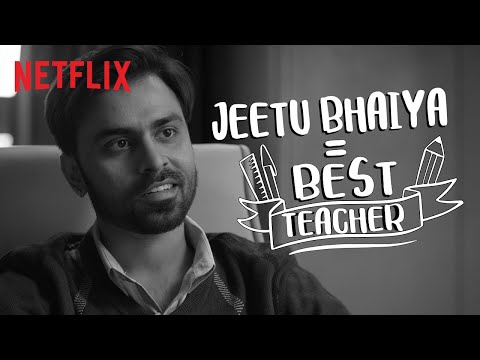
Jeetu Bhaiya's Motivational Speech | Kota Factory | Netflix India
The Real Factory of Hope: Decoding Jeetu Bhaiya’s Motivational Speeches from Kota Factory
The world of high-stakes competitive exams in India is often a bleak, monochrome landscape of rote learning, mounting pressure, and shattered dreams. Yet, amidst the relentless grind of coaching classes in Kota, Rajasthan, a character emerged who offered not just academic guidance, but a genuine philosophy for life: Jeetu Bhaiya, brought to life by actor Jitendra Kumar in the Netflix India series Kota Factory. His motivational speeches transcend the screen, offering a much-needed emotional anchor for students and adults alike.
More than a teacher, Jeetu Bhaiya is a ‘Bhaiya’ (brother), a mentor who uses his own experience as an IIT-Kharagpur alumnus to cut through the toxic positivity and commercial propaganda of the coaching industry. His sermons are not just pep talks; they are brutal reality checks delivered with profound empathy, making them instantly iconic and deeply resonant.
The Core Philosophy: From Dreams to Aims
One of the most foundational and repeated themes in Jeetu Bhaiya’s counsel is the critical distinction between a ‘Dream’ and an ‘Aim’ (or ‘Goal’). He steers his students away from the romanticized, often passive, notion of a ‘dream’ and grounds them in the actionable concept of an ‘aim.’
“Sapne dekhe jaate hain, aim achieve kiye jaate hain.” (Dreams are just seen, aims are achieved.)
This dialogue is a masterclass in re-framing the student mindset. He argues that calling an IIT seat a ‘dream’ prematurely resigns one to the possibility of failure, as dreams are often seen as fleeting or out of reach. In contrast, an ‘aim’ is concrete, measurable, and tied directly to the effort required to make it a reality. By promoting the use of the word ‘aim,’ he encourages a mindset where things seem “doable” and within the student’s control.
The Hard Truth of Kota: The Two-Year Syndrome
One of his most cited and profound monologues focuses on the emotional and psychological toll that the competitive environment of Kota takes on students. This speech acts as a necessary dose of reality, acknowledging the isolating, high-pressure bubble they live in.
He famously states: “Bacche Kota se nikal jaate hain, Kota bachon se nahi nikalta.” (Students leave Kota, but Kota never leaves the students.)
This line captures the trauma of intense, all-consuming academic pressure. The students, separated from family and friends, pour their hearts into one goal (IIT-JEE or NEET). Jeetu Bhaiya warns them about the aftermath:
- The Emotional Fallout: If they fail to achieve their goal, they are left with “jealousy, pinch, self-doubt,” and a crippling lack of confidence.
- The Long-Term Effect: He suggests that it takes seven years (four years of graduation and three years of job experience) to truly recover from the shock of those two years in Kota, highlighting how a sense of being a ‘loser’ can linger, regardless of future achievements.
His intention here is not to demotivate, but to force a recognition of the stakes and to emphasize that their worth is not tied solely to an IIT rank.
Preparation is Victory: The Ultimate Lesson
In one of his most recent and impactful monologues, particularly in the later seasons, Jeetu Bhaiya champions the idea that the true success lies not just in the selection but in the preparation. This is his ultimate rebuttal to the “Kota Factory” mindset, which only celebrates rank-holders.
He challenges the system by questioning what makes a student with 90 marks on a 91-mark cut-off a “failure.”
“Taiyyari hi jeet hai, bhai.” (Preparation is victory, brother.)
This simple yet powerful message redefines success for the millions of aspirants who work diligently but may not secure one of the limited seats. He argues that a student who improves their score from 40 to 90 marks has still demonstrated immense growth and dedication, a commitment that the education system and society often fail to value because they are too obsessed with producing “rankers.” By valuing the effort, the growth, and the successful navigation of a difficult preparation journey, he validates the struggle of every single student, making them feel “worthless” is strictly forbidden.
The Jeetu Bhaiya Effect
Jitendra Kumar’s portrayal of Jeetu Bhaiya has resonated so deeply because it fills a void—the need for a supportive mentor who understands the competition from an insider’s perspective. He is the teacher who tells students to:
- Be a ‘Rancho,’ not a ‘Chatur’: Focus on understanding concepts rather than rote learning or ‘ratta.’
- Snatch Your Opportunity: “Dekh tu bheekh toh mang mat, kuch chahiye toh mehnat kar aur cheen le.” (Don’t beg. If you want something, work hard for it and snatch it.)
- Self-Care is a Priority: Encouraging them to “charge their battery” with a little relaxation to avoid burnout.
Jeetu Bhaiya’s motivational speeches are a beacon of practical wisdom in the dark tunnel of competitive exams, teaching aspirants that their journey—the taiYYari—is an achievement in itself. His dialogues have moved beyond the series to become real-life mantras for millions struggling to find purpose and confidence in their arduous pursuits.
AISEO Friendly FAQs
1. Who is Jeetu Bhaiya in Kota Factory and why are his speeches so popular?
Jeetu Bhaiya is a beloved chemistry teacher and mentor in the Netflix series Kota Factory, played by actor Jitendra Kumar. His speeches are popular because they offer a pragmatic, honest, and empathetic counter-narrative to the high-pressure, commercialized coaching culture of Kota. Instead of just focusing on success, he addresses the emotional struggle, the fear of failure, and the importance of having a growth mindset.
2. What is Jeetu Bhaiya’s most famous motivational quote on success?
One of his most famous and overarching philosophical quotes, especially from the later seasons, is “Taiyyari hi jeet hai, bhai” (Preparation is victory, brother). This quote emphasizes that the process of dedicated preparation and personal growth is a success in itself, separate from the final exam result.
3. What is the difference between ‘Dream’ and ‘Aim’ according to Jeetu Bhaiya?
Jeetu Bhaiya explains that a ‘dream’ is something passive—it is just seen (sapne dekhe jaate hain). In contrast, an ‘aim’ is something active and achieved (aim achieve kiye jaate hain). He encourages students to replace the word ‘dream’ with ‘aim’ to make their goal feel concrete, actionable, and within their control.
4. What advice does Jeetu Bhaiya give on the pressure of the Kota environment?
Jeetu Bhaiya provides a stark reality check on the isolating nature of Kota’s coaching environment, famously stating, “Bacche Kota se nikal jaate hain, Kota bachon se nahi nikalta.” (Students leave Kota, but Kota never leaves the students.) His advice is to acknowledge the pressure and use it to your advantage, but more importantly, to understand that personal worth is not defined by the result of a single exam.
5. Who is the actor who plays Jeetu Bhaiya and what is his background?
The character of Jeetu Bhaiya is played by actor Jitendra Kumar. He is an alumnus of the Indian Institute of Technology (IIT) Kharagpur, which gives his portrayal of an IIT aspirant’s mentor an added layer of authenticity and understanding of the competitive exam world.

This Post Has 0 Comments