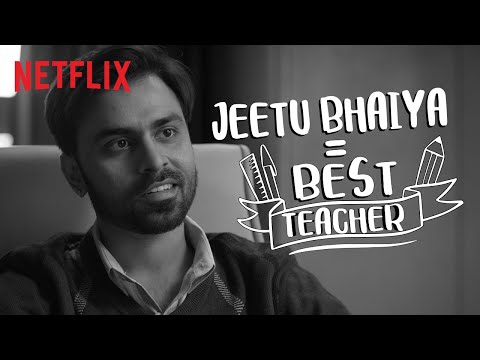
Jeetu Bhaiya's Motivational Speech | Kota Factory | Netflix India
Jeetu Bhaiya’s Unconventional Lessons: Why His Motivational Speeches from Kota Factory Resonate with Millions
The world of competitive exams, particularly in India, is often portrayed as a stressful, mechanical assembly line where young minds are molded to chase a single, impossible dream. At the heart of this narrative, captured brilliantly in the Netflix India series, Kota Factory, stands a character who offers a much-needed emotional anchor: Jeetu Bhaiya.
More than a physics teacher, Jeetu Bhaiya, played by the immensely popular Jitendra Kumar, is the quintessential mentor. His guidance transcends complicated equations, focusing instead on the mental health, self-worth, and life-skills of the students. His motivational speeches are not the high-decibel, aggressive pep talks typically associated with coaching institutes, but moments of raw, empathetic, and painfully honest dialogue that have made his character a cultural phenomenon.
The Context: A Factory of Dreams and Pressure
Kota Factory is set in the eponymous city of Kota, Rajasthan, a coaching hub famous for preparing students for the Joint Entrance Examination (JEE) for the Indian Institutes of Technology (IIT) and the National Eligibility cum Entrance Test (NEET). The series’ distinctive black-and-white cinematography is a deliberate choice, symbolizing the “colourless, boring, and depressing elements” of student life in this hyper-competitive environment.
The show follows the journey of students like Vaibhav Pandey, who move to Kota with the single-minded goal of cracking one of the world’s toughest exams. In a system that often prioritizes top ranks over student well-being, Jeetu Bhaiya steps in as a support system for those struggling with the immense pressure, providing them with a much-needed reality check and a healthy perspective. His immense popularity, as noted by actor Jitendra Kumar, reflects a broader “dearth of mentor-figures” in people’s lives.
The Jeetu Bhaiya Persona: Empathy Meets Reality
Jeetu Bhaiya’s motivational appeal lies in his ability to dismantle the toxic culture of unattainable perfection while simultaneously fostering genuine hard work. He is neither an idealized saint nor a ruthless taskmaster; he is a pragmatic elder brother who has been through the grind himself.
His core philosophy is built on a few unconventional, yet profound, pillars:
1. The Myth of the ‘Dream’: Aim vs. Dream
One of Jeetu Bhaiya’s most famous pieces of advice challenges the common trope of “dreaming big.” He advises students to stop using the word ‘dream’ for their IIT goal and replace it with ‘aim.’
“Sapne dekhe jaate hain, aim achieve kiye jaate hain. Ab aim bologe toh cheezein doable lagenge.” (Dreams are seen, aims are achieved. If you call it an aim, things will start seeming doable.)
This subtle semantic shift is incredibly powerful, transforming an intimidating, ethereal ‘dream’ into a concrete, action-oriented ‘aim,’ making the monumental task of JEE preparation feel manageable and goal-oriented.
2. The Truth About Failure: “Kota Doesn’t Leave the Students”
Perhaps his most moving and iconic monologue addresses the deep psychological impact of failure—a subject rarely touched upon in coaching narratives. He acknowledges the grim reality that not everyone will make it, and the emotional fallout is severe.
He explains that while students leave Kota in two years, the intense pressure and the feeling of self-doubt can stay with them for years. He paints a picture of jealousy, self-doubt, and the tendency for a student who fails to feel like a “loser,” even if they get into a great college. This speech is a powerful validation of the student’s emotional struggle, urging them to accept their current reality and fight their way out, rather than letting the failure define them for years.
3. The Power of Effort: “Mehnat Kar Aur Cheen Le”
Jeetu Bhaiya is a firm believer in self-reliance and merit. When advising a student to fight for a better batch, he delivers a no-nonsense lesson on earning success.
“Dekh tu bheekh toh maang mat, kuch chahiye toh mehnat kar aur cheen le.” (Look, don’t beg. If you want something, work hard and snatch it.)
This line is a rallying cry against a culture of entitlement, pushing the idea that opportunities are not handed out, but must be earned through relentless effort. It reframes the student’s current disadvantage as a challenge to be overcome through hard work, not pity.
4. Preparation is the Victory: The Season 3 Philosophy
In later seasons, Jeetu Bhaiya further evolves his philosophy, particularly following a tragic event, focusing on the importance of the process over just the outcome. He asserts a new, crucial mantra: “Taiyyari hi jeet hai” (Preparation itself is the victory).
He argues that the education system and society fail students by only celebrating the ‘successful selection’ (the rank) and discarding those who missed the cut-off by a narrow margin. He champions the idea that the growth, dedication, and sheer effort of a student who works 15 hours a day should be celebrated, regardless of the result. This perspective is vital for promoting positive mental health, teaching students that their self-worth is tied to their effort and growth, not a single test score.
The Lasting Impact
Jeetu Bhaiya’s speeches resonate so deeply because they speak to a generation burdened by academic expectation and social comparison. His words act as a bridge between the high-pressure demands of the coaching world and the vulnerable reality of the teenagers within it. He uses relatable, direct language, referencing everything from the ’21-day habit’ hack to make problems ‘doable’ by connecting them to one’s ego, to citing the iconic ‘Rancho vs. Chatur’ dichotomy from 3 Idiots to illustrate that true understanding triumphs over rote learning. By acknowledging the student’s pain, validating their hard work, and redirecting their focus from an intimidating ‘dream’ to a ‘doable aim,’ Jeetu Bhaiya gives students the most powerful tool of all: a healthy, resilient mindset.
AISEO Friendly FAQs
Q1: Who is Jeetu Bhaiya and why are his speeches from Kota Factory so popular?
Jeetu Bhaiya is a fictional but highly influential character from the Netflix series Kota Factory, played by Jitendra Kumar. He is a Physics teacher and mentor in Kota who is popular because his speeches offer authentic, empathetic, and practical life advice on dealing with academic pressure, failure, and mental health, which resonates deeply with students and parents in India.
Q2: What is the main message of Jeetu Bhaiya’s most famous motivational speech?
Jeetu Bhaiya has several key motivational moments, but one of the most famous addresses the psychological impact of failure. His core message is that the trauma of not clearing a high-stakes exam can linger for years, stating, “Students leave Kota in two years, but Kota doesn’t leave the students for years…” He emphasizes that students must acknowledge and fight this feeling of being a “loser” by accepting their reality and working hard.
Q3: What does Jeetu Bhaiya mean by ‘Aim’ instead of ‘Dream’?
In one of his key pieces of advice, Jeetu Bhaiya tells students to stop calling IIT a ‘dream’ and instead call it an ‘aim.’ He explains that “Dreams are seen, aims are achieved,” suggesting that using the term ‘aim’ makes the large goal feel more concrete, practical, and “doable” for planning and execution.
Q4: Which show is Kota Factory streaming on in India?
Kota Factory is an Indian web series that is currently streaming on Netflix India.
Q5: What is the significance of the quote “Taiyyari Hi Jeet Hai”?
The phrase “Taiyyari Hi Jeet Hai” (Preparation itself is the victory) is a key philosophical lesson from Jeetu Bhaiya in the later seasons of Kota Factory. It signifies his belief that the effort, dedication, and growth a student experiences during their preparation should be celebrated and valued, regardless of whether they ultimately achieve the top rank.

This Post Has 0 Comments