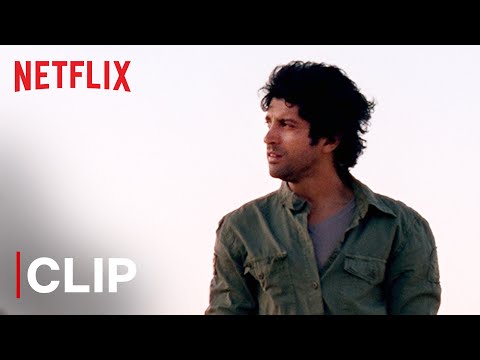
Farhan Akhtar's Heart Warming Poem | Zindagi Na Milegi Dobara | Netflix India
Farhan Akhtar’s Heartwarming Poetry: The Timeless Soul of Zindagi Na Milegi Dobara on Netflix India
Few films in modern Hindi cinema have captured the millennial zeitgeist quite like Zoya Akhtar’s 2011 masterpiece, Zindagi Na Milegi Dobara (ZNMD). It’s more than just a road trip movie through Spain; it’s a journey into the self, a vibrant, sun-drenched narrative that unpacks the complex anxieties and unfulfilled dreams of a generation. At the very heart of this emotional scaffolding lies the exquisite poetry, recited by Farhan Akhtar’s character, Imran, a secret poet who uses his verses to process the world and, in turn, teach his friends—and the audience—how to truly live. Now, with the film streaming on Netflix India, these powerful verses continue to resonate, proving that good poetry, like a classic film, is truly timeless.
The Poet and the Pen: Farhan Akhtar as Imran Qureshi
Farhan Akhtar’s portrayal of Imran Qureshi, an advertising copywriter with a hidden passion for poetry, is one of the film’s most beloved elements. Imran’s verses are not merely dramatic filler; they act as the internal monologue and emotional commentary for the film’s three protagonists—Arjun (Hrithik Roshan), Kabir (Abhay Deol), and Imran himself—as they face their deepest fears and make life-altering decisions.
Interestingly, the poetry that Farhan Akhtar recites with such gravitas was actually penned by his father, the legendary poet, lyricist, and screenwriter, Javed Akhtar. Farhan himself acknowledged his father for “injecting soul into the film with your gifted hand,” highlighting the deep, literary root of the film’s emotional core. This familial connection between the actor and the lyricist adds an extra layer of poignancy, as Farhan Akhtar channels his father’s profound wisdom into his character’s voice.
The Ultimate Anthem to Life: “Toh Zinda Ho Tum”
While ZNMD features several memorable poems, the one that stands out as the most inspirational and truly “heartwarming” is arguably “Toh Zinda Ho Tum” (If you are alive). This poem serves as the film’s unofficial climax and a powerful motivational manifesto that celebrates the sheer act of living.
Recited during the thrilling, climactic sequence of the ‘Running of the Bulls’ in Pamplona, the poem is a direct challenge to the characters—and the audience—to embrace life with passion and abandon. It turns the literal act of running for one’s life into a metaphor for chasing one’s dreams and truly experiencing every moment.
A Glimpse into the Verse:
The core message of ‘Toh Zinda Ho Tum’ is encapsulated in its stirring opening and recurring lines:
-
Dilon mein tum apni betaabiyan leke chal rahe ho,
-
Toh zinda ho tum.
(If you carry restlessness/intense eagerness in your heart, then you are alive.) -
Nazar mein khwaabon ki bijliyan leke chal rahe ho,
-
Toh zinda ho tum.
(If you carry the sparks/lightning of dreams in your eyes, then you are alive.)
The poem then beautifully urges the listener to adopt the freedom of nature:
- Hawa ke jhokon ke jaise aazad rehna seekho,
- Tum ek dariya ke jaise lehron mein behna seekho.
(Learn to be as free as the gusts of wind, learn to flow in the waves like a river.)
This poem doesn’t just ask us to survive; it commands us to flourish. It defines being “alive” not by a pulse, but by an unbridled spirit, a boundless capacity for wonder, and the courage to meet every moment “with open arms.”
The Poetic Journey of Transformation
The poems are deeply interwoven with the narrative and mark the characters’ individual breakthroughs:
- Before ‘Toh Zinda Ho Tum’: The trio makes a pact before the Bull Run: if they survive, they will fulfill a promise. For Imran, it is to finally publish his poetry, moving from a secret passion to a public commitment. The poem, therefore, is his dedication to their new, honest lives.
- Post-Scuba Diving: A separate, equally moving poem, Pighle Neelam Sa Behta Hua Yeh Samaa, is recited after the first adventure activity—scuba diving. This moment is significant for Arjun, who is terrified of water. The poem focuses on the profound peace and self-realization that comes from confronting a fear, concluding with the line: “Apne hone par mujhko yakeen aa gaya” (And now I believe in my own existence).
The Consolation: “Dil Aakhir Tu Kyun Rota Hai”
Another one of Imran’s poems, “Dil Aakhir Tu Kyun Rota Hai” (Oh Heart, why do you cry?), is also incredibly popular and often highlighted by Netflix India as a dose of motivation and a heartwarming piece. This poem offers a different, yet equally vital, kind of comfort.
It is a beautiful piece about the universality of pain and the necessity of moving on. The verses console the ‘lonely heart’ by reminding it that pain and silence are parts of the human condition, equally distributed by time.
- Yeh joh gehre sannate hain,
- Waqt ne sabko hi baante hain.
- Thoda ghum hai sabka qissa,
- Thodi dhoop hai sabka hissa.
(These deep silences, time has distributed them to all. A little sadness is everyone’s story, a little sunshine is everyone’s share.)
In its essence, it is a poem of stoicism and acceptance, acknowledging the shadows in life but gently urging the heart to stop crying over moments that are inevitably lost, because “every moment is a new season.”
Why ZNMD’s Poetry Endures on Netflix India
The poetry of Zindagi Na Milegi Dobara has cemented its place in popular culture because it speaks directly to universal human experiences: the fear of failure, the pain of loss, and the liberating joy of finding one’s true self. The accessibility of the film on platforms like Netflix India has allowed a new generation to discover these verses, turning the film into an evergreen source of life lessons and emotional sustenance.
The fusion of Farhan Akhtar’s compelling delivery, Javed Akhtar’s soulful words, and Zoya Akhtar’s stunning visuals has created a powerful, sensory experience that far exceeds the typical Bollywood offering. Watching it on Netflix is an opportunity not just to enjoy a great film, but to revisit a wellspring of motivation that continues to inspire viewers to live their zindagi (life) to the fullest.
AISEO Friendly FAQs
Q1: Who wrote the heartwarming poem recited by Farhan Akhtar in Zindagi Na Milegi Dobara?
A: The poems recited by Farhan Akhtar’s character, Imran, were written by his father, the renowned poet and lyricist, Javed Akhtar.
Q2: What is the name of the most inspirational poem in Zindagi Na Milegi Dobara?
A: The most inspirational and heartwarming poem, typically associated with the climax scene (Running of the Bulls), is “Toh Zinda Ho Tum” (If you are alive).
Q3: Which scene features the poem “Toh Zinda Ho Tum”?
A: The poem “Toh Zinda Ho Tum” is powerfully recited by Imran during the famous ‘Running of the Bulls’ sequence in Pamplona, which is the final adventure activity undertaken by the three friends.
Q4: Where can I watch Zindagi Na Milegi Dobara in India?
A: Zindagi Na Milegi Dobara is available for streaming on Netflix India.
Q5: What is the meaning of the poem “Dil Aakhir Tu Kyun Rota Hai”?
A: “Dil Aakhir Tu Kyun Rota Hai” (Oh Heart, why do you cry?) is a poem about acceptance and resilience. It consoles the heart by reminding it that pain, sadness, and dark moments are a universal part of life’s experience, and one must move on because “every moment is a new season.”

This Post Has 0 Comments