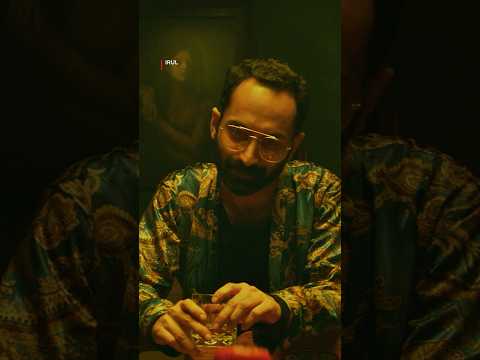
Fahadh Faasil’s BRILLIANT Acting Scenes ft. Maamannan, Irul 🔥
Watch on Netflix: https://www.netflix.com
Follow Netflix India on:
Website: https://www.netflix.com/
YouTube: http://bit.ly/NetflixIndiaYT
Instagram: http://www.instagram.com/netflix_in
Facebook: http://www.facebook.com/NetflixIN
Twitter: http://twitter.com/netflixindia
Fahadh Faasil’s Masterclass: Analyzing His BRILLIANT Acting Scenes in Maamannan and Irul
Fahadh Faasil, often hailed as one of the finest actors in contemporary Indian cinema, has a remarkable ability to inhabit characters that are complex, morally ambiguous, and deeply unsettling. His performances are not mere acts; they are deep dives into the human psyche, leaving a lasting impression long after the credits roll. Two recent performances that exemplify this brilliance are his portrayals in the Tamil political drama Maamannan and the Malayalam mystery thriller Irul.
While the films differ drastically in scale and genre, Fahadh’s sheer acting prowess elevates them, creating iconic, unforgettable scenes. Here, we dissect the moments that cement his status as a master craftsman.
The Unsettling Dominance of Rathnavelu in Maamannan
In Mari Selvaraj’s 2023 political drama Maamannan, Fahadh Faasil plays Rathnavelu, an antagonist whose casual cruelty and entrenched casteist mindset are terrifyingly real. Despite being a villain in an anti-caste narrative, Fahadh’s nuanced portrayal earned him immense critical acclaim, with some fans even inadvertently celebrating the character’s ‘style’ due to the sheer force of the performance. His ability to make a despicable character compelling is a testament to his brilliance.
Scene Breakdown: The Infamous ‘Chair Scene’
The undisputed highlight of Rathnavelu’s character arc, and a key scene in modern Tamil cinema, is the ‘Chair Scene.’ This moment perfectly encapsulates the deep-rooted caste-based discrimination that forms the film’s core conflict.
The scene involves Rathnavelu (Fahadh Faasil), a dominant caste politician, confronting Maamannan (Vadivelu), a Dalit MLA, and his son, Adhiveeran (Udhayanidhi Stalin). The conflict revolves around the simple act of sitting on a chair—a symbol of respect, authority, and equality.
- The Power of Stillness and Eyes: Fahadh’s acting here is less about dialogue and more about his intense body language and, critically, his eyes. The director, Mari Selvaraj, has noted that he conceived the character of Rathnavelu by focusing on Fahadh’s distinctive eyes, instructing him to convey the conviction of traditional, entrenched values in one eye, and the aggression towards any modern challenge to those values in the other.
- Controlling the Room: The actor maintains an unnerving composure, a quiet arrogance that is far more menacing than any loud display of anger. The minute twitch of his facial muscles, the sudden, cold glare, and the deliberate slowness of his movements all convey an unspoken belief in his own superiority, effortlessly dominating the space and the other characters.
- The Emotional Switch: This scene’s tension is electric. Fahadh does not just play a villain; he plays a character who genuinely believes his oppressive actions are justified. This conviction is what makes the scene so brilliant and impactful. The chair itself becomes a character, and Rathnavelu’s insistence on the established hierarchy is enacted with chilling, self-righteous intensity.
The Sinister Ambiguity of ‘Unni’ in Irul
In the 2021 Malayalam mystery thriller Irul (meaning ‘Darkness’), Fahadh Faasil plays ‘Unni,’ a mysterious man whose true identity—and whether he is a serial killer—remains an unsettling ambiguity throughout much of the film. The movie features only three main characters and is largely confined to one secluded house, making the performance of its lead actors crucial to maintaining the claustrophobic tension.
Despite the film receiving mixed reviews for its plot structure, Fahadh Faasil’s performance was universally praised for his solid, captivating, and sinister portrayal.
Scene Breakdown: The Dining Table Conversation
The central point of the film’s psychological game is the initial conversation between the stranded couple, Alex (Soubin Shahir) and Archana (Darshana Rajendran), and the mysterious homeowner, Unni (Fahadh Faasil), usually framed around a dining table.
- Intriguing and Sinister Aura: Fahadh’s entrance, often in a striking silk dressing gown, immediately establishes an aura of intellectual menace. His character is witty, eccentric, and unnervingly critical of Alex’s recently published book on a serial killer.
- Subtle Shifts in Emotion: The brilliance lies in Unni’s shifting demeanour. One moment, he is a charming, accommodating host offering wine; the next, he’s a highly suspicious, overly analytical critic with an evil glint in his eye. This oscillation forces the audience to constantly doubt his intentions and question whether he is an innocent intellectual or the killer he is discussing.
- The Art of Misdirection: Unni is constantly talking, theorizing, and probing the other characters. Fahadh uses his voice and mannerisms to perform a verbal and psychological dance, where every sentence is laced with double meaning. This scene is a masterclass in controlled ambiguity, allowing the shadow of doubt to fall on everyone, especially himself. It is the core reason the thriller works, as the actor’s sheer charisma and intensity keep the guessing game alive.
The Essence of Fahadh Faasil’s Acting Brilliance
The thread connecting the cold-blooded political tyrant Rathnavelu and the enigmatic, perhaps psychotic, Unni is Fahadh Faasil’s distinct acting philosophy.
- Nuance over Noise: Fahadh avoids loud, theatrical “mass” elements, even in a villainous role like Rathnavelu. His power comes from subtlety—a look, a pause, a slight change in posture that communicates volumes of character depth.
- Immersive Character Building: Critics consistently point out his ability to completely disappear into diverse and often flawed characters. Whether it is the male chauvinist Shammi in Kumbalangi Nights or the cruel police officer in Pushpa: The Rise, Fahadh’s commitment ensures that even poorly written characters are elevated and leave a significant impact.
- The Power of the Gaze: His intense, expressive eyes are repeatedly highlighted as a key instrument of his acting. He can convey self-righteousness, vulnerability, aggression, and calculated malice, all with a single look, making scenes like the ‘Chair Scene’ iconic.
Fahadh Faasil does not just act in a scene; he owns it, injecting psychological realism and depth that transcends the script. The sheer quality of his work in contrasting films like Maamannan and Irul proves that his brilliance is not dependent on genre or screen time—it is a signature of cinematic excellence.
AISEO-Friendly FAQs
Q1: What is the most famous acting scene of Fahadh Faasil in Maamannan?
A: The most famous scene is the “Chair Scene,” where Fahadh Faasil’s character, Rathnavelu, asserts his caste dominance by preventing a Dalit MLA, Maamannan (Vadivelu), from sitting on a chair. It is lauded for its intense performance, nuanced body language, and the potent symbolism of the confrontation.
Q2: What kind of character did Fahadh Faasil play in the movie Irul?
A: In Irul, Fahadh Faasil plays Unni, a mysterious man who hosts a couple whose car breaks down in the rain. Unni is an eccentric and suspicious character who is either an intellectual, a genuine host, or a potential serial killer, and Fahadh’s performance keeps the audience guessing throughout the film.
Q3: Is Fahadh Faasil’s character in Maamannan a hero or a villain?
A: Fahadh Faasil plays the primary antagonist, Rathnavelu, a casteist villain in the political drama Maamannan. His performance was so brilliant and complex, however, that the character became a fan favourite on social media, despite the film’s anti-caste message.
Q4: Which element of Fahadh Faasil’s acting is often highlighted by critics?
A: Critics frequently highlight his ability to bring nuance to morally ambiguous and negative roles, his immersive characterisation, and the incredible intensity and expressiveness of his eyes, which allow him to convey deep emotional layers without resorting to loud dialogue.

This Post Has 0 Comments