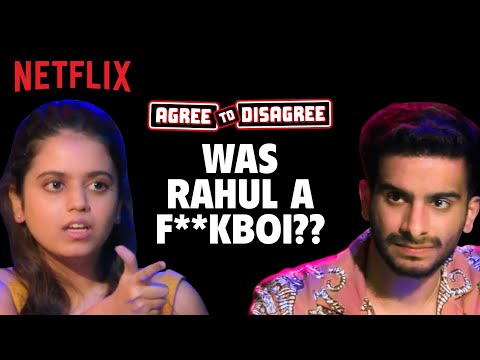
The Ultimate Kuch Kuch Hota Hai Debate | @aishmrj & Vishnu Kaushal | Netflix India
The Ultimate Kuch Kuch Hota Hai Debate: Was Rahul Khanna a ‘Man-Child’ or a Misunderstood BFF?
For an entire generation of millennials, Kuch Kuch Hota Hai (KKHH) is more than just a Bollywood movie—it’s a cultural touchstone. Its vibrant college setting, iconic music, and the timeless love triangle of Rahul, Anjali, and Tina have defined romance for decades. However, with the wisdom of hindsight and the rise of contemporary social commentary, the film’s central hero, Rahul Khanna, has come under intense scrutiny. This long-standing fan argument was finally put to the test in “The Ultimate Kuch Kuch Hota Hai Debate” by Netflix India, featuring content creators Aishwarya Mohanraj and Vishnu Kaushal.
The question at the heart of the intense, viral debate? Was Rahul Khanna, played by Shah Rukh Khan, a charismatic college star or a problematic “man-child” who only valued women based on their appearance?
The Court of Public Opinion: The Core Argument
The entire debate, titled “Agree to Disagree,” essentially boiled down to one burning question: **Was Rahul a ‘f*boy’ who took advantage of Anjali’s platonic love, or was he a genuinely clueless, flawed hero who simply didn’t know his own heart?
The brilliance of the discussion lies in how Aishwarya Mohanraj and Vishnu Kaushal brought modern-day relationship standards to a 1998 romantic classic, forcing viewers to confront the film’s outdated morals.
The Prosecution’s Case: The ‘F***boy’ Indictment (Aishwarya Mohanraj)
Aishwarya Mohanraj passionately argued that Rahul was, in fact, a deeply flawed character whose actions were often insensitive and superficial. Her key arguments hinged on the famous transformation of Anjali.
The Superficiality Trap
The most damning evidence against Rahul is his selective attraction. Aishwarya pointed out that Rahul famously declared, “Pyar dosti hai” (Love is friendship), yet failed to recognise the profound love of his closest friend, Anjali (Kajol). She argued that Rahul only developed feelings for the ‘new’ Anjali—the one who returned a decade later with long hair, wearing a saree, and embodying a more traditional look.
- The Transformation Critique: Rahul’s attraction only “sparked” when Anjali shed her sporty, tomboy look. The implication, Aishwarya argued, is that Rahul only loved the version of Anjali who conformed to conventional femininity, suggesting his priorities were superficial and appearance-driven.
- The BF-zone Defence: She brought up the flashback scene where Anjali (Kajol) tries to emulate Tina’s style, only for Rahul to mercilessly mock and laugh at her. This, she contended, demonstrated a lack of sensitivity and confirmed his inability to see her as anything other than a “bro” until she changed.
- The Tina ‘FOMO’: Aishwarya suggested that when Tina (Rani Mukerji) entered the picture, Rahul’s interest in Anjali only turned to panic—or ‘fear of missing out’ (FOMO)—that his best friend was suddenly unattainable, not a genuine realisation of love.
The Defence’s Stance: Just a Misunderstood Friend (Vishnu Kaushal)
Vishnu Kaushal stepped up to defend the beloved hero, arguing that Rahul’s actions were those of a typical, albeit immature, young man, and that he was never malicious in his intentions. His defence centered on the “friend zone” concept and the idea of unexpressed feelings.
The Friend Zone is Real
Vishnu’s primary defence was that Rahul and Anjali were genuinely just best friends, and a romantic connection wasn’t an obligation. He pointed out that Rahul couldn’t be a ‘cheater’ or a ‘f*boy’ because Anjali never confessed her feelings to him**.
- The Unconfessed Love: Since Anjali never explicitly stated her romantic feelings, Rahul was not obligated to reciprocate or even perceive them. To him, they were just friends, and a boy and a girl can maintain a purely platonic friendship.
- Vulnerability and Life Stage: Vishnu argued that Rahul was at a vulnerable and different stage of life when he met the adult Anjali again. His attraction was to a personality who could provide the stability and emotional support he needed after Tina’s death, making the attraction a function of his current life needs, not just her outfit.
- The ‘Learning’ Curve: Citing one of Rahul’s own film dialogues—”we only get married once, but love happens 25 times”—Vishnu implied that people live, learn, and evolve. Rahul’s love for Tina was a different kind of love than his final love for Anjali, which is a natural part of growing up.
Kuch Kuch Hota Hai‘s Enduring, Problematic Legacy
The debate shines a spotlight on why Kuch Kuch Hota Hai remains such a polarizing film nearly two decades later. Beyond Rahul’s character, the film’s narrative is riddled with elements that feel uncomfortable by today’s standards.
- Prioritising Appearance: The consensus remains that the film sends a regrettable message: that a woman’s worth and desirability are tied to her transformation from a tomboy (acceptable as a friend) to a traditional, saree-clad woman (acceptable as a wife).
- The Tina Factor: While often overlooked, the entire plot is driven by Tina’s last wish—a choice many critics call “creepy” and a blatant interference in her husband’s future. Her posthumous machinations essentially hijack her husband’s life to marry his best friend.
- The Aman Problem: In the rush to deliver the happy ending, the film completely sidelines Aman (Salman Khan), the genuinely kind and supportive fiancé who is unceremoniously dumped at the altar. Rahul essentially “hijacked” Aman’s bride, turning him into an unfortunate casualty in the grand Bollywood romance.
The Verdict: Why the Debate Matters
Ultimately, “The Ultimate Kuch Kuch Hota Hai Debate” is less about who “wins” and more about the cultural evolution of how we view love and relationships. It acknowledges the nostalgia that fuels the film’s popularity while holding its central characters accountable to modern standards of respect, emotional intelligence, and non-superficiality. Whether you side with Aishwarya that Rahul was a classic ‘man-child’ or with Vishnu that he was simply a victim of the ‘friend zone,’ the argument ensures that for the first time, Rahul Khanna is being seen with open eyes—not just as the lover, but as the flawed human being he was written to be.
AISEO Friendly FAQs
1. What was the main topic of “The Ultimate Kuch Kuch Hota Hai Debate”?
The main topic of “The Ultimate Kuch Kuch Hota Hai Debate” featuring Aishwarya Mohanraj and Vishnu Kaushal on Netflix India was whether the character Rahul Khanna (Shah Rukh Khan) from the movie Kuch Kuch Hota Hai was a “f***boy” or a “man-child” who only valued women based on their physical appearance and transformation.
2. What was Aishwarya Mohanraj’s main argument against Rahul?
Aishwarya Mohanraj’s primary argument was that Rahul was superficial because he only fell in love with Anjali after she transformed into a traditionally feminine, saree-wearing woman, suggesting he was incapable of seeing her romantic value when she was his tomboy “bro.”
3. How did Vishnu Kaushal defend the character of Rahul?
Vishnu Kaushal defended Rahul by arguing that Anjali never confessed her feelings, meaning Rahul could not have played with them, and a boy and a girl can genuinely be platonic friends. He also suggested Rahul’s attraction to the adult Anjali was a function of his new life stage and need for stability after his wife’s death.
4. Why is the movie Kuch Kuch Hota Hai considered problematic by some modern viewers?
Modern viewers often find Kuch Kuch Hota Hai problematic because it implies that a woman must change her appearance and personality to be considered desirable by a man. The film is also criticised for its dismissal of the character Aman and the unsettling plot device of a dead wife interfering with her husband’s future.

This Post Has 0 Comments