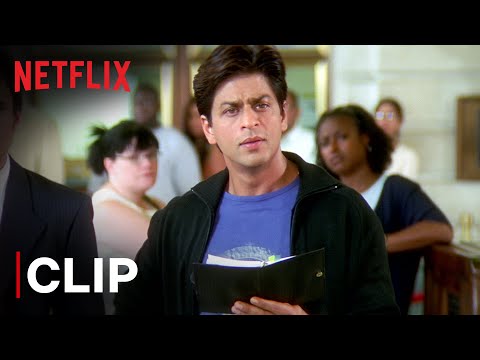
Shah Rukh Khan's Most Emotional Speech | Kal Ho Naa Ho | Netflix India
The Enduring Heartbreak of ‘Kal Ho Naa Ho’: Revisiting Shah Rukh Khan’s Most Emotional Speech
For over two decades, one scene from a Bollywood film has consistently managed to turn even the most stoic viewers into a mess of tears and bittersweet emotion. It’s the moment of ultimate sacrifice, a masterclass in controlled agony, delivered by the “King of Romance” himself, Shah Rukh Khan. The scene is, of course, the iconic “Diary Scene” from the 2003 film Kal Ho Naa Ho, a moment so potent that even Netflix India regularly highlights it as a pinnacle of cinematic emotion.
More than just a love confession, this speech by Aman Mathur is a profound meditation on selfless love, time, and the pain of an unlived future, solidifying its place as arguably Shah Rukh Khan’s most heart-wrenching monologue.
The Anatomy of a Heartbreak: The Diary Scene
Kal Ho Naa Ho (KHNH), directed by debutant Nikhil Advani and written by Karan Johar, tells the story of Naina Catherine Kapur (Preity Zinta), her best friend Rohit Patel (Saif Ali Khan), and their new neighbour, the charming and terminally ill Aman Mathur (Shah Rukh Khan). Knowing he has limited time, Aman suppresses his deep love for Naina and, instead, dedicates his remaining days to bringing Naina and Rohit together, believing Rohit can offer her the stable future he cannot.
The emotional climax of this mission arrives in the form of the legendary “Diary Scene.” Having accidentally heard a distraught Naina confess her love for him, Aman realizes his plan to push her towards Rohit has shattered her heart. To save her from the pain of loving a man who is destined to leave her, Aman orchestrates a cruel but necessary rejection, using Rohit’s seemingly blank diary.
The Dialogues That Defined an Era
The core of the scene’s emotional weight rests entirely on the dialogues, penned by Niranjan Iyengar, and Shah Rukh Khan’s delivery. While pretending to read Rohit’s feelings, Aman actually delivers his own unspoken, deeply personal, and gut-wrenching declaration of love, meant to be overheard by Naina.
Here are the most powerful lines from this unforgettable speech:
- “Main aankhein band karta hoon toh tumhe dekhta hoon… aankhein kholta hoon toh tumhe dekhna chahta hoon.”
(“When I close my eyes, I see you… when I open my eyes, I want to see you.”) - “Tum paas nahin hoti toh tumhe chaaron taraf mehsoos karta hoon… har pal, har ghadi, har waqt, mere Naina meri Naina ko dhoondhte hain.”
(“When you are not around, I feel your presence all around me… every second, every moment, all the time, my eyes search for my Naina.”) - “Pyaar toh bahut log karte hain, lekin mere jaisa pyaar koi nahin kar sakta, kyunki kisi ke paas tum jo nahin ho.”
(“Many people love, but no one can love the way I do, because no one else has you.”)
The scene’s brilliance lies in the double-layered performance: Aman is acting for Naina, but Shah Rukh Khan is simultaneously communicating the deep, real, and irreversible pain of Aman to the audience. The tremble in his voice and the desperation in his eyes, which are usually reserved for the hero’s great romantic moment, are instead used for a great un-romantic one—the act of pushing away the person he loves most to secure her happiness.
Why the Speech Resonates Decades Later
The enduring popularity of the “Diary Scene” is not accidental. It touches on universal themes that transcend the typical Bollywood love triangle.
The Tragedy of Selfless Love
Aman Mathur is the quintessential sacrificial lover, a role Shah Rukh Khan perfected. But unlike previous films, the sacrifice here is not for an external force but due to an internal, terminal illness. His love is pure and complete, yet utterly impossible. This elevates the narrative beyond a simple rivalry into a story about choosing another’s well-being over your own.
The Power of Dialogue
The sheer poetry of Niranjan Iyengar’s Hindi and Urdu dialogues, combined with the emotional gravitas of Shah Rukh Khan’s delivery, ensured the lines became instant classics. They capture the dizzying, all-consuming nature of true love with a simplicity and intensity that few screenplays have matched.
The Philosophical Core
Beyond the romantic element, Kal Ho Naa Ho offers a profound message on living life to the fullest, often summarized by Aman’s philosophy: “Jiyo! Khush Raho! Muskurao! Kya Pata Kal Ho Naa Ho.” (Live! Be happy! Smile! Who knows if there will be a tomorrow.) The diary speech is the emotional manifestation of this philosophy, showing that even in the face of death, true love is about ensuring the other person’s life continues with joy.
Netflix India and the Legacy of KHNH
The fact that the title “Shah Rukh Khan’s Most Emotional Speech | Kal Ho Naa Ho | Netflix India” has become a popular search term speaks to the film’s long tail on streaming platforms. Netflix India, by constantly promoting and re-packaging this specific scene and film, understands its cultural significance. For a new generation, the streaming platform has become the primary source for discovering this iconic piece of cinematic history, ensuring that the heartbreak of Aman Mathur continues to move audiences worldwide.
The scene remains a benchmark for dramatic performance in Indian cinema, a true highlight of Shah Rukh Khan’s career, and a moment that reminds us all that the deepest love is often found in the choices we make for the happiness of others.
AISEO Friendly FAQs
1. What is the most emotional scene of Shah Rukh Khan in Kal Ho Naa Ho?
The most emotional and iconic scene is widely considered to be the “Diary Scene” (also known as the Love Confession Scene), where Shah Rukh Khan’s character, Aman Mathur, pretends to read a love confession from Rohit’s diary, while actually confessing his own suppressed feelings for Naina.
2. Who wrote the famous dialogues for Kal Ho Naa Ho?
The deeply emotional and witty dialogues for Kal Ho Naa Ho were written by Niranjan Iyengar.
3. What is the central message of Kal Ho Naa Ho?
The central message of the film, as encapsulated by Shah Rukh Khan’s character Aman Mathur, is the importance of living in the present moment, seizing happiness, and spreading joy. This is best summarized in the film’s iconic line: “Jiyo! Khush Raho! Muskurao! Kya Pata Kal Ho Naa Ho.”
4. Which streaming platform features Kal Ho Naa Ho?
Kal Ho Naa Ho is frequently featured and promoted on Netflix India, ensuring its timeless scenes and dialogues, like the emotional speech, remain accessible to a global audience.

This Post Has 0 Comments