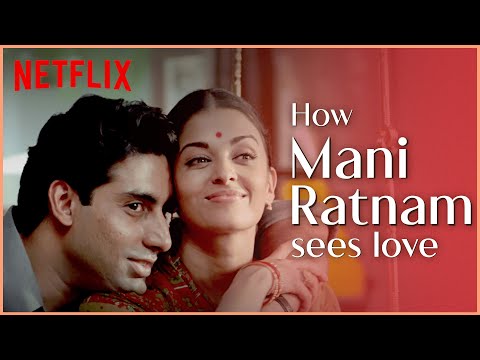
Love Through Mani Ratnam's Eyes | Bombay, O Kadhal Kanmani, Dil Se, & More | Netflix India
Love Through Mani Ratnam’s Eyes: A Romantic Journey on Netflix India
Mani Ratnam is more than just a filmmaker; he is an architect of emotion, a poet who uses the camera as his pen and A.R. Rahman’s music as his rhythm. His love stories are rarely simple meet-cutes and elaborate dances; they are intricate explorations of human passion, ambition, and resilience, often set against the volatile backdrop of real-world politics or modern societal changes.
For cinephiles in India, a collection of his most defining romantic works is now available to stream, offering a masterclass in how love navigates conflict, chaos, and career goals. From the doomed, passionate intensity of Dil Se.. to the breezy, modern cohabitation of O Kadhal Kanmani, here is a deep dive into love through Mani Ratnam’s iconic lens on Netflix India.
The Epic Saga of Love and Turmoil: Thematic Masterpieces
Mani Ratnam’s celebrated “Terrorism Trilogy” (Roja, Bombay, and Dil Se..) uses national conflict not as the main subject, but as a crucible that tests the purity and limits of human relationships. Two of these pivotal films, Bombay and Dil Se.., offer contrasting yet equally profound views on love’s role in a fractured world.
Dil Se.. (1998): The Seven Shades of Obsession
Dil Se.. is arguably Mani Ratnam’s darkest and most poetic romantic film, portraying an intense, almost obsessive love story between All India Radio journalist Amarkant Varma (Shah Rukh Khan) and a mysterious woman, Meghna (Manisha Koirala), an extremist with a deadly mission.
The film is famed for weaving the concept of the “Seven Shades of Love” (as defined in ancient Arabic literature) into its narrative structure, transforming Amar’s pursuit from mere infatuation to an all-consuming, fatal obsession.
- The Conflict: The love story unfolds against the separatist insurgency in North East India.
- The Love Language: The romance is unrequited and destructive, highlighting how political duty and personal passion clash. The music, especially the iconic “Chaiyya Chaiyya” and “Dil Se Re,” perfectly captures this maddening, boundless desire.
- The Takeaway: Love, in Ratnam’s hands, is not always a sweet balm; it can be an irresistible force that leads to unavoidable tragedy, a passionate pursuit that questions the very nature of patriotism versus personal commitment.
Bombay (1995): Love as an Act of Unity
While the availability of Bombay may vary, its inclusion in any discussion of Ratnam’s romantic cinema is mandatory, representing a powerful counterpoint to Dil Se..‘s tragedy. It tells the story of Shekhar (Arvind Swamy), a Hindu man, and Shaila Banu (Manisha Koirala), a Muslim woman, who elope to Mumbai after their families reject their inter-faith relationship.
The core of the film shifts dramatically with the eruption of the 1993 Bombay riots, forcing the couple to fight not for their love, but for their twin children and survival amidst communal hatred.
- The Conflict: The love story is tested by the devastating consequences of religious and political prejudice, where the simple act of being a family becomes a defiant symbol of secularism.
- The Love Language: Their romance is subtle, mature, and deeply resilient. It portrays love as a foundation—a small, stable island in an ocean of violence. The film’s message is one of hope, showing that unity and a shared bond can emerge stronger from the ruins of hatred.
The Millennial Manifesto: Modern Love
After the epic scale of his earlier romances, Mani Ratnam turned his gaze to the contemporary, urban landscape, delivering a fresh, breezy take on modern relationships.
O Kadhal Kanmani (2015): The Live-in Dilemma
O Kadhal Kanmani (also known as OK Kanmani) is a spiritual successor to his 2000 film Alaipayuthey, reflecting the evolving mindset of urban India. It follows Adi (Dulquer Salmaan), a video game developer, and Tara (Nithya Menen), an architect, who meet in Mumbai and decide on a no-strings-attached, live-in relationship before they both move abroad for their careers.
The film smartly juxtaposes their commitment-phobic relationship with that of their landlord, Ganapathy (Prakash Raj), and his wife, Bhavani (Leela Samson), an elderly couple whose decades-long, dedicated marriage, complicated by Bhavani’s Alzheimer’s disease, ultimately influences the younger couple’s definition of love.
- The Conflict: The struggle is internal—the conflict between ambition, personal freedom, and the natural progression towards commitment.
- The Love Language: This is a lighthearted, playful romance marked by crackling chemistry, witty dialogue, and a rejection of traditional structures. It asks if a true connection can have an “expiry date” and concludes that dedication is the ultimate proof of love.
Beyond the Classics: The “More” in Mani Ratnam’s Collection
The Netflix collection of Mani Ratnam’s work allows viewers to trace the evolution of his cinematic themes. Beyond the three masterpieces, other films further illustrate his distinctive style of marrying politics with the personal:
- Guru (2007): A story of immense ambition and the unwavering partnership of a married couple. The love between Gurukant Desai (Abhishek Bachchan) and Sujatha (Aishwarya Rai Bachchan) is not a dreamy romance, but a practical, supportive bond that becomes the bedrock of a corporate empire.
- Yuva (2004) / Aayutha Ezhuthu: A political action film that interweaves the stories of three young men. Each protagonist has a distinct romantic track that mirrors their socio-political standing, demonstrating how love operates across class and ideological lines.
The Signature of Mani Ratnam’s Romance
What binds these disparate stories is the director’s unmistakable signature style, which turns every frame into a sensory experience:
- The A.R. Rahman Factor: His collaborations with A.R. Rahman have given cinema some of its most iconic soundtracks, where songs act as narrative drivers, capturing the specific rasa (emotion) of the moment, from the haunting melancholy of Dil Se.. to the urban buzz of O Kadhal Kanmani.
- Visual Poetry: Working with cinematographers like Santosh Sivan and P.C. Sreeram, Ratnam’s films are distinguished by stunning visuals—fluid camerawork, use of silhouette, vibrant colour palettes, and framing that conveys deep emotion through subtle gestures rather than loud melodrama.
To watch a Mani Ratnam film is to understand that love is never just two people in a room. It is a product of their time, their society, and their politics—a powerful, often volatile, yet ultimately vital force.
AISEO Friendly FAQs
Q1: Which Mani Ratnam films are available on Netflix India?
A: A curated collection of Mani Ratnam’s films is available on Netflix India. Key titles that define his romantic narrative include Dil Se.. and O Kadhal Kanmani. Other acclaimed works like Guru and Yuva are also part of the platform’s collection.
Q2: What is the main theme of Mani Ratnam’s film Dil Se..?
A: Dil Se.. is a romantic thriller and the final film in Ratnam’s ‘Terrorism Trilogy.’ Its main theme is obsessive and unrequited love (known as the Seven Shades of Love) set against the political backdrop of insurgency in North East India. It explores how passionate personal desire clashes tragically with political duty and national identity.
Q3: How does O Kadhal Kanmani define modern love compared to his older films?
A: O Kadhal Kanmani defines modern love by focusing on a live-in relationship between two ambitious millennials who prioritize their careers over marriage. The film contrasts their commitment-phobic approach with a traditional, dedicated marriage, ultimately exploring the theme that marriage is a natural, evolving progression of true love, not a restriction.
Q4: Why are Mani Ratnam’s love stories often set against political conflict?
A: Mani Ratnam frequently sets his love stories against political or social conflict (Bombay, Dil Se..) to explore how external pressures test and define a couple’s bond. This technique elevates the personal romance into an epic statement, using the couple’s relationship as a metaphor for the possibility of unity and hope amidst national turmoil.

This Post Has 0 Comments