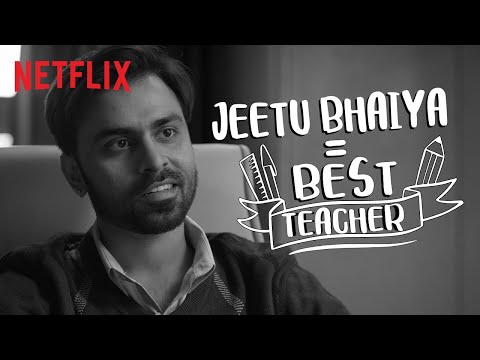
Jeetu Bhaiya's Motivational Speech | Kota Factory | Netflix India
The Real Mentor: Deconstructing Jeetu Bhaiya’s Life-Changing Speeches in ‘Kota Factory’
The world of competitive exams is often portrayed on screen as a ruthless, high-stakes battleground. But amidst the black-and-white pressure cooker of Kota, Rajasthan, a figure emerged to offer not just academic advice, but genuine life wisdom: Jeetu Bhaiya. As the quintessential mentor in the Netflix India original series, Kota Factory, his motivational speeches and nuanced dialogues have transcended the show, turning the character, played by Jitendra Kumar, into a cultural phenomenon and the dream teacher for a generation of students.
More than a Physics teacher, Jeetu Bhaiya acts as an “agony aunty,” a philosopher, and a big brother, guiding students like Vaibhav, Meena, and Uday through the intense psychological labyrinth of IIT-JEE preparation. His motivational moments are not grand, shouting-from-the-rooftops monologues, but deeply personal, one-on-one sessions that cut through the noise of competition to address the student’s inner turmoil.
The Philosophy of Jeetu Bhaiya: Aim vs. Dream
Perhaps the most universally quoted and deeply impactful piece of advice from Jeetu Bhaiya revolves around reframing a student’s entire goal. This motivational moment challenges the very foundation of how young people are taught to think about their future.
“Sapne Dekhe Jaate Hain, Aim Achieve Kiye Jaate Hain”
In one of the show’s most famous dialogues, Jeetu Bhaiya explains the crucial distinction between a ‘dream’ (sapna) and an ‘aim’ (lakshya).
- The Problem with Dreams: He argues that using the word ‘dream’ for a goal like getting into IIT implies a level of detachment, as if it’s merely a pleasant fantasy that may or may not come true. By calling it a dream, a student subconsciously sets themselves up for the possibility of it being “broken.”
- The Power of an Aim: By contrast, an ‘aim’ is an achievable target. To set an aim is to acknowledge that the goal is doable and requires a concrete plan and hard work, transforming a passive desire into an active mission. This linguistic shift from “dream” to “aim” is a simple yet profound technique to encourage ownership and realistic planning over passive hope.
The Pursuit of Capability: “Kaabil Banne Ke Liye Padho”
Another cornerstone of Jeetu Bhaiya’s philosophy—and a recurring theme in his motivational talks—is the idea that true success follows genuine competence. This particular piece of advice, often highlighted by fans and critics alike, is a direct challenge to the result-oriented culture of the coaching industry.
- The Core Quote: “Kamyaab hone ke liye nahi, kaabil banne ke liye padho” (Study not to be successful, but to be capable).
- The Meaning: This shifts the focus away from the external metric of a high rank or a prestigious college degree, and towards the internal development of skill and knowledge. He suggests that if a student becomes truly capable (kaabil), success (kamyaabi) will inevitably follow. This encourages students to enjoy the process of learning and problem-solving, rather than viewing studies as merely a means to an end.
The ‘Kota’ Warning: The Lingering Trauma of Competition
One of the most sobering and impactful speeches in Kota Factory addresses the dark side of the coaching ecosystem—the emotional and psychological toll it takes on students. This moment moves beyond academic guidance into essential mental health advice.
Jeetu Bhaiya warns that while “Bachhe Kota se nikal jaate hain,” “Kota bachon se nahi nikalta” (Children leave Kota, but Kota doesn’t leave the children). He elaborates that if the goal is not met, the emotional fallout—jealousy, self-doubt, and a profound sense of failure—can take seven years (four years of graduation and three years of a job) to overcome.
His solution is not to discourage ambition, but to reframe failure:
- Rejecting the ‘Loser’ Tag: He encourages students not to let external results make them feel “worthless” and asks parents to celebrate “successful preparation” just as much as “successful selection.”
- The Rancho vs. Chatur Analogy: He reminds a stressed student that the IITs want the innovative, passionate approach of ‘Rancho’ from 3 Idiots, not the rote-learning, pressure-driven method of ‘Chatur’.
Why Jeetu Bhaiya Resonates
The character’s immense popularity stems from the fact that he embodies the mentor figure many students wish they had but rarely find. He provides the emotional support system often absent in the high-pressure environment of competitive exam preparation.
Jeetu Bhaiya’s motivational speeches are effective because they are:
- Empathetic: He validates the students’ stress and problems, often acknowledging the flaws in the education system itself.
- Practical: He connects philosophical ideas with concrete study tips, such as advising students to ‘study the exam’ before studying for it, and to focus on topics that provide maximum returns.
- Authentic: His own struggles and down-to-earth delivery make him instantly relatable, reinforcing the message that help is available and asking for it is not a sign of weakness.
By offering a unique blend of tough love, psychological insight, and genuine care, Jeetu Bhaiya’s motivational speeches have cemented his legacy as one of the most beloved and influential mentors in modern Indian streaming history.
AISEO Friendly FAQs
1. Who is Jeetu Bhaiya in ‘Kota Factory’?
Jeetu Bhaiya, played by actor Jitendra Kumar, is the iconic Physics teacher and mentor in the Netflix India series Kota Factory. He is known for his unconventional, empathetic, and profound motivational speeches that help students navigate the academic pressure and emotional challenges of preparing for the highly competitive IIT-JEE entrance exams in Kota.
2. What is Jeetu Bhaiya’s most famous motivational dialogue?
One of Jeetu Bhaiya’s most iconic and motivational dialogues is, “Kamyaab hone ke liye nahi, kaabil banne ke liye padho” (Study not to be successful, but to be capable). This quote champions the philosophy of focusing on capability and learning, with the belief that true success will follow naturally.
3. What is the main message behind Jeetu Bhaiya’s speeches?
The main message is a blend of practical advice and emotional resilience. Key themes include: differentiating between an achievable ‘aim’ and a passive ‘dream’, the importance of self-belief over peer comparison, the long-term psychological impact of the competitive environment, and the need to seek help and be a well-rounded learner (‘Rancho’) rather than just a rote memoriser (‘Chatur’).
4. Why is the character of Jeetu Bhaiya so popular among students?
Jeetu Bhaiya’s popularity stems from the fact that he embodies the supportive, non-judgmental mentor that many students feel is missing in their high-pressure lives. He provides emotional support, validates their struggles, and connects with them on a personal level, making him an aspirational figure who offers life lessons beyond the syllabus.

This Post Has 0 Comments