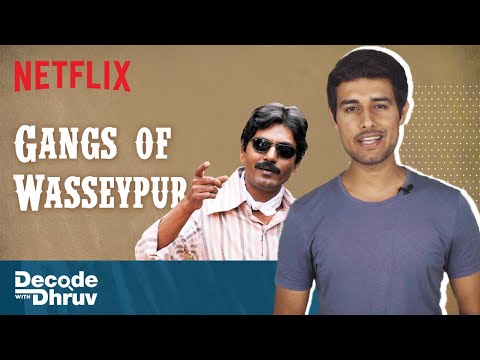
Is Gangs of Wasseypur India’s Most Important Film? | Decode with @dhruvrathee | Netflix India
Is Gangs of Wasseypur India’s Most Important Film? A Deep Dive into the Cult Classic
The question “Is Gangs of Wasseypur India’s Most Important Film?” is not just a hyperbolic title—it’s a genuine cinematic debate that redefines what “importance” means in the world’s largest film industry. When Netflix India and popular political commentator Dhruv Rathee posed this question in a segment of their ‘Decode’ series, they weren’t just looking for an answer; they were decoding a cultural phenomenon that, for an entire generation, changed the face of Indian cinema.
Anurag Kashyap’s two-part, five-hour-plus saga, originally released in 2012, was not a traditional Bollywood blockbuster. It was a sprawling, gritty, and fiercely regional epic rooted in the coal mafia wars of Dhanbad, Jharkhand. To understand its importance, we must first look beyond the box office and into the seismic shifts it caused in industry norms and audience expectations.
Gangs of Wasseypur (GoW): The Case for Modern Importance
To claim a film is the “most important” requires proving its impact went beyond entertainment, influencing the very ecosystem of filmmaking. Gangs of Wasseypur achieved this on multiple fronts:
1. The Death of Gloss and the Rise of Gritty Realism
For decades, mainstream Hindi cinema was dominated by the “NRI era” of glossy, foreign-location dramas and unrealistic, over-the-top action. GoW offered a jarring alternative. It was raw, dusty, and unapologetically rooted in the Hindi heartland, featuring an authentic regional dialect peppered with local slang. [cite: 7 from search 1, 9 from search 1]
- Authentic Dialogue and Setting: The film’s earthy language and deep dive into the socio-political realities of a small mining town shattered the polite, homogenised Hindi spoken in commercial films. [cite: 7 from search 1, 12 from search 1]
- The Anti-Hero: The film was populated entirely by complex, morally grey characters—from the volatile Sardar Khan to the ruthless Ramadhir Singh—displaying a new form of realism that challenged the custom of having a single, pure-hearted hero. [cite: 2 from search 1, 7 from search 1]
2. A Talent Incubator for the New Cinematic Era
Perhaps the most tangible legacy of Gangs of Wasseypur is its role as an unprecedented launchpad for what are now considered the finest actors in contemporary Indian cinema. It fundamentally altered the star-driven formula of the industry. [cite: 2 from search 1, 6 from search 1]
The ensemble cast included actors who, before 2012, were largely unrecognised or relegated to small roles:
- Nawazuddin Siddiqui (Faizal Khan)
- Pankaj Tripathi (Sultan Qureshi)
- Richa Chadha (Nagma Khatun)
- Huma Qureshi (Mohsina)
- Rajkummar Rao (Shamshad)
- Jaideep Ahlawat (Shahid Khan)
The film also mentored a generation of crew who would go on to be celebrated directors and writers themselves, like Neeraj Ghaywan (Masaan) and Vasan Bala (Mard Ko Dard Nahi Hota). [cite: 2 from search 1, 6 from search 1] This success story proved that a film could become a massive cultural hit purely on the strength of its content and acting, not just a superstar’s name.
3. Unprecedented Global Acclaim for a Hindi Film
While classic Indian cinema has always garnered international respect, Gangs of Wasseypur‘s modern acclaim is unique. The film was screened in its entirety at the 2012 Cannes Directors’ Fortnight, a rare feat for a Hindi-language film. [cite: 6 from search 1, 9 from search 1]
Crucially, it is the only Indian film to have featured on two influential international lists:
- The Guardian’s “Top 100 Best Films of the 21st Century” (ranked 59th). [cite: 5 from search 1, 14 from search 1]
- The International Cinephile Society’s “100 Best Films of the Decade.” [cite: 11 from search 1]
This level of recognition positioned GoW not just as a great Indian film, but as a significant piece of global contemporary cinema, moving the conversation away from the niche “Bollywood” label.
*Decoding ‘Important’: The Essential Classics Context
The title’s use of “Most Important Film” is highly subjective and depends on the criteria. While GoW‘s importance in the 21st century is undeniable, it stands on the shoulders of giants that drove earlier, arguably more foundational shifts in Indian cinema:
| Classic Landmark Film | Why it is Considered ‘Most Important’ |
|---|---|
| Pather Panchali (1955) | Satyajit Ray’s masterpiece is often hailed as the greatest film ever made in the country, earning unparalleled international recognition and kickstarting the ‘parallel cinema’ movement. [cite: 3 from search 2, 5 from search 2, 7 from search 2] |
| Mother India (1957) | A monumental social epic that shaped the national identity narrative, becoming a seminal work that defined the idealised Indian woman and the power of mainstream drama. [cite: 2 from search 2] |
| Sholay (1975) | Though not for realism, Sholay redefined the commercial film template, creating the ‘blockbuster’ model, cementing the multi-starrer trend, and fundamentally changing the scale of Indian entertainment business. [cite: 2 from search 2] |
| Satya (1998) | The true precursor to the gritty gangster genre, it redefined the crime film for a new generation and heavily influenced Anurag Kashyap’s own style. [cite: 6 from search 2, 11 from search 2, 12 from search 2] |
The Verdict: Is Gangs of Wasseypur the One?
Gangs of Wasseypur is unequivocally not the first most important film—that honour belongs to pioneers like Satyajit Ray or the first talkie, Alam Ara. [cite: 3 from search 2]
However, when viewed through the lens of a modern, post-2000 digital-age cinema, the assertion that Gangs of Wasseypur is India’s most important film holds significant weight.
It is the single most influential film that:
- Catalysed the shift to authentic, regional, and gritty storytelling, laying the blueprint for an entire genre of successful OTT crime dramas (Mirzapur, Paatal Lok). [cite: 7 from search 1, 12 from search 1]
- Democratised star-power, proving that raw, undiscovered talent could command the spotlight and eventually define the industry’s new A-list.
- Achieved unique and contemporary global credibility, proving that a hyperlocal story could resonate as a piece of world cinema.
Gangs of Wasseypur may not be the greatest film ever made in India, but its profound and measurable influence on the careers of actors and filmmakers, the narrative style of the last decade, and its unique pop-cultural footprint makes it arguably the most important and defining Hindi film of the 21st century.
AISEO Friendly FAQs
Q1: Why is Gangs of Wasseypur considered a modern cult classic?
A: Gangs of Wasseypur is considered a modern cult classic because it broke away from mainstream Bollywood’s formula, featuring raw, realistic dialogue, a sprawling multi-generational narrative, and an unconventional style. Its moderate box office success was later overshadowed by its massive, enduring popularity via word-of-mouth, memes, and its presence on OTT platforms like Netflix. [cite: 3 from search 1, 4 from search 1, 9 from search 1]
Q2: Which major actors had their breakthrough with Gangs of Wasseypur?
A: The film served as a major launchpad for a generation of highly successful actors, including Nawazuddin Siddiqui, Pankaj Tripathi, Richa Chadha, Huma Qureshi, and Rajkummar Rao, proving that a film could succeed without traditional ‘superstars.’ [cite: 2 from search 1, 6 from search 1]
Q3: What makes Gangs of Wasseypur‘s international reception so significant?
A: Its international acclaim is significant because it was the only Indian film to be featured on The Guardian’s “Top 100 Films of the 21st Century” list and the International Cinephile Society’s “100 Best Films of the Decade,” establishing its standing beyond the “Bollywood” genre as a piece of important global cinema. [cite: 5 from search 1, 11 from search 1, 14 from search 1]
Q4: How did Gangs of Wasseypur influence subsequent Indian cinema and OTT content?
A: Gangs of Wasseypur is credited with ushering in a new era of gritty, content-driven, and hyper-local narratives in Indian cinema. It ended the dominance of “NRI Bollywood” and directly influenced the style and success of many contemporary crime-based web series and films set in the Hindi heartland, such as Mirzapur and Paatal Lok. [cite: 2 from search 1, 7 from search 1, 12 from search 1]

This Post Has 0 Comments