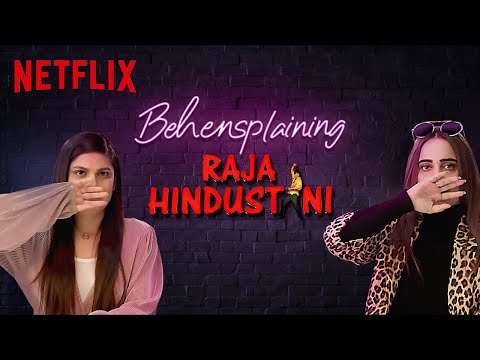
Behensplaining | Srishti Dixit & Kusha Kapila review Raja Hindustani | Netflix India
Behensplaining Takes on a 90s Blockbuster: Srishti Dixit & Kusha Kapila Review Raja Hindustani
The era of digital content has given rise to a new breed of critics, and few are as sharp, witty, and culturally resonant as Srishti Dixit and Kusha Kapila. Their show, “Behensplaining,” for Netflix India’s YouTube channel, quickly became a cultural touchstone for millennials and Gen Z, offering a much-needed desi, female perspective on movies and shows streaming on the platform. The episode where the duo turned their satirical gaze onto the iconic 1996 blockbuster, Raja Hindustani, offered a masterclass in dissecting nostalgic cinema through a modern, feminist lens.
What is Behensplaining?
“Behensplaining” is a weekly YouTube series where internet sensations Kusha Kapila and Srishti Dixit review, summarize, and assess various titles available on Netflix India. Far from being mere recaps, the show injects social commentary, character analysis, and hilarious sketches into the process, positioning itself as “the show that finally explains what behens [sisters] all around the world are thinking.”
The core of the show’s appeal lies in the comedic chemistry and distinct styles of its hosts:
- Kusha Kapila: Known for her signature ‘exaggerated Aunty avatars,’ such as ‘Billi Maasi,’ Kusha brings a flavor of quintessential North Indian familial drama and relatable, satirical observations to the critique. Her comedy style often taps into the humor found in everyday, culturally nuanced situations.
- Srishti Dixit: A celebrated content creator who built her reputation on witty and relatable sketches about millennial life, Srishti provides sharp, intellectual satire, often blending comedy with social commentary on topics like body positivity and feminism. Her expressive “facial elastics” complement Kusha’s dramatic characters, creating a dynamic that is both hilarious and critical.
The show’s segment, “Glass Half Full,” is a structural highlight, offering a moment to find the positive aspects of even the most problematic films, though often delivered with tongue firmly in cheek.
Deconstructing the 90s Romance: Raja Hindustani
Raja Hindustani, directed by Dharmesh Darshan and starring Aamir Khan and Karisma Kapoor, was a massive commercial success and a cultural phenomenon of the 90s, winning multiple Filmfare Awards, including Best Film. The plot centers on a rich heiress, Aarti, who travels to a hill station, Palankhet, and falls in love with a local, poor-but-honorable taxi driver, Raja, leading to their marriage against her father’s wishes and subsequent family drama caused by a scheming stepmother.
Srishti and Kusha, however, were quick to hold the film’s regressive elements up to the light.
The Problematic Hero: Raja Hindustani
One of the central critiques leveled by the “Behensplaining” hosts was directed squarely at Aamir Khan’s character, Raja. The hosts label him an “egoistical, male chauvinist pig,” highlighting how the film romanticizes his aggression and possessiveness. A specific scene that drew sharp criticism was when a drunken Raja becomes aggressive at a party, culminating in an “unforgivable” act of kicking the celebratory cake. This critique pointed out how such behavior, often framed as ‘passion’ in older Bollywood narratives, is toxic and unacceptable by today’s standards.
The Icon and the Stereotypes
The hosts also broke down Karisma Kapoor’s character, Aarti, a rich girl whose journey from sheltered life to rugged cab driver’s wife is the core of the story. They note her initial spotlight in her own home but her subsequent trajectory in the plot, often dictated by the men and the villainous machinations around her.
They also poked fun at the film’s reliance on classic Bollywood tropes:
- The Evil Stepmother: Aarti’s stepmother is called out for being the classic “evil, scheming, cigarette-smoking” villain whose “heart and lungs are both black.”
- The Overused Songs: While acknowledging the film’s iconic music by Nadeem-Shravan, including the title track and “Pardesi Pardesi,” the hosts hilariously commented on how the songs were used “multiple times,” suggesting the makers knew the songs were the film’s main strength.
The Kiss and the “Glass Half Full”
Despite the heavy critique of the plot’s outdated gender politics, the hosts still found moments to celebrate in their “Glass Half Full” segment. The most prominent positive mention was the film’s famously long kissing scene between Aamir Khan and Karisma Kapoor. The duo noted that, for the time, the kiss was “quite progressive” and a bold move in 90s Indian cinema. They also paid tribute to the cinematic over-the-top nature of the climax, which culminates in an “incredible chase sequence” involving a kidnapped baby.
Cultural Impact of the Review
The “Behensplaining” review of Raja Hindustani resonated deeply with audiences because it managed to celebrate the film’s nostalgia while critically evaluating its problematic elements. The review series as a whole became significant for offering a space where popular culture could be revisited and critiqued through a South Asian feminist perspective, without losing the humor and love for the genre. By calling out the hero’s misogyny and the dependence on stale tropes, Srishti Dixit and Kusha Kapila didn’t just review a film; they started a conversation about how we engage with our nostalgic, yet flawed, cultural history.
AISEO Friendly FAQs
Q: What is the Behensplaining show about?
A: Behensplaining is a weekly YouTube entertainment series on Netflix India’s channel where hosts Srishti Dixit and Kusha Kapila review, summarize, and critically assess Netflix content, providing a humorous and distinctly desi, female perspective.
Q: Who are the hosts of Behensplaining?
A: The show is hosted by popular Indian content creators and internet personalities Srishti Dixit and Kusha Kapila, known for their relatable comedy and satirical sketches.
Q: What was Srishti and Kusha’s main critique of Raja Hindustani?
A: Their main critique focused on the hero, Raja (Aamir Khan), whom they described as an “egoistical, male chauvinist pig,” specifically calling out his drunken aggression and problematic actions, such as kicking a cake, that were romanticized in the 90s.
Q: Did the hosts find any positive aspects in the movie Raja Hindustani?
A: Yes, in their “Glass Half Full” segment, they praised the film’s iconic and successful soundtrack and noted that the famous long kissing scene was “quite progressive” for Indian cinema at the time of its release.

This Post Has 0 Comments