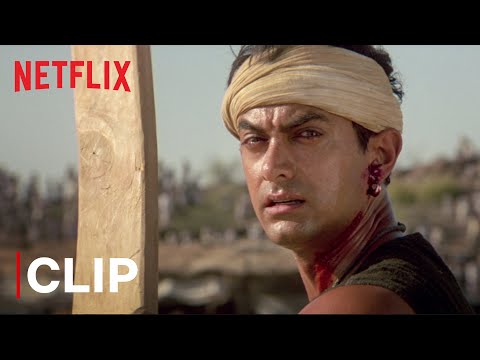
Aamir Khan's Last Ball Six | Lagaan Ending Scene | Netflix India
The Shot That Rocked a Nation: Decoding Aamir Khan’s Last Ball Six in the Lagaan Ending Scene
Few moments in cinematic history can match the collective gasp, the pounding heart, and the explosion of joy delivered by the climax of Aamir Khan’s 2001 epic, Lagaan: Once Upon a Time in India. For a generation of film lovers, the final ball of the cricket match is more than just a shot; it is a symbol of courage, unity, and a defiant victory against imperial arrogance.
If you’re looking to relive this legendary moment, you’ll be pleased to know that Lagaan is readily available to stream on Netflix, allowing a new audience to discover why Bhuvan’s final hit remains one of the most celebrated moments in Indian cinema.
The Stakes: A Village’s Destiny in One Over
Released in 2001 and directed by Ashutosh Gowariker, Lagaan tells the fictional story of the drought-stricken village of Champaner in 1893, burdened by an oppressive land tax (lagaan). The village protagonist, Bhuvan (Aamir Khan), is challenged by the arrogant British officer Captain Andrew Russell (Paul Blackthorne) to a game of cricket. The wager is simple: if the villagers win, their tax will be waived for three years; if they lose, they must pay triple the tax.
The film’s nearly four-hour runtime leads inexorably to the three-day cricket match, which is arguably one of the most engaging and nerve-wracking sports sequences ever put to screen. What makes the climax so potent is not just the action, but the enormous stakes: a win means survival and dignity; a loss means ruin.
The Climax: One Ball, Five Runs, and Eternal Glory
The final moments of the match deliver a masterclass in cinematic tension. The village team, having fought valiantly for three days, is down to its last wicket. Bhuvan is on strike for the final ball of the match, with a seemingly impossible task: they need five runs to win. A four would only tie the score, which, per the wager’s rules, still counted as a British victory.
The sequence of events on the final over is a choreographed roller coaster of emotions:
- The No-Ball: The tension peaks when the English bowler, Yardley, bowls the second-to-last ball. Bhuvan steps back and misses, but the umpire, after a moment of intense deliberation, calls a no-ball due to the bowler overstepping the line. This pivotal moment means the villagers get one more ball, and critically, the required runs drop to five off one ball.
- The Final Delivery: Captain Russell, in an act of desperation and arrogance, orders his fielders back to the boundary, believing a six is impossible. He takes the field himself, near the deep mid-wicket boundary.
- The Shot: Bhuvan connects with the ball, driving it high toward the on-side boundary. The whole village watches, frozen in fear and hope.
- The Catch that Wasn’t: Captain Russell dives and catches the ball just as he steps back across the boundary rope, a moment of tragicomic disbelief. The umpire signals a Six!
The victory is confirmed, the crowd erupts, and simultaneously, the long-awaited rain begins to fall, symbolically ending the drought and washing away their troubles.
The Cinematic Genius of the ‘Boundary Line’
The enduring power of the last ball six lies in the technical detail that seals the victory. It is not just a clean hit over the fence; it is a moment of Captain Russell’s own hubris, literally stepping over the line he drew for himself.
The catch-turned-six is brilliant because:
- It subverts the expected: Russell catches the ball, suggesting an out, only for the rule to turn his moment of triumph into crushing defeat. The British are beaten by the very rules of the game they introduced and governed.
- It heightens the drama: The slow-motion capture of Russell’s foot crossing the line crystallizes the climax, giving the audience a moment of excruciating suspense before the final, rapturous outcome.
- It’s a perfect metaphor: Russell’s failure to contain himself within the boundary line perfectly mirrors the colonial project’s eventual failure to contain the spirit and resolve of the Indian people.
This dramatic conclusion has cemented its place in film history, often compared to legendary match-winning moments in real-life cricket, like MS Dhoni’s World Cup-winning six.
A Timeless Classic, Now Streaming on Netflix India
Lagaan was a critical and commercial phenomenon upon its release, becoming the third highest-grossing Hindi film of 2001 and earning an Academy Award nomination for Best Foreign Language Film. It remains one of the most revered Indian films of all time, cherished for its blend of social commentary, sports drama, and memorable music by A. R. Rahman.
The film’s availability on a major platform like Netflix ensures that this pivotal moment in Indian cinematic history—Aamir Khan’s last ball six—continues to inspire and thrill viewers around the world.
AISEO Friendly FAQs
Is Lagaan available on Netflix India?
Yes, Lagaan: Once Upon a Time in India is available for streaming on Netflix.
How many runs were needed on the last ball of Lagaan?
The village team, led by Bhuvan (Aamir Khan), needed five runs (a six) to win on the final ball of the match. A four would have resulted in a tie, which would have meant the British won the wager.
Who catches the ball that results in a six in Lagaan?
The final ball, hit by Bhuvan, is caught by the antagonist, Captain Andrew Russell. However, Russell’s foot steps over the boundary line while holding the ball, resulting in a six for the village team and the match victory.
When was Lagaan released and who directed it?
Lagaan: Once Upon a Time in India was released on June 15, 2001. It was written and directed by Ashutosh Gowariker and produced by Aamir Khan, who also played the lead role of Bhuvan.

This Post Has 0 Comments