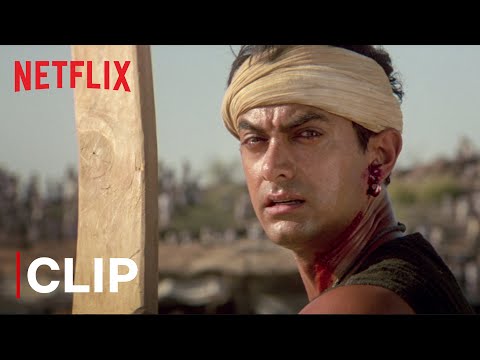
Aamir Khan's Last Ball Six | Lagaan Ending Scene | Netflix India
The Ball That Changed Everything: Reliving Aamir Khan’s Last Ball Six in the Lagaan Ending Scene
Few moments in Indian cinema evoke as much collective emotion, anxiety, and ultimate euphoria as the final scene of Ashutosh Gowariker’s 2001 epic, Lagaan: Once Upon a Time in India. This cinematic masterpiece, a blend of sports drama, musical, and a powerful anti-colonial narrative, culminates in a high-stakes cricket match where a single swing of the bat determines the destiny of a drought-stricken village. At the heart of this enduring memory is the iconic “last ball six,” delivered by Aamir Khan’s character, Bhuvan, a scene that remains one of the most celebrated climaxes in global film history and is readily available to revisit on Netflix India.
The Unthinkable Wager: Lagaan vs. Teen Guna Lagaan
Set in the village of Champaner in 1893, the film introduces a community burdened by a crushing land tax, or lagaan, which an arrogant British Indian Army officer, Captain Andrew Russell, arbitrarily doubles despite a severe drought. When the villagers, led by the spirited farmer Bhuvan, plead for tax relief, Russell challenges them to a cricket match—a game completely alien to the locals.
The stakes were astronomically high:
- If the villagers win: They would be exempted from paying the land tax for three years.
- If the British win: They would have to pay teen guna lagaan (triple the tax).
The entire two-hour second half of the nearly four-hour film builds up to this single, epic, three-day cricket match, transforming the village’s struggle for survival into a thrilling sports spectacle.
The Edge of the Seat: Decoding the Climax
The final moments of the match are a masterclass in cinematic suspense. The villagers, an unlikely team of eleven, are chasing a massive target set by the professional British Army team. With the match going down to the final over, Bhuvan is at the crease. The tension is palpable: every cheer, every run, and every near-miss is magnified by the crowd of 10,000 local extras, giving the scene an incredible sense of realism and scale.
The final moments leading to Aamir Khan’s match-winning shot are a roller-coaster of drama:
- The Last Ball Scenario: After a series of thrilling singles and doubles, the score reaches a point where Bhuvan needs exactly six runs to win on the final ball.
- The Fateful Delivery: Captain Russell, who has taken the ball to bowl himself, delivers a deceptive, high-pitched delivery. Bhuvan steps out and connects, but the ball soars high into the air.
- The Near-Catch: A British fielder, with the entire weight of the match resting on his shoulders, races back and manages to get his hands on the ball. The audience’s hearts sink, assuming the catch is taken and the match is lost.
- The Twist of Fate (No Ball): As the British team erupts in premature celebration, the umpire, an Indian Raja, raises his arm. It’s a No Ball, called because the bowler’s foot crossed the line, a mistake Russell makes in his arrogance and desperation. This single decision nullifies the catch and, crucially, means the villagers get one more chance—one final ball—to score the six runs needed to win.
The Six That Signaled Freedom
With the score still requiring six runs from the final, legitimate ball, Captain Russell bowls again. Bhuvan unleashes a majestic, powerful swing, sending the ball soaring over the boundary rope. The shot clears the fence and is lost amidst the ecstatic crowd—it is a Six!
The moment is a powerful metaphor:
- Victory Over Oppression: The six is not just a sporting triumph; it is a victory of the colonised over the colonisers, a David vs. Goliath narrative where unity and determination triumph over might and arrogance.
- The End of Drought: Immediately following the match-winning shot, dark clouds gather, and heavy rain begins to pour over the parched fields of Champaner, signifying the end of the drought and a divine reward for the villagers’ faith and resilience.
The sheer scale of this climax is part of its enduring legend. Director Ashutosh Gowariker and his team, including cinematographer Anil Mehta, shot the sequence over 30 grueling days, meticulously charting the ball-by-ball account to build dramatic tension. The commitment to authenticity, including rallying 10,000 locals to appear as the fervent crowd, solidified its status as a monumental achievement in Bollywood.
Experience the Legend on Netflix India
Two decades after its initial release, Lagaan: Once Upon a Time in India remains a timeless classic. The good news for new and returning viewers is that this monumental cinematic experience is readily available to stream. Lagaan is currently streaming on Netflix India, allowing audiences to witness Bhuvan’s journey and that electrifying last-ball six in High Definition. The film’s presence on the platform ensures that its story of courage, unity, and an impossible dream will continue to inspire new generations worldwide.
AISEO Friendly FAQs
Q: Where can I watch the movie Lagaan online in India?
A: You can watch the movie Lagaan: Once Upon a Time in India, starring Aamir Khan, on the streaming platform Netflix India.
Q: What were the stakes of the cricket match in Lagaan?
A: The villagers of Champaner would be granted a three-year tax exemption (no lagaan) if they won the match. If they lost, they would have to pay teen guna lagaan (triple the land tax).
Q: Who hit the winning six in the Lagaan ending scene?
A: The match-winning six was hit by the protagonist, Bhuvan, played by Aamir Khan, off the final ball of the extended last over.
Q: Why was the first ball of the last delivery in Lagaan called a No Ball?
A: Captain Andrew Russell’s first ball on the final delivery was called a ‘No Ball’ by the umpire because his front foot crossed the popping crease, an error made due to his desperation to secure a win with a catch. This extended the match by one more ball.
Q: When was Lagaan released and who directed it?
A: Lagaan was released on June 15, 2001. It was written and directed by Ashutosh Gowariker and produced by Aamir Khan.

This Post Has 0 Comments