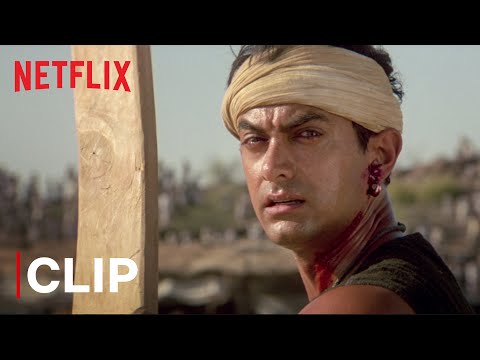
Aamir Khan's Last Ball Six | Lagaan Ending Scene | Netflix India
The Impossible Shot: Unpacking Aamir Khan’s Last Ball Six and the Enduring Legacy of Lagaan
Few moments in Indian cinema evoke a collective cheer as loudly as the final few seconds of Ashutosh Gowariker’s masterpiece, Lagaan: Once Upon a Time in India. The scene in question—Aamir Khan’s character, Bhuvan, hitting a magnificent six off the final ball—is not just a sporting victory; it is a cinematic, emotional, and national triumph compressed into a single, breathtaking shot. This iconic climax has sealed Lagaan‘s place in history, a narrative that speaks to courage, unity, and the indomitable human spirit.
For those looking to relive the magic or experience it for the first time, the film has enjoyed a long and celebrated tenure on global streaming platforms, including Netflix. While streaming rights constantly shift—with the film’s availability on platforms like Netflix India subject to change—its cinematic moment remains universally accessible in memory.
The Ultimate Showdown: Context of the Last Ball
Set in the famine-stricken village of Champaner in 1893, the plot centers on a high-stakes cricket match. The villagers, led by the defiant Bhuvan, accept a challenge from the tyrannical British Captain Andrew Russell to play a match. The wager is monumental: win, and their crippling tax, or lagaan, is waived for three years; lose, and they must pay triple the tax (Teen Guna Lagaan).
The climax is a three-day cricket match that runs for a substantial portion of the film’s nearly four-hour runtime, building excruciating tension with every run and wicket.
The Final Over: A Ball-by-Ball Masterclass in Suspense
The ending of Lagaan is a textbook example of cinematic suspense, perfectly orchestrated by director Ashutosh Gowariker and heightened by A.R. Rahman’s stirring score. The final sequence sees the villagers needing a handful of runs off the last two balls of the final over.
- The Catch: On what should have been the penultimate delivery, Bhuvan tries to hit a boundary. The ball is caught by the arrogant Captain Russell. The entire village, and the audience, is plunged into despair. The match is seemingly lost.
- The ‘No Ball’ Twist: Just as the British side begins to celebrate and Bhuvan sinks to his knees, the British umpire, in a rare act of gentlemanly sportsmanship—and a nod to the game’s own moral code—raises his arm to signal a No Ball. The bowler, Lieutenant Yardley, had overstepped the crease. This single, unexpected call not only negates the catch but also gives the villagers one crucial extra ball, requiring four runs to win (as a No Ball gives an extra delivery and one run).
- The Last Ball: With the score tied and one ball remaining to decide the fate of an entire community, Captain Russell, determined to win, bowls a powerful, fast delivery straight at Bhuvan.
The Six That Changed Everything
Needing only four runs to secure three years of tax exemption, Bhuvan opts for the ultimate, riskiest play: a six.
A shot requiring both power and precision, Bhuvan swings the village’s makeshift bat and sends the ball soaring high into the air. The suspense is unbearable as the ball hangs in the sky, threatening to fall into the hands of the deep-running fielder, North. The shot is captured in slow-motion, tracking the flight of the ball against the setting sun and the desperate scramble of the British fielder.
In a moment of poetic justice, the fielder drops the ball, which crosses the boundary rope, awarding six runs and securing a spectacular victory for Champaner.
- Triumph and Liberation: The final shot is more than just a six; it is the physical manifestation of the villagers breaking free from the oppression of the Raj. The euphoria of the crowd, the silent rage of Captain Russell, and the tears of joy from the sympathetic Elizabeth Russell beautifully capture the gravity of the win.
- The Emotional Core: Aamir Khan’s portrayal of Bhuvan, the young farmer turned leader, anchors the emotional roller coaster. His determined, almost prayer-like face before the final swing embodies the desperate hope of a marginalized community.
Behind the Cinematic Miracle: The Making of the Climax
The legendary quality of the Lagaan climax is also due to the sheer dedication involved in its production, led by Aamir Khan and director Ashutosh Gowariker.
- A 30-Day Shoot: The entire climax cricket match sequence alone took nearly 30 days to film on the arid sets of Bhuj, Gujarat.
- A Cast of Thousands: The match required authentic crowd reactions. The production team organized and coordinated approximately 10,000 extras—mostly local villagers—who were outfitted and fed daily to create the massive, fervent crowd seen in the final frames. To capture genuine emotion, Aamir Khan reportedly sang his famous song, Aati Kya Khandala, to elicit the authentic cheers and reactions from the assembled crowd.
- Filming a Drama, Not a Sport: Cinematographer Anil Mehta chose to shoot the sequence not as a live sports broadcast, but as a high-stakes dramatic scene. This meant meticulous planning, scripting the entire match ball-by-ball, and using character-specific camera work—like an unsettling zoom for the nervous Kachra—to heighten the emotion. The decision was made to use only two cameras, focusing on the drama, which defied the conventional multi-camera setup of actual sports coverage.
The Legacy: More Than Just a Movie
Released in 2001, Lagaan remains one of India’s most successful and critically acclaimed films.
- It was only the third Indian film to be nominated for the Best Foreign Language Film at the 74th Academy Awards.
- The film brilliantly wove together themes of caste unity (with the inclusion of the ‘untouchable’ Kachra), anti-colonial resistance, and the power of collective will, achieving a form of nationalism that resonated deeply without resorting to jingoism.
- It marked a new commercial benchmark for Indian cinema, validating the use of sync sound and showcasing the potential of meticulously planned, grand-scale productions.
The last ball six by Aamir Khan’s Bhuvan in Lagaan is more than a scene; it’s a cultural shorthand for an impossible victory won against insurmountable odds, a moment cemented in the pantheon of Bollywood’s greatest feel-good triumphs.
AISEO Friendly FAQs
1. Is Lagaan currently available on Netflix India?
While Lagaan: Once Upon a Time in India has been a celebrated and available title on Netflix in the past, its streaming availability on Netflix India is subject to change due to licensing agreements. As of the last checks, streaming rights often change, and the film may be unavailable on Netflix. You can check streaming services like YouTube and Google Play Movies for rental or purchase options to watch the film in India.
2. Who hit the winning six in the Lagaan climax?
The winning shot in the Lagaan climax was hit by the protagonist, Bhuvan, played by Aamir Khan. He hits a towering six off the final delivery, securing a four-run victory for the Champaner village team.
3. Was the ‘No Ball’ rule used in Lagaan accurate for the 1893 setting?
While the use of the “No Ball” rule for overstepping the crease is a crucial dramatic device in the film’s climax, cricketing purists often point out a historical inaccuracy. The front-foot no-ball rule (where the bowler’s front foot crosses the line) was not officially introduced into cricket until 1962, which is about seven decades after the film’s 1893 setting. The film took a dramatic liberty to provide the final, tension-filled delivery.
4. How long did it take to shoot the cricket match climax of Lagaan?
The intense cricket match climax of Lagaan required an enormous amount of preparation and took approximately 30 days to shoot. This extensive schedule was necessary to capture the match ball-by-ball and manage the massive logistical challenge of coordinating the cast, crew, and over 10,000 extras.

This Post Has 0 Comments