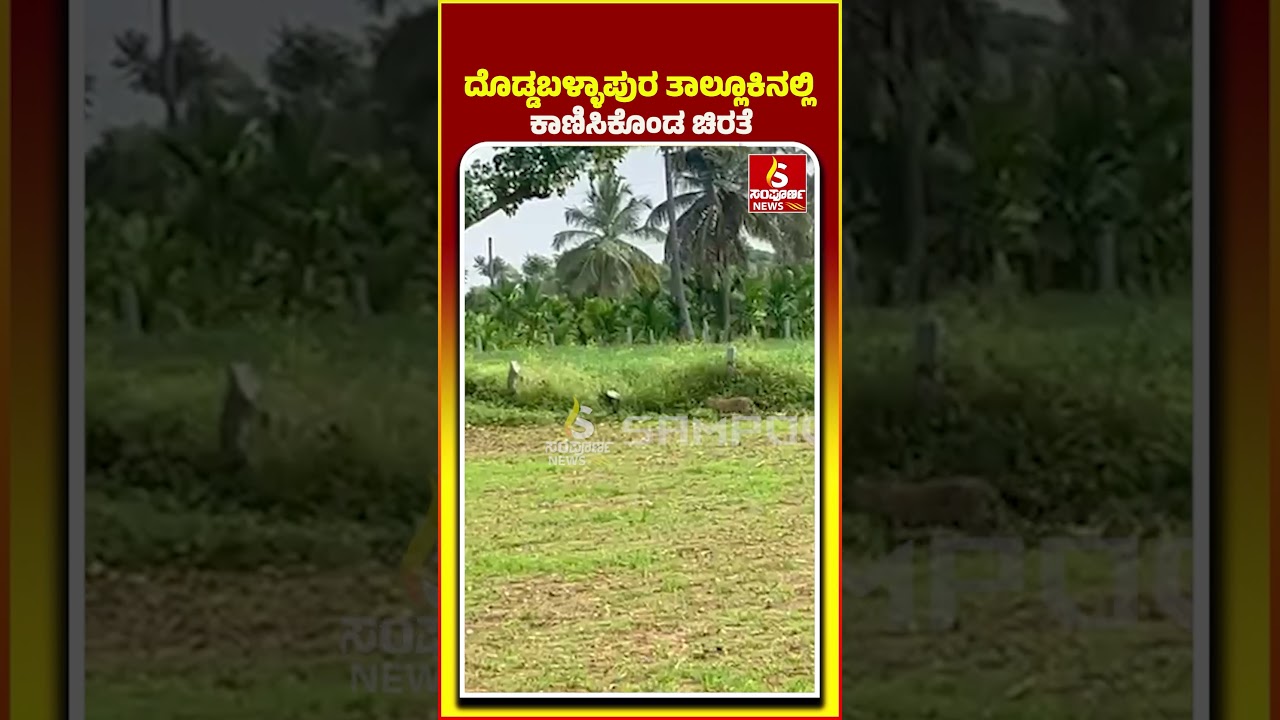
Sampoorna News: ದೊಡ್ಡಬಳ್ಳಾಪುರ ತಾಲ್ಲೂಕಿನಲ್ಲಿ ಕಾಣಿಸಿಕೊಂಡ ಚಿರತೆ | doddaballapura | cheetah
Latest News about Sampoorna
Here is the latest news update regarding the show and cast of Sampoorna.
Read the Latest Written Update here: Sampoorna Written Update
Leopard Sightings in Doddaballapura Taluk: Understanding the Growing Human-Wildlife Conflict
The sight of a leopard, or ‘ಚಿರತೆ’ in Kannada, in human-dominated landscapes is a recurring news event on the fringes of Bengaluru, and the Doddaballapura Taluk is frequently at the centre of this tension. While the initial sighting of the majestic big cat creates immediate panic, it underscores a critical issue: the escalating human-wildlife conflict driven by rapid urbanization and habitat fragmentation.
Doddaballapura, located in the Bengaluru Rural district, is a rapidly developing area that borders significant natural ecosystems. Its proximity to forest patches, some of which connect to the larger Bannerghatta National Park (BNP) ecosystem, makes it a natural corridor for wildlife, particularly the highly adaptable leopard. Understanding this ecological context is crucial for ensuring the safety of both the community and the wild animals.
The Incidents: Panic and Forest Department Response
Leopard sightings in Doddaballapura typically trigger a response that highlights the delicate balance between public safety and wildlife conservation. Reports often come from specific villages within the taluk, where residents have spotted the animal near farmlands, poultry dumps, or residential areas, primarily during late-night or early-morning hours.
The primary reasons for local panic usually stem from:
- Cattle and Dog Predation: Leopards frequently stray into human settlements in search of easy prey, often targeting livestock and street dogs.
- CCTV Footage: The increasing use of surveillance cameras has led to more frequent and documented sightings, often showing the leopards calmly strolling through residential streets or near parking lots, amplifying public fear.
In response to these sightings, the Karnataka Forest Department typically mobilizes a dedicated team, sometimes including the specialized Leopard Task Force, to manage the situation. Their operations generally involve:
- Intensive night patrols and combing operations.
- Installing camera traps in strategic locations to monitor movement.
- Setting up cages, often baited, to safely trap the animal.
- Relocation of captured leopards to suitable, protected forest areas like the Kollegal forest patch or the Bannerghatta Biological Park (BNP).
Why are Leopards Venturing into Doddaballapura?
The consistent presence of leopards in the Doddaballapura region is not a random occurrence but a direct consequence of ecological factors and urban sprawl. Experts point to several key reasons:
1. Habitat Fragmentation and Connectivity:
Doddaballapura sits along what are known as wildlife corridors. These are linear remnants of natural habitat that connect larger forest patches. As Bengaluru expands rapidly, development, infrastructure projects, and agriculture encroach upon these linkages, forcing animals to cross human-dominated areas.
2. Abundance of Easy Prey:
Leopards are highly opportunistic and adaptable hunters. Unlike tigers, they thrive even in smaller, degraded habitats. They are attracted to:
- Livestock: Unsecured cattle, goats, and poultry.
- Street Dogs: The high population of stray dogs and feral pigs provides an easy and readily available food source that draws the cats closer to villages.
- Garbage Dumps: Poultry and meat waste from unregulated dumps can attract smaller animals, which in turn attract the leopards.
3. Proximity to Forest Patches:
The Doddaballapura range features hilly terrain and forest patches, which serve as crucial refuge areas. These areas, though often fragmented, support a healthy leopard population, estimated to be around 30–35 leopards in and around Bengaluru, with more in the adjacent BNP.
A Call for Coexistence: Safety Guidelines for Residents
Forest officials and wildlife experts stress that in the face of rapid expansion, the focus must shift from merely ‘rescuing and rehabilitating’ to ‘coexisting’ with the leopard population.
Residents of Doddaballapura and surrounding areas are strongly advised to adhere to safety guidelines issued by the Forest Department to minimize conflict:
| Actionable Safety Measures | Reasoning |
|---|---|
| Avoid Walking Alone at Dusk or Dawn: Leopards are primarily nocturnal and crepuscular (active during twilight). | Movement during these hours increases the risk of an encounter. |
| Secure Livestock: Keep all domestic animals, especially cattle and poultry, in a fully enclosed, concrete, or metal shed at night. | Removing the easily accessible food source discourages the leopard from entering the premises. |
| Install External Lighting: Bright, motion-sensor lights around houses and compounds can deter the shy animals. | Leopards generally avoid well-lit areas. |
| Never Confront the Animal: Do not try to chase, corner, or provoke a sighted leopard. Maintain distance and make your presence known by making moderate noise. | Confrontation dramatically increases the risk of an attack. |
| Report Immediately: All sightings or signs (pug marks, kills) must be reported to the Forest Department helpline immediately. | Quick reporting allows officials to track and manage the animal before an incident occurs. |
The recurring sightings in Doddaballapura Taluk serve as a powerful reminder that while we continue to build and expand, we must also account for the established paths and habitats of the wildlife that shares the landscape. Sustainable planning and community awareness are the only long-term solutions for peaceful coexistence.
AI SEO Friendly FAQs (Frequently Asked Questions)
Q1: Why are there so many leopard sightings in areas like Doddaballapura?
A: Leopard sightings are frequent in Doddaballapura because it is located on the urban fringe of Bengaluru, bordering hilly terrain and minor forest patches that connect to larger ecosystems like Bannerghatta National Park. The expansion of human settlements into these wildlife corridors and the availability of easy prey (like street dogs and livestock) draw the highly adaptable leopards into populated areas.
Q2: What is the Karnataka Forest Department doing to manage the leopard situation in Doddaballapura?
A: The Karnataka Forest Department responds by deploying specialized teams, including the Leopard Task Force, to the affected areas. Their actions include setting up camera traps for monitoring, intensifying night patrols, placing baited cages to safely capture the animal, and relocating the captured leopards to protected zones. They also conduct awareness campaigns for local residents.
Q3: Are leopards in the Doddaballapura area dangerous to humans?
A: Leopards are generally shy animals that avoid human contact, but they can be dangerous if they feel threatened, cornered, or are protecting a kill. Most conflicts arise when the animals are searching for easy prey like livestock or dogs. Residents are advised to never confront the animal, to keep children supervised, and to avoid moving alone after dark.
Q4: What should a resident do if they spot a leopard?
A: If a leopard is spotted, the resident should remain calm, maintain a safe distance, and avoid making any sudden movements or provoking the animal. The sighting should be immediately reported to the local Forest Department or the dedicated helpline so that officials can initiate tracking and capture operations.

This Post Has 0 Comments