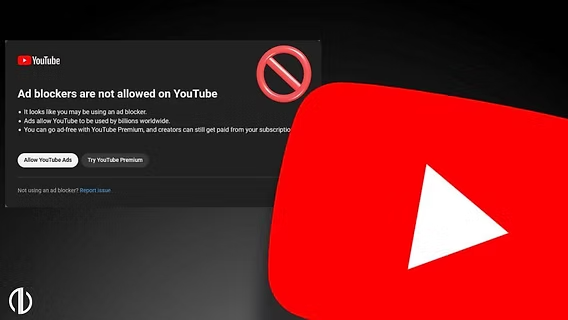
YouTube’s Aggressive Anti-Download & Ad Blocker Crackdown: New Technical Barriers Emerge in November 2025
The Unending War for Offline Content: YouTube Escalates Technical Barriers
The ability to download YouTube videos has always been a battleground: a space where user desire for offline access clashes directly with YouTube’s Terms of Service (ToS) and monetization model. In November 2025, that conflict has escalated dramatically, with YouTube rolling out some of its most aggressive technical roadblocks yet, not just for ad-free viewing, but also for the third-party tools many rely on for downloading.
Recent reports indicate a severe tightening of YouTube’s anti-ad blocker infrastructure, leading to widespread issues for users who attempt to bypass advertisements. This is not a separate issue; it is part of the same complex technical defense system that YouTube deploys to prevent unauthorized video downloads, forcing users toward the platform’s official, paid solutions. The cat-and-mouse game has entered a critical new phase, making the process of unauthorized downloading more unstable and riskier than ever.
Breaking Technical News: The November Blockade
The most immediate and impactful news for the general YouTube user arrived in the first two weeks of November 2025. Numerous reports confirmed that YouTube had deployed new, advanced detection methods that are effectively breaking major ad-blocking extensions, including popular tools like AdBlock Plus and, in some cases, uBlock Origin. Users found that with these blockers active, videos would not load or buffer, or the entire YouTube homepage would go blank, creating an immediate, non-negotiable choice: disable the blocker or subscribe to Premium.
From a technical standpoint, this crackdown uses highly sophisticated tactics:
- Ad Request Monitoring: YouTube knows precisely which ad scripts should load on a page. If an ad blocker prevents the browser from making these specific requests, the absence acts as an immediate ‘dead giveaway’ of unauthorized software.
- Bait Ads: The platform is reportedly sneaking in invisible “bait” ads using common ad-naming conventions. If this hidden code is instantly detected and removed by an ad blocker, the site registers the violation before a real ad even attempts to play.
While this targets ad-free viewing, the underlying infrastructure changes—constantly changing tokens, encryption protocols, and dynamic delivery methods—are the same ones that third-party video downloaders must constantly struggle to circumvent. The sheer speed and aggression of this technical tightening signify YouTube’s renewed, firm commitment to monetizing all content views, including offline ones.
The Open-Source Response: A Perpetual Patch War
The ongoing war can be clearly seen in the open-source community, particularly with the highly popular command-line utility, yt-dlp, a spiritual successor to the well-known youtube-dl. Just days ago, a new release was pushed out, reflecting the necessity of constant patching.
These tools must dedicate developer resources to solving ever-changing technical challenges, such as implementing an external n/sig solver to manage new encryption or signature checks. This proves that the stability of all third-party download methods is inherently fleeting. What works today can, and likely will, be completely broken tomorrow as YouTube iterates its defensive algorithms. For the average user, this translates to:
- Instability: Download software frequently fails, requiring immediate updates.
- Security Risk: The necessity of constantly seeking and downloading new software versions from unofficial sources significantly increases the risk of malware or corrupted files.
- Technical Complexity: Tools like
yt-dlpoften require a high degree of technical skill to install, maintain, and troubleshoot, further isolating the average user from unauthorized access.
The Legal Reality: Terms of Service Remain Unbending
Beyond the technical roadblocks, users must constantly remember the uncompromising legal stance taken by the platform. YouTube’s Terms of Service explicitly prohibit downloading videos without explicit permission, stating that users may not “access content through any technology or means other than the video playback pages of the Service itself, the embeddable player, or other explicitly authorized means YouTube may designate”.
Using unauthorized downloaders is a direct violation of these terms, which can result in the termination of a user’s account and potential legal consequences, as it often infringes on copyright laws. This legal framework is the core reason YouTube continues its technical warfare; every download bypassed is a blow against the platform’s creator-support and ad-revenue business model.
The Only Official Path: The Power of YouTube Premium
Amid the escalating technical and legal risks of unauthorized downloading, YouTube continues to heavily promote its official solution: YouTube Premium. This subscription is the only method that provides legal, stable, high-quality offline access to videos while ensuring creators are compensated.
Key features of the Premium ecosystem include:
- Offline Viewing: The cornerstone feature, allowing users to save videos for viewing within the YouTube app on mobile devices (and certain desktop browsers) for up to 30 days without an internet connection.
- Smart Downloads for Shorts: Premium users have access to features like “Smart Downloads for Shorts,” which automatically download recommended Shorts content based on watch history, ensuring there is always something fresh to watch offline. This feature, which expanded to iOS users earlier in 2025, shows YouTube’s continued investment in the Premium offline experience.
- High-Quality Downloads: Premium subscribers can download in resolutions up to 1080p, a significant advantage over the low-quality (often 360p or 144p) downloads sometimes made available in certain regions for free users.
For users prioritizing stability, legality, and convenience, the monthly subscription remains the only reliable way to ensure a consistent offline library.
Conclusion: A New Era of Access Restriction
As of November 2025, the landscape for downloading YouTube videos has become significantly more challenging. YouTube’s intensified technical crackdown, primarily aimed at ad blockers, serves as a powerful reminder of the platform’s overarching policy to restrict unauthorized content access. While the open-source community will continue to fight the technical battle with rapid updates like the recent yt-dlp patch, users must weigh the convenience of third-party tools against the very real risks of technical instability, potential malware, and account suspension. For a secure, stable, and legal offline viewing experience, YouTube Premium remains the single authorized path.
Frequently Asked Questions (FAQs)
Q: Is it legal to download YouTube videos using third-party software in 2025?
A: Generally, no. Downloading videos from YouTube using any third-party software, website, or extension is a direct violation of YouTube’s Terms of Service (ToS). It also often infringes on copyright laws. YouTube’s ToS explicitly prohibits accessing content through any means other than the officially designated services, like the video playback page or YouTube Premium.
Q: How is YouTube currently blocking downloaders and ad blockers?
A: YouTube employs advanced and constantly evolving technical measures. These include monitoring for missing ad requests, deploying invisible “bait” ad code to detect blocking software, and constantly changing encryption and signature tokens. These methods lead to videos failing to play or the entire service becoming unusable when unauthorized software is detected.
Q: What is the official, legal way to download videos for offline viewing?
A: The only official and legal method is to subscribe to YouTube Premium. This allows you to download videos for offline viewing directly within the YouTube mobile app (and some desktop browsers in select regions). These downloads are encrypted and can only be played within the app, not saved as a standalone video file on your device.
Q: Why do third-party download tools keep breaking and needing updates?
A: They break because of YouTube’s aggressive and continuous technical updates. YouTube constantly changes its video delivery mechanisms, such as encryption keys, streaming protocols, and token signatures. Every time YouTube makes a technical change (like the one necessitating the recent yt-dlp update), the third-party tools must be immediately updated to find a new workaround, leading to frequent instability and downtime for users.
Q: Does YouTube Premium allow me to download videos in 4K?
A: YouTube Premium allows you to download videos for offline viewing in up to 1080p quality. While the platform streams content in 4K, the offline download feature is typically capped at 1080p.
Read More:

This Post Has 0 Comments