Trump Calls for NBC to Fire Seth Meyers ‘IMMEDIATELY’ Over ‘A Closer Look’ Monologue on Epstein Crisis
The Unprecedented Attack: President Calls for Late-Night Host’s Firing
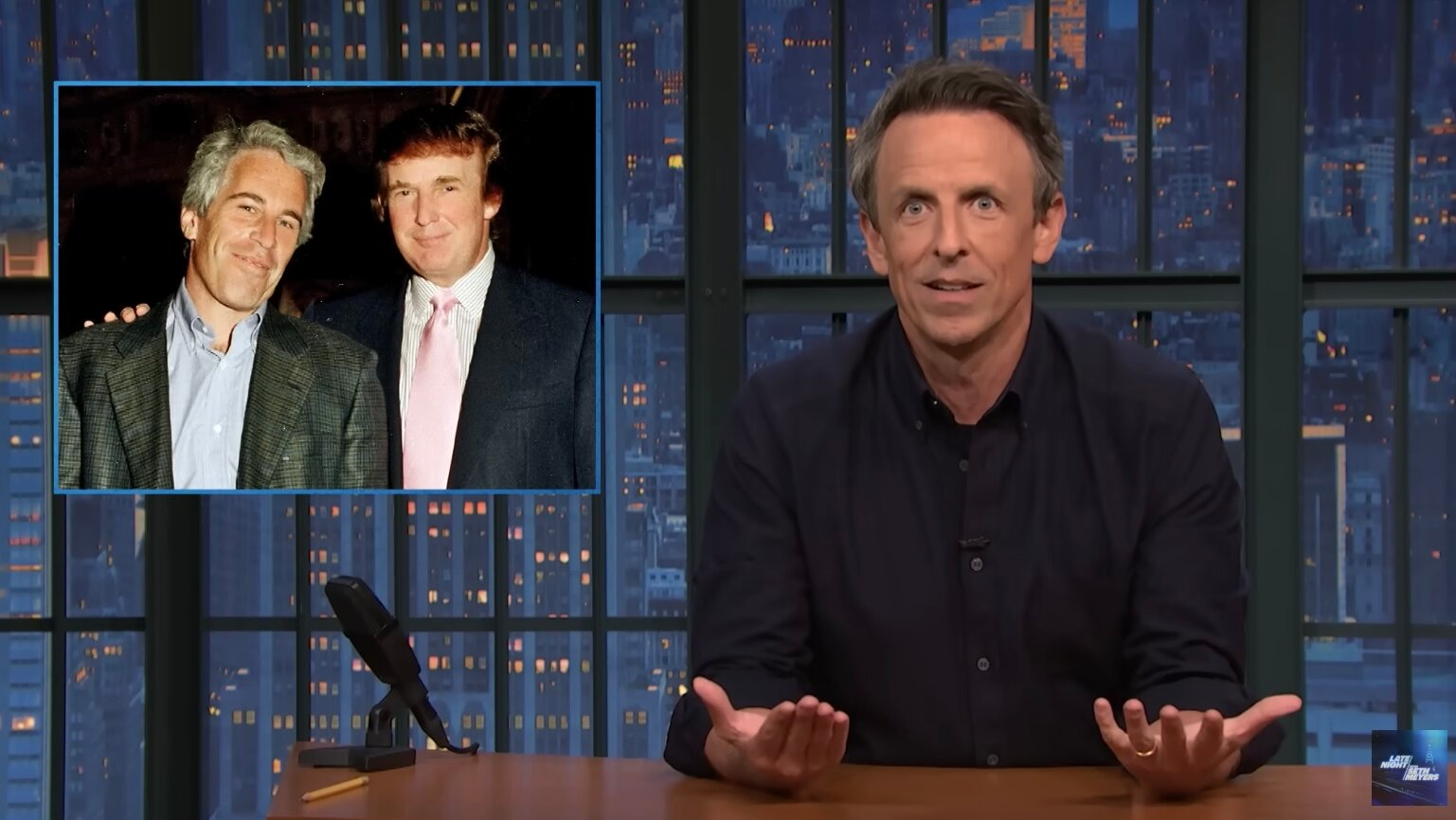
In an extraordinary escalation of the ongoing feud between political figures and late-night satire, Donald Trump renewed his demand for NBC to immediately fire ‘Late Night’ host Seth Meyers following a highly critical segment on the Jeffrey Epstein email scandal and the administration’s internal turmoil. The controversy was amplified when a sitting federal official, FCC Chair Brendan Carr, publicly reposted Trump’s angry rant, injecting a layer of government pressure into a media dispute and sparking a fierce debate over free speech, political comedy, and the limits of executive influence over broadcast networks.
Trump’s condemnation, posted on his Truth Social platform late Saturday evening, labeled Meyers’ show a “Ratings DISASTER” and accused the host of suffering from an “incurable case of Trump Derangement Syndrome (TDS).” The demand to “fire him, IMMEDIATELY!” came in direct response to Meyers’ recent, biting ‘A Closer Look’ segment that scrutinized the president’s tumultuous week, focusing on a reported emergency Situation Room meeting called by aides to address the crisis surrounding the newly released Jeffrey Epstein emails.
The Segment That Sparked the Rage: Epstein, Visas, and a ‘Sad’ President
The segment in question, Meyers’ signature ‘A Closer Look,’ aired on Late Night and detailed what the host characterized as an administration in panic. Meyers highlighted the dramatic development that the president’s top aides held a critical meeting in the White House’s Situation Room—a venue typically reserved for discussions of national security, war, or global crises—to instead focus on the political fallout of the president’s name appearing in the newly released emails related to convicted sex offender Jeffrey Epstein.
“The president’s top aides held an emergency meeting in the Situation Room yesterday,” Meyers stated on his show. “Not because of some conflict or global crisis, but because his name is in newly released emails from Jeffrey Epstein.”
Meyers also took aim at a recent interview the president conducted with Fox News host Laura Ingraham. During that interview, the president defended the importance of H-1B visas, claiming that Americans lack certain “talents” and that foreign workers are necessary, a comment that reportedly angered his MAGA base. Meyers mocked the president’s defense, joking that Trump was essentially saying, “you can’t expect me to make America again with only Americans.”
Perhaps the most visually effective part of the segment, and a key factor in the segment’s virality, was Meyers’ critique of the president’s demeanor while addressing the crisis. The host noted that the president appeared “flustered” and looked “so sad while saying the words ‘it’s a great day,'” comparing him to a “kid that asked for an Xbox for Christmas but got a jigsaw puzzle instead.” This critique of the president’s visibly low spirits, coupled with the political critique, was deemed a “meaningful and real development” by Meyers, suggesting a significant crack in the president’s political armor.
The FCC Complication: An Unprecedented Government Endorsement
The political firestorm took a sharp turn toward a serious media ethics and free speech debate with the involvement of Federal Communications Commission (FCC) Chairman Brendan Carr. Carr, a Trump appointee whose official role involves regulating interstate and international communications by radio, television, wire, satellite, and cable, reposted the president’s call to fire Meyers on his own social media account.
This act immediately drew widespread criticism from legal experts, media watchdogs, and political commentators. An FCC chairman publicly advocating for the termination of a journalist or host at a major broadcast network—especially one regulated by the FCC—is seen as a dangerous overreach and a chilling example of government officials attempting to exert influence based on content that is critical of the executive branch. The chairman’s post essentially lent the weight of a powerful federal regulatory body to a political grievance, suggesting that criticism of the administration could potentially invite retribution or regulatory scrutiny for the network employing the critic.
While the FCC has no direct authority to fire a late-night talk show host, the symbolic power of the chairman’s endorsement in a regulatory environment where NBC holds multiple broadcast licenses is impossible to ignore. Critics argue that it creates an atmosphere of intimidation, potentially leading media companies to self-censor to avoid regulatory hassles, license reviews, or other forms of bureaucratic retaliation. The situation raises fundamental questions about the protection of political satire under the First Amendment when the object of the satire is utilizing the power of the government to retaliate.
Meyers’ Long-Standing Role as a Political Satirist
Seth Meyers, a former head writer for Saturday Night Live’s “Weekend Update,” has firmly established his Late Night show as one of the most politically trenchant programs on television. His “A Closer Look” segments, which often run over ten minutes and provide detailed, fact-checked commentary interspersed with comedic ridicule, have become a staple of the political commentary landscape. This depth of focus contrasts with the often faster-paced, more joke-driven monologues of other late-night hosts, cementing Meyers’ reputation as the intellectual satirist of the genre.
This is not the first time the president has targeted Meyers. The two have a long-running, public feud that has seen the president repeatedly attack Meyers and his program’s ratings. However, the intensity of this latest outburst, combined with the context of the Epstein scandal—a topic that is reportedly creating deep anxiety within the president’s circle—and the intervention of the FCC chairman, marks a significant escalation. For the late-night host, these attacks often translate into a badge of honor, validating the efficacy of their political critique and often boosting the visibility of the very segments the critics wish to suppress.
The history of late-night comedy is intrinsically linked to political criticism, from Johnny Carson’s gentle ribbing to Jon Stewart’s razor-sharp commentary. Meyers is operating within a genre tradition, but the nature of the pushback—a call for immediate termination amplified by a government regulator—suggests a new, more hostile environment for political commentators. The networks, including NBC, are placed in a precarious position, forced to balance their commitment to their talent’s free expression with the potential political and regulatory pressures that come from defying a powerful figure. So far, NBC has made no public statement regarding the President’s demand, a silence that is likely viewed by many as a silent affirmation of their support for the host and their commitment to the show’s format.
The Ratings War: Fact vs. Fiction in the Firing Demand
Trump’s Truth Social post explicitly cited Meyers’ program as a “Ratings DISASTER,” a frequent line of attack in his long-running critique of late-night shows. While the traditional, nightly linear television ratings for Late Night with Seth Meyers may trail those of its earlier competitors, the metrics for success in modern late-night television are almost entirely driven by digital performance. Meyers’ ‘A Closer Look’ and ‘Jokes Seth Can’t Tell’ segments frequently garner millions of views on YouTube and other social platforms, generating enormous digital revenue and setting online trends.
Industry analysts frequently point out that the political monologues that draw the most ire are often the very ones that perform best online. Therefore, the very segments that Trump demands be censored or punished are, ironically, the show’s biggest engine for cultural relevance and digital profitability. For NBC, firing a host whose content is consistently driving high-engagement, shareable clips would be a decision based on political capitulation, not commercial logic. The ratings argument, in this modern context, often serves more as a political insult than a factual critique of the show’s overall health or influence.
Frequently Asked Questions (FAQs)
Q: What specific segment led to the President’s call to fire Seth Meyers?
A: The demand followed a recent ‘A Closer Look’ segment on Late Night with Seth Meyers. The monologue heavily criticized the administration’s response to the newly released Jeffrey Epstein emails, including reports of an emergency Situation Room meeting among the president’s aides to discuss the crisis. The segment also mocked the president’s remarks during a Fox News interview where he seemed to criticize American workers while defending H-1B visas.
Q: Why is the involvement of FCC Chair Brendan Carr significant?
A: The significance lies in the mixing of a political grievance with a powerful federal regulatory body. The Federal Communications Commission (FCC) regulates television broadcasters like NBC. When the FCC Chairman, a government official, reposts a presidential demand to fire a host, it is widely viewed by critics as an attempt to leverage the government’s regulatory power to intimidate a network and potentially suppress critical political speech. This raises serious First Amendment and media independence concerns.
Q: Has the President previously called for Seth Meyers to be fired?
A: Yes, the President has a history of publicly attacking Seth Meyers, along with other late-night hosts like Jimmy Kimmel and Stephen Colbert. He has repeatedly referred to them as “losers” with “ZERO talent” and has urged NBC to fire Meyers in the past, often citing low television ratings. However, the latest incident is distinguished by the specific focus on the sensitive Epstein crisis and the unprecedented public involvement of the FCC Chair.
Q: What is the current status of the Late Night with Seth Meyers show and NBC’s response?
A: As of now, Seth Meyers remains the host of Late Night with Seth Meyers, and there has been no indication from NBC that they will acquiesce to the demand for his firing. The show continues to air new, politically-charged episodes. NBC has a long-standing tradition of supporting its late-night talent, and an attempt to fire Meyers would likely be met with significant backlash from the entertainment community and media critics. The show’s success is largely measured by its massive digital and social media footprint, which is driven by the very segments being criticized.
Q: What does “Trump Derangement Syndrome (TDS)” mean in this context?
A: “Trump Derangement Syndrome (TDS)” is a phrase often used by the president and his supporters to dismiss criticism as an irrational or obsessive hatred of the president, rather than a substantive critique of his policies or actions. In his Truth Social post, the president used this term to characterize Meyers’ monologue as an out-of-control, politically motivated “rage” rather than a satirical commentary on current events.
Read More:

This Post Has 0 Comments