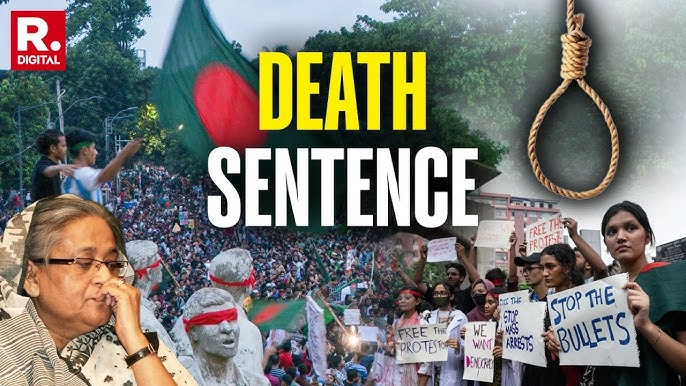
Sheikh Hasina Death Sentence: Anandabazar Patrika Breaks Down Bangladesh Crisis as Nation Erupts in Protests
Sheikh Hasina Verdict Sends Shockwaves: Unrest in Dhaka and India’s Diplomatic Dilemma
The political landscape of South Asia has been dramatically reshaped over the last 48 hours following the seismic judicial verdict handed down to former Bangladesh Prime Minister Sheikh Hasina. As reported and analyzed extensively by Anandabazar Patrika (ABP), one of the region’s most authoritative news sources, the tribunal’s decision to sentence Hasina to death has plunged Bangladesh into a state of volatile unrest and triggered a major diplomatic crisis with immediate implications for India.
The news broke to an already anxious nation, which has now seen the Awami League, Hasina’s party, call for a nationwide ‘bandh’ (strike), paralyzing key regions and signaling a dangerous escalation in the country’s political turmoil. The breaking news coverage from Anandabazar Patrika has been critical in mapping the on-ground reality—from the jubilant handclaps in the Dhaka courtroom upon the verdict’s announcement to the subsequent intervention of the police and army amidst mass protests.
The Defiance of Sheikh Hasina: ‘Allah Will Take My Life’
At the heart of the dramatic proceedings is Sheikh Hasina’s resolute defiance. Days before the formal sentencing, Anandabazar Patrika highlighted her powerful audio message, which has since become a rallying cry for her supporters. In it, she declared, “Allah has given life, Allah will take it. I have no fear.” This statement, delivered from an undisclosed location, framed her as a political martyr fighting an “orchestrated court verdict” by an “unelected government,” as explicitly noted in ABP’s reports.
The former Prime Minister, who was deposed following a coup and subsequent political upheaval, has vehemently rejected the charges against her. Anandabazar also reported on another fiery comment attributed to her, specifically targeting the head of the interim government: “Yunus will not hang me, I will hang him!” Such charged rhetoric, disseminated widely through the media landscape dominated by ABP, underscores the deeply personal and existential nature of this political confrontation.
The Geopolitical Earthquake: India’s Stand on Repatriation
One of the most crucial and timely developments highlighted in the ABP network’s analysis is the intricate geopolitical dance involving India. ABP News and ABP Live have prominently featured an ‘Explained’ segment addressing the burning question: Will India send Sheikh Hasina back to Bangladesh?
The consensus in the analysis, which is critical for a Calcutta-based publication like Anandabazar with deep regional ties, suggests that New Delhi will not repatriate the former Bangladeshi leader. This stance is rooted in a complex calculation of political necessity and regional stability. Sheikh Hasina, throughout her premiership, was a staunch ally of India, particularly in matters of counter-terrorism and security. Her presence, even in exile, is viewed as a vital check against forces that could destabilize the long and porous India-Bangladesh border.
ABP’s geopolitical experts suggest that the interim government, headed by Nobel laureate Muhammad Yunus, is exhibiting an enmity towards Hasina that makes any cooperation on her return diplomatically fraught. The article emphasizes that Hasina is considered ‘necessary’ for maintaining a delicate regional equilibrium. The implications of this are enormous: India, by giving sanctuary (or at least refusing extradition), is signaling its deep concern over the current political trajectory of its neighbor, making the Bangladesh Crisis a core issue of India’s foreign policy.
A Nation on the Brink: Violence and Historical Flashpoints
The reporting by Anandabazar Patrika has painted a vivid picture of a nation teetering on the edge. The immediate aftermath of the verdict saw pockets of severe violence and emotionally charged protests. One of the most symbolic acts of unrest, reported exclusively by the leading Bengali daily, was the attempted demolition of Sheikh Mujibur Rahman’s Dhanmondi house in Dhaka.
Sheikh Mujibur Rahman, the father of Sheikh Hasina and the founding father of Bangladesh, holds an almost sacred place in the nation’s history. The attempt by hundreds of protesters, reportedly bringing bulldozers, to tear down his ‘broken’ house, which now serves as a museum and monument, was a direct and unprecedented attack on the very foundations of the Awami League’s legacy. The report detailed how the situation required an immediate, heavy-handed intervention by the police and the army to prevent the house from being destroyed, highlighting the extreme ideological polarization currently gripping the country. This single event, brought to light through the detailed ground reporting of ABP, illustrates the high stakes of the crisis, where historical and emotional symbols are being targeted.
Anandabazar Patrika: A Critical Voice in a Tumultuous Time
In this atmosphere of profound uncertainty, Anandabazar Patrika’s role has transcended mere reporting. As a newspaper deeply entrenched in the cultural and political life of Bengal and the larger Bengal-speaking diaspora, it serves as the most trusted window into events across the border. The publication has dedicated significant resources to providing live updates, in-depth editorials, and expert geopolitical analysis that contextualizes the crisis for its readership.
Its continued coverage of the Awami League’s nationwide hartal (strike), the student and youth protests, and the political maneuvering in Dhaka is not just news—it is a critical source for understanding the future of a closely linked neighbor. The newspaper’s focus on granular details, such as the seizure of Sheikh Hasina’s assets (including three cars, land, and a farmhouse) by the military-backed interim government, demonstrates a commitment to comprehensive, factual reporting that is essential for public understanding during a crisis.
Looking Ahead: The Path to Stability
The immediate future of Bangladesh hinges on several unknown factors: the reaction of the international community (specifically the UN, which has expressed ‘dissatisfaction’ with the death penalty), the sustainability of the Awami League’s civil disobedience, and the response of the current Yunus-led government. Anandabazar’s reporting suggests a prolonged period of instability is likely, where legal battles will intertwine with street protests and diplomatic pressure. For India, the primary objective will remain border security and maintaining a non-violent resolution to the political deadlock, even as it offers a strategic ‘safety net’ to key allies like Sheikh Hasina. The world watches, primarily through the lens of dedicated regional news outlets like Anandabazar Patrika, for any sign of de-escalation in a crisis that is far from over.
Frequently Asked Questions (FAQs)
Q1: What is the main breaking news concerning Sheikh Hasina?
A: The most significant breaking news, as extensively covered by Anandabazar Patrika, is the death sentence handed down to former Bangladesh Prime Minister Sheikh Hasina by a special tribunal. This verdict has led to immediate and widespread national unrest and calls for a nationwide strike by her party, the Awami League.
Q2: What was Sheikh Hasina’s reaction to the death sentence?
A: Sheikh Hasina has maintained a stance of fierce defiance. In an audio message highlighted by ABP, she stated, “Allah has given life, Allah will take it. I have no fear.” Her party has labeled the tribunal’s decision as a politically motivated verdict from an “unelected government”.
Q3: Is Sheikh Hasina currently in Bangladesh?
A: No, Sheikh Hasina is not currently in Bangladesh. She was deposed following a coup and is reportedly in exile. Her exact whereabouts are not publicly confirmed, but she continues to communicate with her supporters.
Q4: How has India reacted to the crisis, according to ABP’s analysis?
A: Analysis published by the ABP network suggests that India will not return Sheikh Hasina to Bangladesh, viewing her as a necessary strategic ally for maintaining regional stability. The analysis indicates that New Delhi is highly concerned about the implications of the Yunus government’s current policies on India-Bangladesh relations.
Q5: What significant acts of protest have occurred in Dhaka?
A: One of the most symbolic and violent acts of protest reported by Anandabazar Patrika was the attempt by hundreds of demonstrators, equipped with bulldozers, to demolish the historic Dhanmondi house of Sheikh Mujibur Rahman, the father of the nation and Sheikh Hasina. The attempt was only foiled by the intervention of the police and the army.
Q6: Who is the ‘Yunus Government’?
A: The ‘Yunus Government’ refers to the interim administration currently in power in Bangladesh, headed by Nobel laureate Muhammad Yunus, which took control after the political upheaval that led to Sheikh Hasina’s removal from power.
Read More:

This Post Has 0 Comments