
Shabana Azmi: Celebrating 50 Years of Cinematic Excellence, Activism, and an Unbroken Legacy
Shabana Azmi: The Reign of an Empress—50 Years in Indian Cinema
For five decades, the name Shabana Azmi has been synonymous with the finest, most courageous, and socially relevant cinema in India. More than just an actress, she is an institution, a fearless social activist, and a towering figure whose career spans the entirety of India’s cinematic New Wave and its transition into the global mainstream. As she marks a magnificent 50 years in the film industry, her journey—from her groundbreaking debut in 1974 to her latest projects in 2025—is a masterclass in artistic integrity, critical acclaim, and leveraging celebrity for social good.
Latest News: A Golden Jubilee and New Cinematic Territory (2025 Update)
The most prominent news surrounding Shabana Azmi is the celebration of her 50th year in Indian cinema, a monumental milestone that began with her 1974 debut in Shyam Benegal’s seminal film, Ankur. The industry and her peers have paid effusive tributes to her enduring influence.
Honored at Jagran Film Festival 2025
In a fitting tribute to her five-decade-long career, the Jagran Film Festival (JFF) 2025 is scheduled to honor Azmi with a retrospective showcasing her work from Ankur (1974) to her recent roles. This celebration highlights her versatility and the profound influence she has had on generations of filmmakers and actors. She has expressed deep gratitude, noting that her appetite for work has only grown and that her favourite role “has yet to come,” signaling her continuous commitment to the craft.
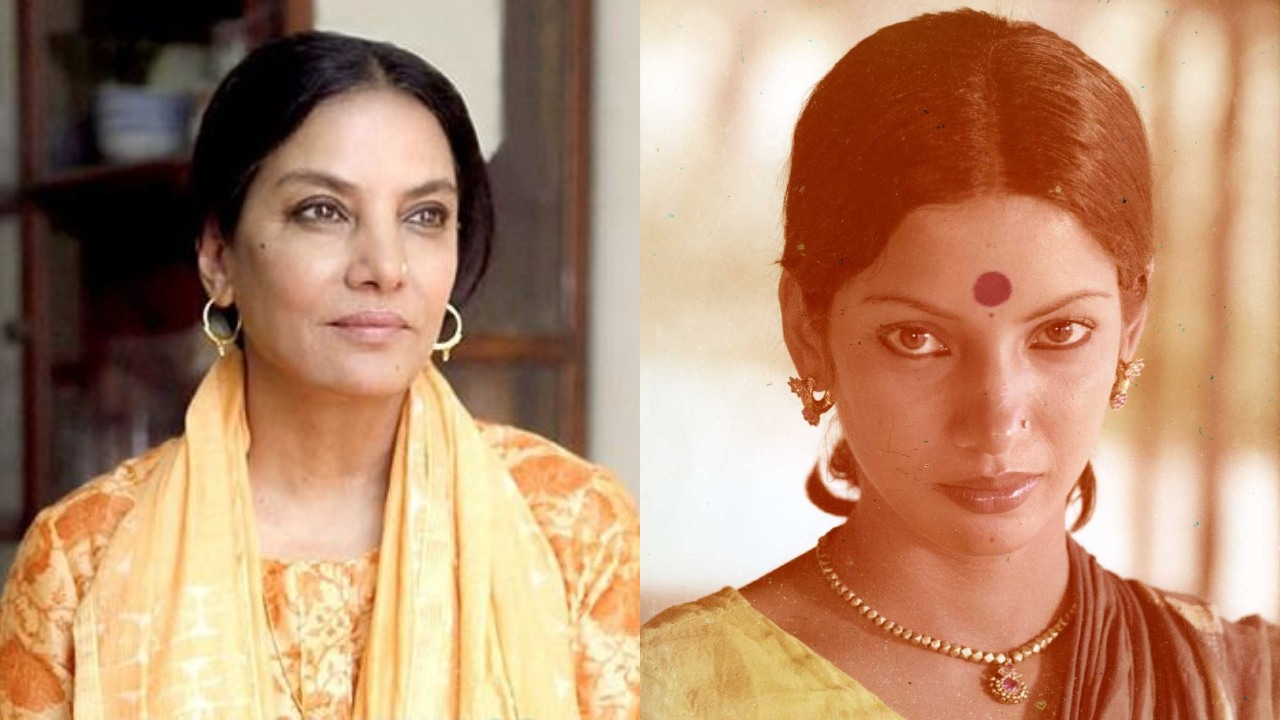
Upcoming Projects: Dabba Cartel and Bun Tikki
Azmi continues to take on challenging and unconventional roles, demonstrating her relevance in the modern content landscape.
- Dabba Cartel (Web Series): She is set to star in the anticipated web series Dabba Cartel. Speaking at the India Today Conclave 2025, Azmi discussed her role in the crime drama, emphasizing the theme that ‘power can be quiet.’ The series, which centers on women coming together in solidarity within a crime narrative, underscores a significant thematic shift in Indian storytelling, with her nuanced performance serving as an anchor.
- Bun Tikki (Film): She will also be seen in the upcoming film Bun Tikki, where she co-stars with her contemporary, Zeenat Aman. This pairing of two stalwarts from the same generation is highly anticipated by fans and critics alike.
The Dawn of a New Wave: From FTII to Ankur
Born on September 18, 1950, into a family steeped in art and activism—her father was the legendary Urdu poet Kaifi Azmi, and her mother was stage actress Shaukat Azmi—Shabana Azmi was destined for a life of purpose.
After graduating in Psychology from St. Xavier’s College, Mumbai, she pursued her passion at the prestigious Film and Television Institute of India (FTII) in Pune, where she was awarded the gold medal for the Best Student in Acting.
Her debut in 1974 with Shyam Benegal’s Ankur (The Seedling) immediately positioned her as a leading figure in the burgeoning Parallel Cinema movement. This new wave of art films was characterized by its serious content, realism, and a focus on offering a truthful, often progressive, portrayal of Indian society. Azmi became a trailblazer during this period, taking on complex, unconventional female characters that challenged societal norms and gave a voice to marginalized women on screen.
The Unrivalled Trophy Case: A Record of Excellence
Shabana Azmi’s cinematic contributions are officially recognized by a list of accolades that remains unmatched in Indian cinema.
- Five National Film Awards for Best Actress: She holds the record for the most National Film Awards for Best Actress, a testament to her consistent delivery of powerful, nuanced performances. Her winning roles include Ankur (1974), Arth (1982), Khandhar (1983), Paar (1984), and Godmother (1999).
- Five Filmfare Awards: In addition to her National Awards, she has been honored with five Filmfare Awards, cementing her success in both the critical and commercial spheres.
- Civilian Honours: The Government of India has bestowed upon her two of the nation’s highest civilian honours: the Padma Shri in 1988 and the Padma Bhushan in 2012.
Artistic Masterpieces: Balancing Art and Commercial Appeal
One of Azmi’s greatest strengths has been her ability to seamlessly transition between the gritty realism of Parallel Cinema and the vibrancy of mainstream Bollywood, proving that artistic integrity and popular appeal are not mutually exclusive.
Arth – The Defining Role
While her filmography boasts over 160 films, Azmi has consistently cited Mahesh Bhatt’s 1982 film, Arth, as her favourite film and a pivotal milestone in her career. The film, which explores a woman’s journey of self-discovery and empowerment after her husband leaves her for another woman, continues to resonate as a transformative experience for many women, offering them tremendous strength. Her performance is widely regarded as one of the best portrayals of female fortitude in Indian cinema.
Other Iconic Roles
Her willingness to embrace challenging, often controversial subjects is evident in her film choices:
- Masoom (1983): A sensitive portrayal of a woman grappling with her husband’s illegitimate child, showcasing her emotional depth.
- Fire (1996): A groundbreaking and controversial film that courageously depicted a lesbian relationship between two sisters-in-law, a role that reaffirmed her dedication to social commentary.
- Rocky Aur Rani Kii Prem Kahaani (2023): Her recent success in the mainstream hit demonstrated her continued relevance, earning her a Filmfare Award and introducing her powerful screen presence to a new generation of audiences.
- Mainstream Hits: She also made her mark in commercial cinema with films like Amar Akbar Anthony, Parvarish, and Avtaar, showcasing her versatility and widespread popular appeal.
Beyond the Screen: A Voice for the Voiceless
Shabana Azmi’s greatness extends far beyond her on-screen roles; she is a tireless and fierce social and women’s rights activist, inheriting a social conscience from her revolutionary parents. She has consistently used her celebrity status as a powerful instrument for social change.
The Mijwan Welfare Society (MWS)
Arguably her most passionate and enduring commitment is to the Mijwan Welfare Society (MWS), an NGO named after her ancestral village. MWS is dedicated to the empowerment of the girl child and rural women in India, focusing on education, primary health, sanitation, skill development, and employment generation. She has successfully brought the exquisite traditional craft of chikankari embroidery, practiced by the women of Mijwan, to the forefront of the Indian fashion industry through collaborations with top designers like Manish Malhotra, transforming the village into a globally recognised model.
Championing Slum Dwellers’ Rights
Azmi has been a dedicated activist for the rights of slum dwellers, working extensively with the housing rights organization Nivara Haq. Her commitment was not just nominal; she led campaigns, participated in street protests, and engaged in negotiations that resulted in more than 12,000 free homes being built for the poor. She passionately asserted that shelter and dignity are a basic human right.
A Political Voice and Global Ambassador
From 1997 to 2003, Azmi served as a nominated (unelected) Member of Parliament in the Rajya Sabha, the upper house of the Indian Parliament. During this tenure, she used her platform to advocate for freedom of expression, minority rights, and liberal values, significantly impacting legislation on issues like the national slum policy and the domestic violence against women act.
She has also served as a Goodwill Ambassador for the United Nations Population Fund (UNPFA) and has been a brave and pioneering voice in India for HIV/AIDS awareness, actively countering the stigma associated with the disease.
The Enduring Legacy
Married to celebrated poet and screenwriter Javed Akhtar since 1984, Shabana Azmi’s life is a confluence of artistic and literary powerhouses.
As she reflects on 50 years, her career stands as an unparalleled testament to an actress who refused to be defined solely by commercial success. She chose cinema not just as a profession, but as a vehicle for social inquiry and reform. Her legacy is one that has transcended the boundaries of her industry, positioning her not only as the Empress of Indian Cinema but also as a Global Ambassador for human dignity, inspiring artists and activists for generations to come. Her statement remains clear: she is not done yet.
FAQs: Shabana Azmi – The Icon and The Activist
Q1: What are Shabana Azmi’s most famous films?
A: Her career is marked by a blend of critically acclaimed ‘Parallel Cinema’ and mainstream successes. Her most iconic and award-winning films include Ankur (1974), Arth (1982), Masoom (1983), Paar (1984), and Godmother (1999). In recent times, her performance in the commercial hit Rocky Aur Rani Kii Prem Kahaani (2023) has also garnered widespread praise.
Q2: How many National Awards has Shabana Azmi won?
A: Shabana Azmi holds the record for winning the most National Film Awards for Best Actress, with a total of five wins throughout her career.
Q3: What is Shabana Azmi’s role in social activism?
A: Her activism is deeply rooted and diverse. She is the founder and head of the Mijwan Welfare Society (MWS), which focuses on rural women and the girl child empowerment in her native village of Mijwan. She is also a noted advocate for the rights of slum dwellers (through Nivara Haq), women’s rights, and has served as a nominated Member of Parliament in the Rajya Sabha. She has also been a UN Goodwill Ambassador.
Q4: Who are Shabana Azmi’s parents and husband?
A: Shabana Azmi comes from a highly distinguished family. Her father was the legendary Urdu poet Kaifi Azmi, and her mother was the renowned stage and film actress Shaukat Azmi. She is married to the celebrated poet, lyricist, and screenwriter, Javed Akhtar.
Q5: What is the significance of the film Arth in her career?
A: Mahesh Bhatt’s Arth (1982) is considered a career milestone and her personal favourite. She won a National Film Award for her performance. The film is celebrated for its powerful, proto-feminist narrative about a woman who discovers her self-worth after a personal crisis, offering an enduring message of strength and independence.
Read More:

This Post Has 0 Comments