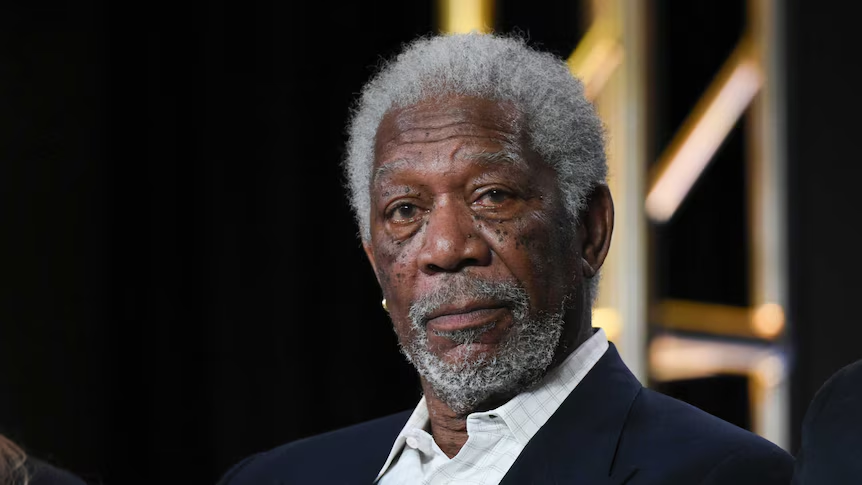
Morgan Freeman Declares AI Voice Cloning ‘Robbery’: ‘Don’t Mimic Me With Falseness’
The unmistakable, authoritative baritone of Morgan Freeman has narrated blockbusters, documentaries, and even played the voice of God. It is, arguably, one of the most iconic and valuable vocal signatures in the world. Now, the legendary actor is drawing a firm, legal line in the sand against the unchecked use of his voice by Artificial Intelligence. Freeman is not mincing words, calling the unauthorized practice of cloning his voice a form of ‘robbery’ and issuing a stern warning to imitators: “Don’t mimic me with falseness.”
In a move that underscores the growing tension between rapid AI advancement and the protection of creative labor, the 88-year-old Oscar winner confirmed that his legal team is actively pursuing cases against those who use AI to replicate his vocal identity without consent. “I’m a little PO’d, you know,” Freeman told The Guardian. “I’m like any other actor: don’t mimic me with falseness. I don’t appreciate it, and I get paid for doing stuff like that, so if you’re gonna do it without me, you’re robbing me.”
The Fight for a Livelihood: When Voice is Currency
For an actor whose primary source of commercial income often comes from his distinctive voice — whether in major motion pictures, commercials, or narrating nature documentaries like March of the Penguins — the threat of AI voice cloning is direct and existential. Freeman’s voice is not a public domain commodity; it is a finely tuned instrument, the result of decades of professional development. He even recounted the early, deliberate effort he put into cultivating his unique tone after receiving coaching from a community college instructor, Robert Whitman.
This personal investment highlights a core ethical argument: an AI clone, no matter how accurate, lacks the life experience, emotional depth, and intentionality of the human performer. It is a synthetic copy that devalues the original artistry. Freeman’s frustration is rooted in the simple economic reality of his profession. Every unauthorized use of his AI voice is a job he did not get paid for and an opportunity stolen from a human being.
When asked about the prevalence of these unauthorized uses, Freeman’s response was telling: his lawyers, he said, “have been very, very busy” and have found ‘quite a few’ cases. The actor’s decision to pursue legal action is a significant escalation, turning a celebrity complaint into a high-stakes legal battle that could help establish crucial precedents for creative rights in the AI era.
The Wider Hollywood AI Crisis
Morgan Freeman’s stand is not an isolated incident; it’s a high-profile chapter in a burgeoning industry-wide crisis. The entertainment world, from film sets to recording studios, is grappling with AI technologies that can effortlessly clone an actor’s voice, face, and even their entire performance style. This issue was a central point of contention in the recent SAG-AFTRA strikes, where performers fought tirelessly to establish strong protections against the unauthorized and uncompensated use of their likenesses by studios using generative AI.
Other Hollywood figures have voiced similar outrage and taken action:
- Tom Hanks publicly warned fans about AI-generated advertisements for ‘miracle cures’ that used his cloned voice and likeness without his consent.
- Scarlett Johansson found herself in a high-profile dispute after alleging that an AI chatbot had used a voice unnervingly similar to her own, leading to strong claims under her ‘right-of-publicity’.
- Zelda Williams, daughter of the late Robin Williams, urged the public to stop sharing AI recreations of her father’s voice and image, underscoring the deep emotional and ethical violations of posthumous deepfakes.
- Over 200 music artists, including Billie Eilish and Stevie Wonder, have signed an open letter calling for AI companies to halt the development of tools that replace human artistry.
Freeman himself slammed the rise of completely synthetic performers, specifically criticizing the fully digital actress, ‘Tilly Norwood.’ “Nobody likes her because she’s not real and that takes the part of a real person, so it’s not going to work out very well in the movies or in television,” he opined, connecting the dots between AI mimicry and the threat to human employment in the arts.
The Legal and Ethical Tightrope
The legal landscape surrounding AI voice cloning remains fragmented, but Morgan Freeman’s actions highlight two main areas of law being tested:
- Right of Publicity: This legal right protects an individual’s right to control the commercial use of their name, likeness, and in many jurisdictions, their voice. Unauthorized AI voice clones clearly infringe upon this right, suggesting that the creator is either the celebrity or has their endorsement.
- Intellectual Property (IP) and Copyright: While a voice is generally not copyrightable like a song or screenplay, the training data used to create the clone often relies on copyrighted performances, which opens a separate avenue for legal challenge under IP law.
The Counterpoint: Licensing and the Future
Not all actors are fighting the technology; some are choosing to leverage it proactively. Freeman’s firm stance stands in sharp contrast to actors who have signed deals to legally and ethically monetize their vocal likenesses. Actors like Michael Caine and Matthew McConaughey have partnered with AI audio companies to create authorized, synthetic versions of their voices for specific commercial use, thereby controlling the narrative and receiving compensation for their digital replicas.
Furthermore, even posthumously, deals have been struck. James Earl Jones, for example, agreed to allow Lucasfilm to digitally recreate his iconic voice for Darth Vader for continued use in Star Wars projects.
These authorized deals suggest a potential path forward: a regulated environment where AI is a tool of augmentation, not replacement, governed by explicit consent and fair compensation. Morgan Freeman’s fight, however, serves as a crucial reminder that absent such explicit agreements, the creation of an AI clone is, in his own words, a criminal act of theft against the artist’s creative identity and livelihood.
Frequently Asked Questions (FAQs) About AI Voice Cloning and Celebrity Rights
Q1: What exactly is ‘AI Voice Cloning’ and how does it work?
AI Voice Cloning, also known as Voice Synthesis or Voice Deepfake, is a technology that uses Artificial Intelligence to create an entirely synthetic voice that is virtually indistinguishable from a target human voice. It works by training an AI model on a large dataset of the target person’s speech. The model learns the unique acoustic qualities, pitch, cadence, and even breathing patterns, allowing it to generate new speech in that voice reading any script.
Q2: Why did Morgan Freeman call AI voice cloning ‘robbing’?
Freeman called it ‘robbing’ because his voice is a central part of his professional identity and a source of significant income. When an AI clone is used without his permission in a commercial context (like an advertisement, narration, or video), it effectively steals a job he would have been hired and paid for. He views the unauthorized commercial exploitation of his vocal likeness as a direct, uncompensated theft of his creative property.
Q3: What legal action is Morgan Freeman taking against AI imitators?
Morgan Freeman has indicated that his legal team is ‘very, very busy’ investigating and pursuing legal cases against those using unauthorized AI clones of his voice. While specific details of the lawsuits are often private, the legal arguments likely center on the Right of Publicity, which protects a celebrity’s right to control the commercial use of their name and likeness, and potentially on Unfair Competition or Misappropriation claims.
Q4: Are all celebrities against AI voice cloning?
No. While many, like Morgan Freeman, Tom Hanks, and Scarlett Johansson, have spoken out against unauthorized cloning, some celebrities are embracing the technology through legal licensing deals. Actors such as Michael Caine and Matthew McConaughey have signed agreements with AI companies to create and authorize the use of their synthetic voices for specific, contracted projects, ensuring they are compensated and have control over the final product.
Q5: How is AI voice cloning impacting the acting and voiceover industry?
AI voice cloning is seen as a significant threat to the livelihood of actors and voice artists. Unions like SAG-AFTRA have made fighting for AI protections a priority, seeking guarantees that digital replicas of actors cannot be used without explicit consent and fair residual payment. The concern is that studios might use a one-time scan of an actor’s voice to generate infinite performances, thereby eliminating future employment opportunities for human artists.
Read More:

This Post Has 0 Comments