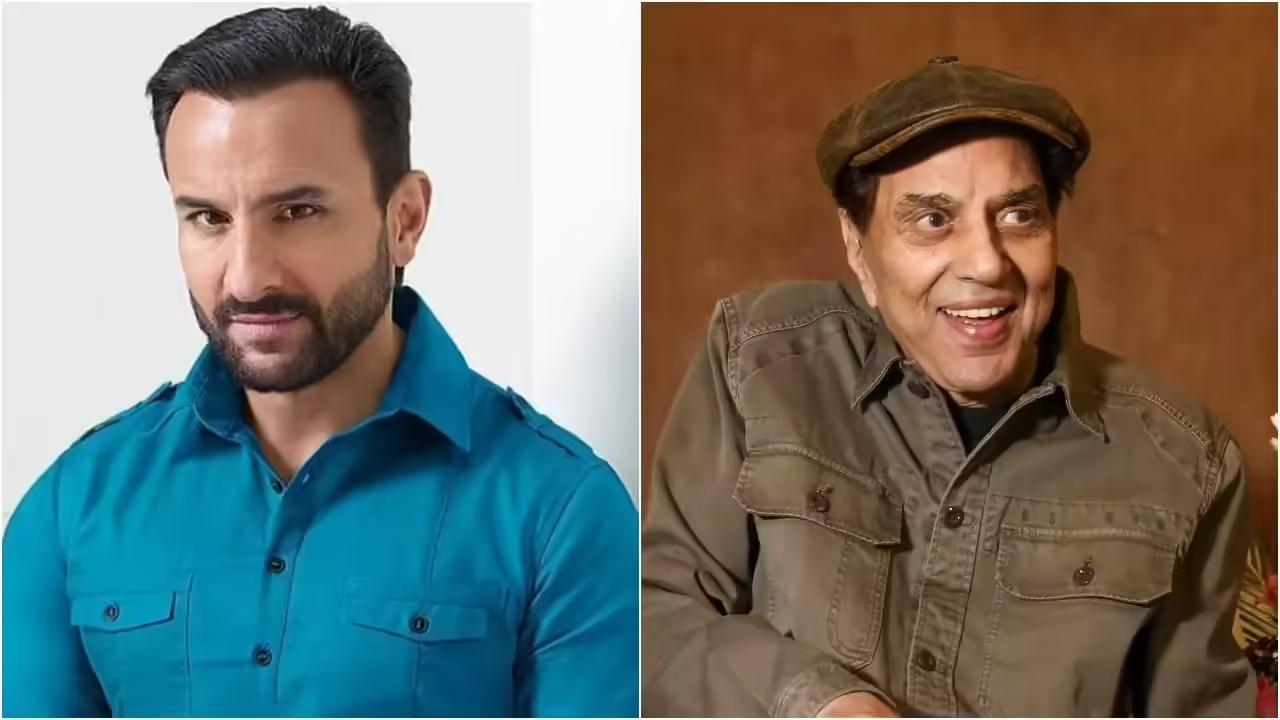
‘Laws Against Brutal Violation’: Saif Ali Khan’s Blistering Demand After Dharmendra Health Media Frenzy
Saif Ali Khan Demands Stricter Privacy Laws Following ‘Brutal Violation’ During Dharmendra’s Health Crisis
In a powerful and searing critique that has sent ripples through the entertainment industry, Bollywood star Saif Ali Khan has launched a blistering attack on the media’s invasive coverage of veteran actor Dharmendra’s recent health scare, demanding the urgent implementation of stricter laws to safeguard celebrity privacy during personal crises. Khan did not mince words, labeling the relentless press intrusion a “brutal violation of privacy” and drawing a painful parallel to his own family’s traumatic experience during his father, Mansoor Ali Khan Pataudi’s, hospitalization.
His condemnation comes at a moment when the veteran actor, Dharmendra, has finally been discharged and is recovering at his Juhu residence following a brief period of hospitalization. The crisis was exacerbated by a relentless media frenzy, false rumors, and a shocking breach of trust—reportedly the leak of a private, vulnerable video of a family member by a hospital employee. This culmination of events has reignited a crucial national conversation about media ethics, the public’s right to know, and the fundamental right to privacy, a debate now fronted by one of the industry’s most articulate voices.
The Crisis That Prompted a Call for Legislation
Dharmendra, a legend of Hindi cinema, was recently admitted to a hospital in Mumbai for treatment and observation. While his family, including his sons Sunny Deol and Bobby Deol, and his wife Hema Malini, managed the delicate situation with dignity, the atmosphere outside the hospital and their residence was anything but calm. The situation quickly devolved into a media circus, characterized by intrusive paparazzi, unchecked speculation, and, most distressingly, a significant breach of personal space.
The breaking point for many, and the context for Saif Ali Khan’s passionate intervention, appears to be the reports of a leaked video showing a private moment of grief. This invasion, allegedly originating from within the medical facility itself and leading to a reported arrest, transformed a personal health matter into a spectacle, magnifying the family’s distress. The Deol family had already issued a public statement, pleading for respect and privacy, a request that was seemingly ignored by a segment of the media.
Saif Ali Khan’s reaction, delivered while speaking to News 24 Online, transcended a mere expression of solidarity. It was a strategic demand for systemic change. “There should definitely be laws against such brutal violation of privacy,” Khan stated emphatically, adding that India urgently needs to address this issue. This elevates the discussion from a simple ethical lapse to a legal and legislative imperative.
A Painful Parallel: The Pataudi Family’s Ordeal
What makes Saif Ali Khan’s statement so compelling is that it is rooted in personal, deeply felt trauma. He drew a direct comparison between the media swarming the Deol family and the ordeal his own family faced when his late father, cricket icon and Nawab of Pataudi, Mansoor Ali Khan Pataudi, was hospitalized.
“We experienced a situation like this when Abba was in the hospital. We were constantly fobbing off unwanted attention while dealing with the crisis at hand,” Khan recalled. This unwanted attention, the constant need to ward off the press while simultaneously navigating a family medical crisis, compounded the pain and difficulty of an already challenging time. His experience provides an irrefutable testimonial that this is not an isolated incident but a pervasive, industry-wide problem that consistently violates the dignity of families during their most vulnerable moments.
By framing the issue through the lens of Mansoor Ali Khan Pataudi’s final days, Saif Ali Khan lent significant emotional weight to his argument. It transforms the call for privacy from a celebrity complaint into a universal human rights issue—the right to mourn, the right to health, and the right to dignity, free from public scrutiny and commercial exploitation.
The Legal and Ethical Crossroads: Where Do We Draw the Line?
Saif Ali Khan’s call for ‘laws against brutal violation of privacy’ directly challenges the current framework of celebrity journalism and the paparazzi culture in India. The debate centers on the nebulous boundary between ‘public interest’ and ‘what interests the public’. While public figures, especially those as revered as Dharmendra, naturally attract attention, their families, particularly during a medical emergency, are not necessarily public property.
The core of Khan’s demand is a robust legal mechanism that penalizes intrusive behavior, misinformation, and, critically, the breach of confidentiality by individuals within professional settings, such as hospital staff. The alleged leak of the Deol family’s private video underscores the critical need for stricter privacy protocols in healthcare settings, especially when high-profile individuals are involved. Current Indian law offers provisions for privacy and defamation, but enforcement often lags, and the rapid, viral nature of digital media frequently outpaces legal redressal.
This incident has spurred condemnation from other industry figures as well. Other celebrities have come forward to criticize the ‘insensitivity’ and ‘vulture-like’ behavior of some sections of the media and paparazzi. This growing consensus within the Bollywood fraternity suggests a tipping point has been reached, where passive tolerance of privacy invasion is giving way to active demands for accountability and legal protection.
The Way Forward: A Framework for Protection
Saif Ali Khan’s prominent voice adds substantial momentum to the movement for media reform. His demand for a dedicated legal framework suggests several potential avenues for change:
- Stricter Penalties for Privacy Breach: Implementing laws that levy severe financial penalties or even criminal charges against individuals (including hospital staff) and media organizations that publish or disseminate images, videos, or private information acquired without consent during a medical or personal crisis.
- Clearer ‘Consent’ Guidelines: Establishing unambiguous legal definitions for when and how images of public figures and, more importantly, their non-public family members can be used, particularly in sensitive situations.
- Mandatory Media Training in Crisis Reporting: Encouraging or mandating ethical guidelines for media organizations, particularly concerning reporting on health and grief, moving away from sensationalism toward verified, respectful updates.
- Strengthening Hospital Confidentiality: Enhancing legal protections and internal disciplinary action for hospital employees who violate patient and family privacy.
Ultimately, Saif Ali Khan’s outspokenness is a necessary wake-up call. It forces the media, the public, and lawmakers to confront a question that defines modern celebrity culture: at what point does the pursuit of a story become a violation of human dignity? For Khan and the Deol family, that line has been brutally crossed, and his call for ‘laws against brutal violation’ serves as a clear, non-negotiable directive for a more ethical and humane standard of journalism.
Frequently Asked Questions (FAQs)
Q: What exactly did Saif Ali Khan say about the media frenzy?
A: Saif Ali Khan condemned the intense media coverage surrounding Dharmendra’s hospitalization, calling it a “brutal violation of privacy.” He explicitly demanded that there “should definitely be laws against such brutal violation of privacy” to protect families during personal and medical crises.
Q: What was the context of Dharmendra’s health scare?
A: Veteran actor Dharmendra was recently admitted to a Mumbai hospital for treatment and close medical observation. He was later discharged and is currently recovering at home. The media frenzy included speculation, false rumors about his condition, and a significant invasion of his family’s privacy.
Q: Why did Saif Ali Khan compare this to his father’s hospitalization?
A: Khan shared that his family faced a similar ordeal with constant, unwanted media attention and scrutiny when his late father, Mansoor Ali Khan Pataudi, was hospitalized. He drew the parallel to illustrate how the media circus compounds the pain of dealing with a genuine family crisis.
Q: What kind of privacy violation occurred that prompted this reaction?
A: The media frenzy included intrusive paparazzi presence and, reportedly, the leak of a private video showing a vulnerable moment of grief from a member of the Deol family. The breach of trust allegedly came from a hospital employee, leading to an outcry over ethics and privacy protocols.
Q: Has the Deol family also spoken out?
A: Yes, the Deol family released a statement urging the media and public to “refrain from further speculation and to respect his and the family’s privacy during this time.”
Read More:

This Post Has 0 Comments