
Karan Johar Names His Bollywood ‘Gurus’: Shah Rukh Khan and Aditya Chopra Hailed as Core Inspirations in Recent Podcast
The Core of Dharma: Karan Johar Finally Reveals the Two Bollywood Titans Who Guided His Career
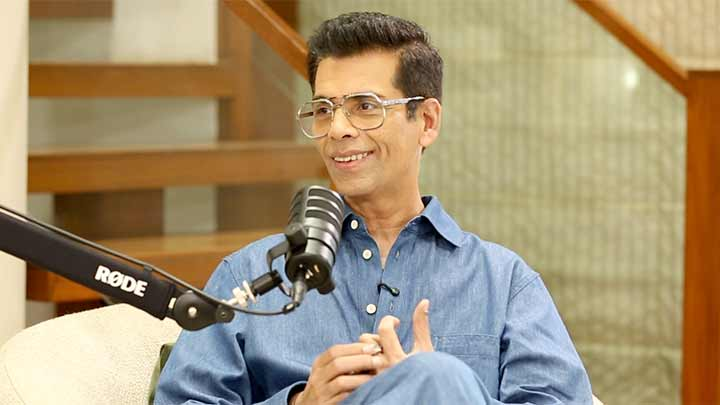
In a candid and deeply personal recent appearance on a major industry podcast, veteran filmmaker and head of Dharma Productions, Karan Johar, has unequivocally named the two individuals who stand as his ‘gurus’ in the world of Indian cinema: Shah Rukh Khan and Aditya Chopra.
This is not a new friendship, but for one of the industry’s most influential voices to openly bestow the title of ‘guru’ on two contemporaries marks a significant moment, offering a rare glimpse into the bedrock of his iconic, three-decade-long career. Johar’s revelation provides concrete answers to the perennial question of who inspired the man behind cinematic milestones like Kuch Kuch Hota Hai, Kabhi Khushi Kabhie Gham…, and Rocky Aur Rani Kii Prem Kahaani.
The ‘Gurus’ Who Launched a Legacy
Karan Johar has often spoken of his close bonds within Bollywood, but his recent interview drew a distinct line, acknowledging Shah Rukh Khan and Aditya Chopra not just as collaborators, but as the primary architects of his directorial journey.
1. Aditya Chopra: The Guiding Mentor and Call of Destiny
Aditya Chopra, the head of Yash Raj Films (YRF), was the one who first challenged Johar to take the director’s chair. Johar revealed that before Kuch Kuch Hota Hai happened, he was considering moving abroad and even learning French for a potential export-import business. Chopra, however, stepped in with a powerful intervention, essentially telling KJo, “Why are you running away from your calling? You are meant to be on a film set.”
Chopra’s conviction was the first major push. As Johar himself admits, Chopra was his “mentor, my guide, my guru” during the making of his debut film, which Johar considers his film school. Chopra, whose Dilwale Dulhania Le Jayenge had redefined romance, helped KJo distill the emotional core of Kuch Kuch Hota Hai, an invaluable lesson in cinematic storytelling. This mentorship was crucial, establishing a template for the grand, emotional, yet commercially viable cinema that would become the signature of Dharma Productions.
2. Shah Rukh Khan: The Catalyst and Unwavering Family Support
The second ‘guru’ is the undisputed King of Bollywood, Shah Rukh Khan. SRK’s role in KJo’s launch was less about technical guidance and more about providing the opportunity and faith needed to overcome profound self-doubt and familial apprehension.
Karan Johar’s father, the late producer Yash Johar, had experienced significant failure in the film industry, making him and KJo’s mother extremely anxious about their son following the same path. It was Shah Rukh Khan who personally took KJo aside and said, “I want you to direct a film and I’ll do it.” He then called Yash Johar to convince him, assuring the veteran producer that his son would make a really good filmmaker.
This act of faith from Bollywood’s biggest star at the time was the single most pivotal moment that allowed the young, uncertain Karan Johar to make his debut. As KJo notes, Shah Rukh Khan’s trust is legendary—the star famously agreed to do Kabhi Khushi Kabhie Gham… (2001) without even reading a script, purely based on his bond with the director.
This relationship transcends professional collaboration; Shah Rukh Khan and his family are an integral part of Johar’s personal world. In the same podcast, KJo expressed his heartfelt wish for his own children, Yash and Roohi, to grow up to be like Aryan and Suhana Khan, underscoring the deep, familial nature of his bond with the star.
The Foundational Influence: Yash Johar’s Legacy
While SRK and Aditya Chopra served as the professional ‘gurus’ who empowered his directorial start, Karan Johar consistently acknowledges the foundational inspiration that came from his own father, Yash Johar. The late producer’s experiences deeply shaped KJo’s professional drive.
Johar has opened up about the emotional toll of watching his father face failure in the film business, an experience he describes as the “toughest moment” of his life. This pain, however, became the “fuel for his own success.” The values of kindness, good character, and love within the fraternity—which his father embodied—are the invisible cornerstones of Dharma Productions’ ethical and business practices today. KJo’s success, therefore, is seen as a tribute and continuation of his father’s passionate, though often commercially challenging, journey.
The Pantheon of Cinematic Idols
Beyond his personal mentors, Johar’s inspirations span the great storytellers of Indian cinema, showcasing his deep reverence for the industry’s history. He has often cited classic filmmakers like Raj Kapoor, Yash Chopra, and Sooraj Barjatya as formative influences on his melodramatic, music-filled, and family-oriented style of filmmaking.
He has also spoken about the pure, almost childlike inspiration he derived from the classic romantic films of his youth. Recalling his younger days, he mentioned watching films like Love Story up to 18 times, with its music becoming his walkman playlist, illustrating how the sheer magic of the silver screen became the initial spark for his lifelong dedication to cinema.
In recent years, he has also acknowledged the newer wave of cinema, mentioning that seeing a contemporary film inspired him to pursue a love story again. Furthermore, he gives credit to the actors he directs, stating that he learned so much from directing both Ranbir Kapoor and Ranveer Singh, a testament to his belief in collaborative growth.
The Road Ahead: Evolution and New Directions
Karan Johar’s willingness to reveal his inner world and inspirations comes at a time when he himself is constantly evolving. As he moves forward, he has stated that “Evolution should be your only resolution,” signaling a continuous commitment to growth and adapting to the changing landscape of cinema. His production house has a strong 2025 lineup, including the upcoming release of Chand Mera Dil, a love story featuring Ananya Panday and Lakshya Lalwani, further proving that the magic of romance—first inspired by his gurus—remains close to his heart.
This latest public acknowledgment of Shah Rukh Khan and Aditya Chopra as his gurus not only solidifies their places in Bollywood history but also provides a moving narrative of mentorship, friendship, and the profound impact of faith on a young filmmaker’s destiny. The success of Karan Johar is, in many ways, the collective triumph of the icons who believed in him first. His willingness to be so candid only enhances his status as one of Indian cinema’s most compelling and authentic voices, always ready to share the credit for his extraordinary journey.
Frequently Asked Questions (FAQs)
Q1: Who did Karan Johar recently name as his ‘gurus’ in Bollywood?
A: Karan Johar recently named Shah Rukh Khan and Aditya Chopra as his two primary ‘gurus’ and mentors in the film industry.
Q2: How did Shah Rukh Khan specifically inspire Karan Johar’s debut?
A: Shah Rukh Khan played a crucial role as the catalyst for Karan Johar’s directorial debut, Kuch Kuch Hota Hai. When Karan’s parents were hesitant due to his father Yash Johar’s prior commercial failures, SRK personally intervened, telling KJo he would star in the film and convincing his father that Karan was destined to be a filmmaker.
Q3: What role did Aditya Chopra play in KJo’s career start?
A: Aditya Chopra served as KJo’s primary mentor and guide. He convinced Karan not to pursue an entirely different career abroad and instead follow his true calling into cinema, famously telling him he was ‘made for the movies.’ KJo referred to his experience working with Chopra on his early films as his ‘film school.’
Q4: Did Karan Johar mention any other classic Bollywood filmmakers as inspirations?
A: Yes, Karan Johar has also cited classic filmmakers like Raj Kapoor, Yash Chopra, and Sooraj Barjatya as being major influences on his signature style of grand, emotional, and family-centric melodramas.
Q5: What was the influence of KJo’s father, Yash Johar, on his career?
A: The experience of watching his father, Yash Johar, face failure in the film industry served as a powerful emotional fuel for Karan Johar’s own success. While his father’s struggles made him wary of the industry, KJo has constantly worked to uphold his father’s values and legacy through Dharma Productions.
Q6: What is Karan Johar’s current resolution for his career and life?
A: In a recent social media post, Karan Johar shared his resolution for the coming year, stating, “Evolution should be your only resolution,” highlighting his ongoing commitment to adapting and growing professionally and personally.
Read More:

This Post Has 0 Comments