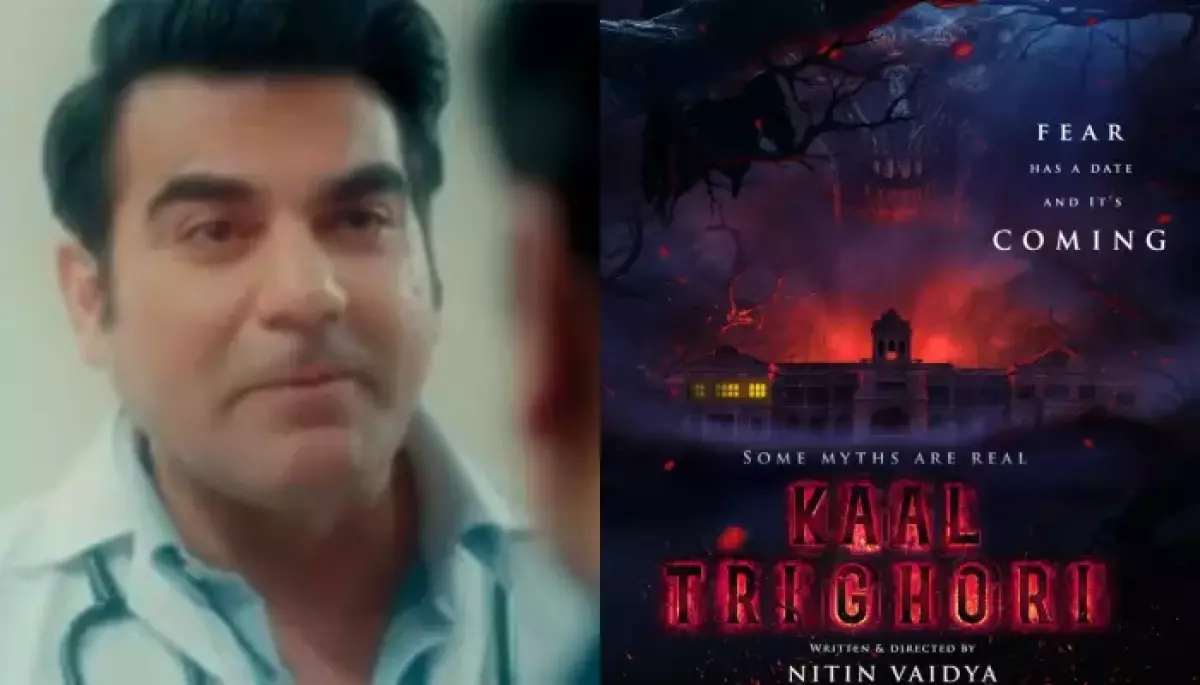
Kaal Trighori: Unveiling the Myth, the Cosmic Alignment, and the Blockbuster Horror
Kaal Trighori: Unveiling the Myth, the Cosmic Alignment, and the Blockbuster Horror
The phrase Kaal Trighori has recently dominated headlines, not as an ancient astrological term (though it draws deeply from them), but as the title of a high-stakes supernatural horror film that promises to redefine the genre in Indian cinema. More than just a movie, the concept of Kaal Trighori taps into a powerful, millennia-old cultural fear—the alignment of destructive cosmic forces and the vulnerability of human existence to the relentless march of time, or ‘Kaal.’
Released on November 14, 2025, the film brings the elusive folklore of ‘Trighori’ to the mainstream, framing it within a rare celestial event that occurs only once every century. This article dives deep into the phenomenon: the film, the mythical force it portrays, and the profound Indian philosophical concepts of time, fate, and the ominous number three that underpin its terrifying premise.
The Latest News: The Cinematic Phenomenon of Kaal Trighori
Kaal Trighori, directed and written by Nitin N. Vaidya, is a supernatural-psychological thriller that has captured the nation’s attention, not only for its stellar cast—including Arbaaz Khan, Rituparna Sengupta, and Aditya Srivastava—but for its unique blend of ancient mythology and modern-day horror. The movie’s core hook is its central myth: the awakening of a dark, malevolent force called Trighori during a rare, century-long celestial alignment.

A Century-Long Wait: The ‘Three Cursed Nights’
The storyline revolves around a unique cosmic event where three crucial lunar phases and Hindu calendar dates converge within the same month: Chaitra Amavasya, Chaitra Purnima, and Baishakhi Amavasya. According to the film’s folklore, this alignment occurs only once every 100 years, creating a temporal window for the entity known as ‘Trighori’ to manifest its dark and destructive power.
The plot follows three intertwined lives—Raviraj, a man fascinated by black magic and the supernatural; his skeptical wife, Madhuri; and their friend, Dr. Manoj—as they become ensnared in the terrifying events surrounding these three cursed nights. The film cleverly plays on the ambiguity: is the horror truly a supernatural reckoning, or is it a carefully orchestrated human conspiracy?
Technical Brilliance and Critical Reception
Critics have noted that Kaal Trighori elevates itself beyond typical Bollywood jump-scare horror by focusing on atmosphere, psychological tension, and a strong foundation in Indian folklore. The use of a real heritage haveli near Rajkot as a backdrop and meticulous sound design contributes to a constant sense of dread, making the setting itself a character. The performances, particularly Arbaaz Khan in his horror debut, have been praised for their emotional intensity, grounding the supernatural events in a relatable, human drama of fear and fractured belief.
Decrypting ‘Kaal Trighori’: Mythology and Numerology
The term Kaal Trighori is a compound word that instantly evokes powerful imagery in the context of Hindu philosophy and astrology. While ‘Trighori’ itself appears to be a name coined for the film’s narrative, its components are deeply rooted in ancient Indian concepts.
The All-Powerful ‘Kaal’
The word ‘Kaal’ (काल) is one of the most significant and profound terms in the Indian philosophical lexicon. It translates primarily to:
- Time: The relentless, unending flow of time that governs the universe.
- Death/Fate: ‘Kaal’ is often used synonymously with Yama, the God of Death, signifying the ultimate, inevitable end. To be under the influence of Kaal is to be subjected to the laws of destiny and mortality.
This connection is a major draw for the film, as it suggests the characters are not merely fighting a ghost but a terrifying, inescapable aspect of fate itself.
The Ominous Significance of ‘Tri’ (Three)
The prefix ‘Tri’ (त्रि), meaning ‘three,’ carries immense weight in Hinduism, representing fundamental cycles and forces. The ‘Trighori’ myth and the film’s structure—three cursed nights, three intertwined lives, three main characters—intentionally leverage this symbolism.
- The Trimurti: The triad of Brahma (Creation), Vishnu (Preservation), and Shiva (Destruction).
- The Gunas: Sattva (Goodness), Rajas (Passion), and Tamas (Darkness/Chaos).
- Srishti, Sthiti, Samhara (Creation, Preservation, Destruction): The cosmic cycle itself.
In the context of ‘Trighori’ (likely derived from Tri-Ghor or ‘three terrible/fierce/dark’), the number three becomes a symbol of a complete, destructive cycle that is cosmic in scale and inescapable for the protagonists.
The Mythological Link to Kaalratri
While not directly the same, the concept of a terrifying, night-bound cosmic force resonates with Hindu mythology, particularly with Goddess Kaalratri. She is the seventh form of Navadurga, often depicted as having dark skin and symbolizing the fierce power to destroy ignorance, darkness, and fear. Her name breaks down to ‘Kaal’ (Time/Death) and ‘Ratri’ (Night), representing the dissolution of the universe and the power required to confront the deepest darkness. This deep-seated fear of the night as the domain of time and death provides the cultural bedrock for the ‘Kaal Trighori’ phenomenon.
The Astrological Undercurrent: Kaal Sarp Dosh
Though Kaal Trighori focuses on a unique celestial alignment of three specific lunar nights, the underlying astrological theme of a pervasive, time-related cosmic defect is similar to the well-known Vedic concept of Kaal Sarp Dosh (or Kaal Sarp Yog).
Kaal Sarp Dosh literally translates to the ‘defect of the time-snake’ or ‘time-serpent.’ It is a feared astrological condition that occurs when all seven major planets are placed between the shadow planets, Rahu (the head of the serpent) and Ketu (the tail of the serpent) in a person’s birth chart. People born under this Dosh are believed to experience:
- Sudden, unexpected obstacles and failures.
- Intense mental stress and emotional instability.
- Financial losses or recurring misfortune.
This astrological context enriches the film’s premise. The audience instinctively understands the gravity of a ‘Kaal’-related celestial event. The alignment of the three cursed nights can be seen as a cosmic Kaal Sarp Yog—a rare, external manifestation of a time-bound curse that ensnares the characters in a cycle of fear and predetermined fate, mirroring the personal struggles of those believed to be affected by the Dosh. The film’s antagonist, Raviraj, who is drawn to black magic and supernatural beliefs, likely views the Trighori nights as a culmination of such dark cosmic energies, seeking either to control them or being victimized by them.
Why Kaal Trighori Resonates
The success of the Kaal Trighori concept lies in its ability to take a fictional, cinematic myth and anchor it to authentic, profound Indian concepts of fate, time, and cosmic alignment. By combining a real-world astronomical event from the Hindu calendar with the established fear associated with ‘Kaal’ and the powerful symbolism of the number three, the film offers a sophisticated horror narrative.
It forces a conversation between the rational, skeptical mind (represented by Madhuri and Dr. Manoj) and the traditional, fear-bound belief in ancient curses and destructive forces (represented by Raviraj). The question it leaves with the audience—whether some myths are truly real—is not just a clever tagline, but an exploration of the line between psychological paranoia and a terrifying, centennial reckoning decreed by time itself.
Read More:

This Post Has 0 Comments