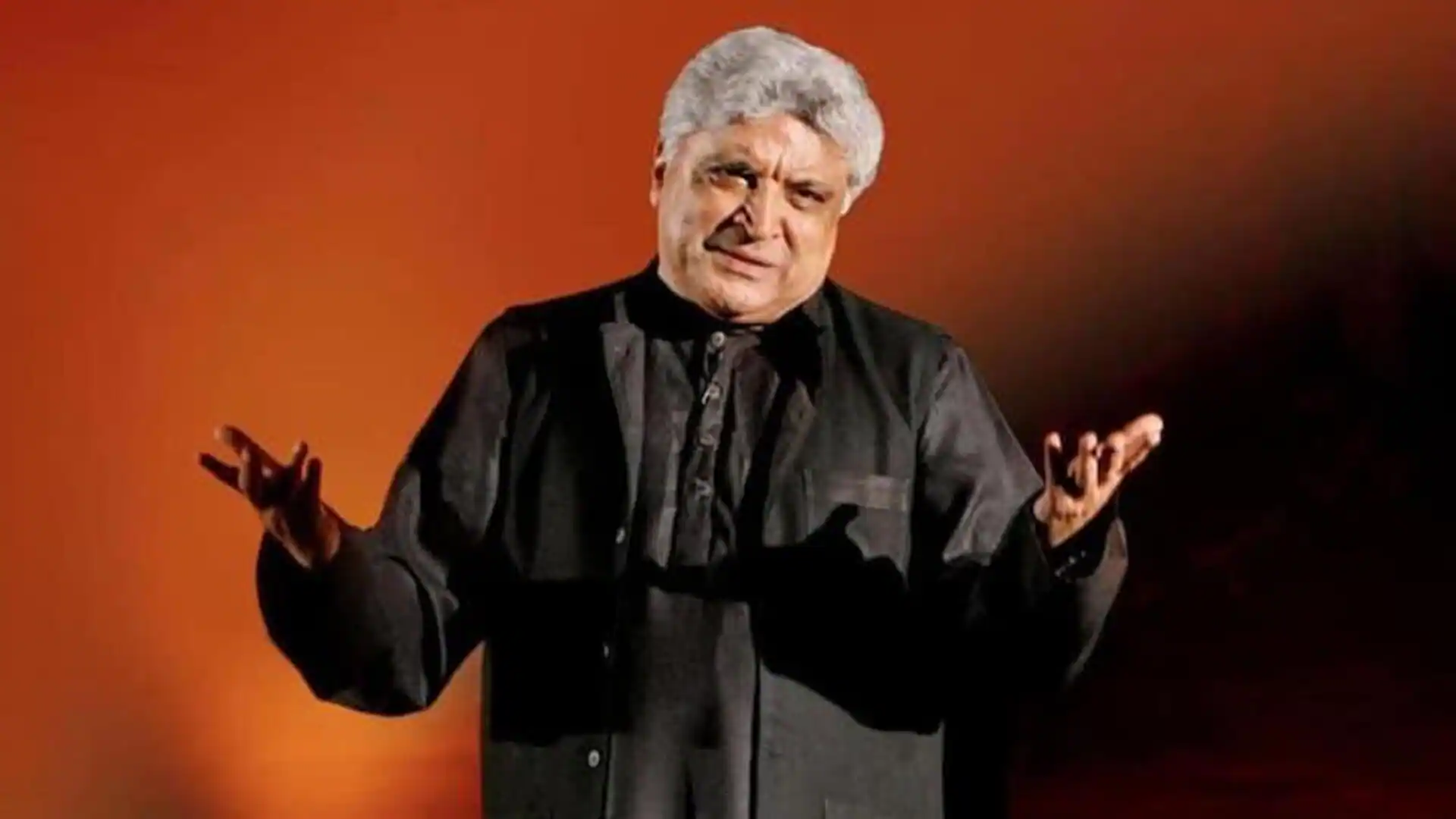
Javed Akhtar: The Angry Young Man’s Penman to India’s Conscience—Latest News, Controversies, and Legacy
Javed Akhtar is not just a name in Indian cinema; he is a cornerstone of its modern narrative, a poet whose verses have defined generations, and a screenwriter who gave Bollywood its ‘Angry Young Man.’ Born on January 17, 1945, in Gwalior, he inherited a profound literary lineage, with his father, Jan Nisar Akhtar, being a renowned Urdu poet and his family tree tracing back seven generations of writers. This rich background, however, did not pave an easy path. His early life in Mumbai was marked by struggle, sleeping on the streets and fighting for survival, a crucible that forged the sharp wit and social consciousness now famous in his work.
His career is a triptych of towering achievements: the revolutionary screenwriter, the prolific lyricist, and the outspoken public intellectual. In each role, he has demonstrated an unparalleled mastery of language, turning dialogue and poetry into cultural artifacts that resonate deeply within the Indian psyche.
The Age of the ‘Angry Young Man’: The Salim-Javed Phenomenon
Javed Akhtar first rose to prominence as one half of the iconic screenwriting duo, Salim-Javed, alongside Salim Khan. Their partnership, which began in the late 1960s, revolutionized Hindi cinema. Before them, screenwriters were often uncredited and undervalued; they changed this by commanding star status and high fees, becoming the first writers in Indian cinema to achieve such a feat.
Their true breakthrough came with ‘Zanjeer’ (1973), a film that introduced the “angry young man” archetype, indelibly linking the persona to a young Amitabh Bachchan. This character was a direct reflection of the social and political disillusionment brewing in post-independence India. The duo’s subsequent blockbusters are a syllabus of classic Indian cinema:
- ‘Sholay’ (1975): An epic dacoit-western that remains a benchmark of Indian filmmaking.
- ‘Deewaar’ (1975): Featuring dialogues that have become part of Indian popular culture, most famously the lines, “Mere paas Maa hai” (I have Mother).
- ‘Haathi Mere Saathi’ (1971)
- ‘Seeta Aur Geeta’ (1972)
- ‘Don’ (1978)
- ‘Trishul’ (1978)
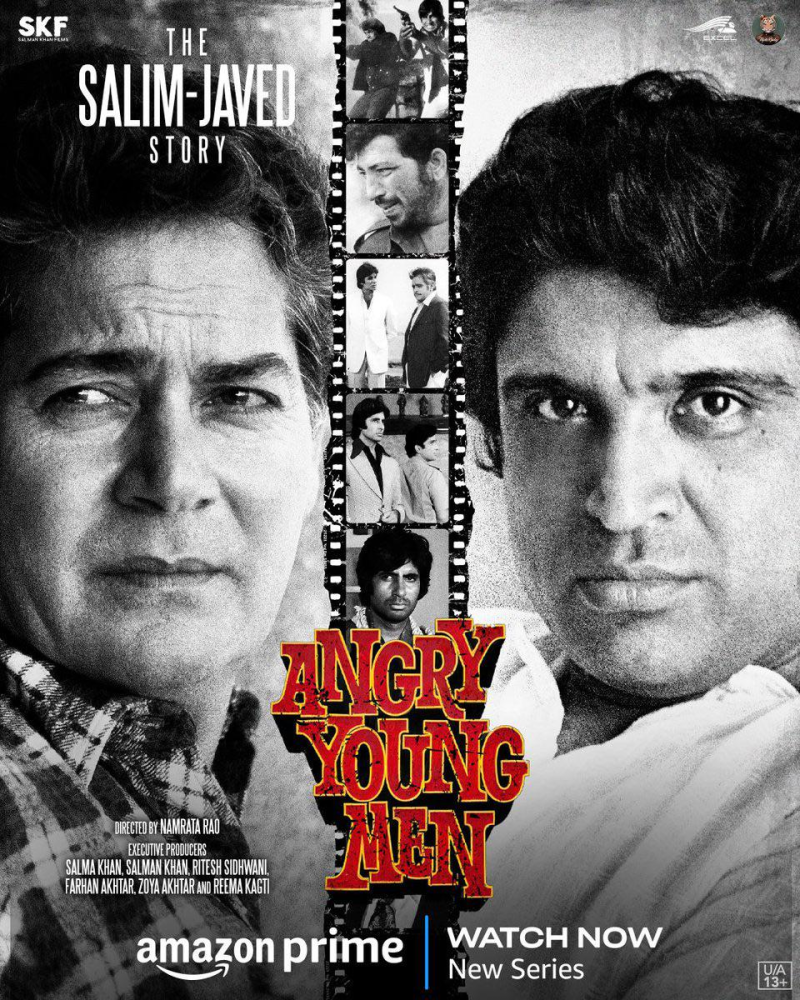
The duo scripted 24 films, with 22 of them becoming massive successes. Their partnership is celebrated in the 2024 Amazon Prime Video documentary, Angry Young Men, which delves into their creative process and monumental impact.
The Poet and Lyricist: A Second Act of Glory
The Salim-Javed partnership dissolved in the early 1980s. Instead of pursuing screenwriting full-time, Akhtar transitioned into becoming a full-time lyricist, a move that proved equally successful. His lyrics are celebrated for their poetic depth, social consciousness, and melodic quality, bridging the gap between high art and popular cinema.
He has penned memorable songs for films like:
- ‘Silsila’ (1981): Marking his solo lyricist debut.
- ‘1942: A Love Story’ (1994)
- ‘Lagaan’ (2001)
- ‘Kal Ho Na Ho’ (2003)
- ‘Veer-Zaara’ (2004)
- ‘Jodhaa Akbar’ (2008)
Beyond cinema, Akhtar is an acclaimed Urdu poet. His first collection of Nazms and Ghazals, ‘Tarkash’ (1995), became a bestseller and was even released as India’s first audio book. His later collection, ‘Lava’, earned him the prestigious Sahitya Akademi Award in Urdu in 2013, India’s second-highest literary honour.
In November 2025, while speaking at the ‘Soundscapes of India’ festival, Akhtar articulated his philosophy on his craft: “Poetry is the music of language, and music is the poetry of sound.” He also criticized modern trends like ‘prose poetry,’ calling it a ‘deception’ that strips away the essential melody and rhythm of verse.
Accolades and Public Life: A Conscience for the Nation
Javed Akhtar’s contributions have been recognized with some of India’s and the world’s most prestigious honors:
- 5 National Film Awards (for Best Lyricist).
- 16 Filmfare Awards (across scriptwriting and lyric-writing categories).
- Padma Shri (1999) and Padma Bhushan (2007), two of India’s highest civilian honors.
- Richard Dawkins Award (2020): He was the first Indian to receive this award, conferred for his work as a “powerful force for secularism, reason, and human rights, challenging superstition and intolerance through his work in poetry, screenwriting, and political activism.”
From 2010 to 2016, Akhtar served as a nominated Member of Parliament in the Rajya Sabha, representing the arts. He is married to veteran actress and fellow activist Shabana Azmi. His children, Farhan Akhtar and Zoya Akhtar, have also become successful filmmakers, continuing the family’s cinematic legacy.
Latest Controversies: The Unflinching Activist
In recent years, Javed Akhtar has become known as much for his outspoken political and social commentary as for his artistic output. A confirmed atheist, he has consistently advocated for secularism, rationality, and freedom of expression, often drawing the ire of fundamentalist groups on both sides of the political spectrum.
The Taliban Minister Row (October 2025): Akhtar ignited a major political controversy in October 2025 by publicly criticizing the Indian government’s reception of Afghanistan’s acting foreign minister and Taliban leader, Amir Khan Muttaqui. He stated he would “hang my head in shame,” questioning the morality of welcoming a representative of a regime that bans girls’ education and tortures women. This statement led to him being branded a ‘Pakistani supporter’ by a section of the ruling party, despite his earlier, widely reported condemnation of Pakistan’s role in the Pahalgam terror attack and his remark that he would “prefer to go to hell than Pakistan.”
The ‘Old Video’ Backlash (October 2025): Around the same time, an old interview resurfaced where Akhtar discussed the role of religion in India. In the clip, he was quoted as saying, “Don’t become like Muslims.” This sparked a sharp reaction from singer Lucky Ali, who called his remarks “ugly” and “monstrous.” In the same interview, Akhtar also reflected on what he saw as a loss of spiritual openness within Hinduism, stating his general opposition to all religion: “I am against religion because it expects faith from you… Beliefs make you irrational.” The incident led to a renewed, heated debate on artistic freedom and religious commentary.
The Faiz Festival Statement (2023): In 2023, Akhtar made headlines in Pakistan after attending the Faiz Festival in Lahore. During an address, he unflinchingly reminded the Pakistani audience that the perpetrators of the 2008 Mumbai terror attacks were still “roaming free” in their country, a statement that was reportedly met with applause in the hall but condemnation from some Pakistani celebrities afterwards.
Through every phase of his career, Javed Akhtar has remained a fearless voice. From scripting the rage of a generation to composing its tenderest love songs, and now, to acting as a sharp-witted conscience for the country, his legacy is one of transformative creativity and unyielding social advocacy. His life story is a testament to the power of words, not just to entertain, but to question, to challenge, and to inspire a deeper connection to humanity and reason.
FAQs: Addressing Key Questions About Javed Akhtar
Q1: Who was the partner in the famous ‘Salim-Javed’ screenwriting duo, and what were their biggest films?
The partner was Salim Khan. Their duo, Salim-Javed, is considered the most successful screenwriting partnership in the history of Indian cinema. Their biggest and most influential films include Zanjeer (1973), which pioneered the ‘Angry Young Man’ archetype, Deewaar (1975), and the all-time blockbuster Sholay (1975). They were the first Indian screenwriters to achieve star status.
Q2: Is Javed Akhtar an atheist, and has this influenced his public statements?
Yes, Javed Akhtar is a confirmed atheist. He has been public about his non-religious beliefs, stating, “I am not revealing a secret, I am saying something that I have said many times, in writing or on TV, in public… I’m an atheist, I have no religious beliefs.” This rationalist worldview profoundly influences his public statements and his writing, driving his advocacy for secularism, freedom of expression, and rational thought, which led to him receiving the Richard Dawkins Award in 2020.
Q3: What is the Richard Dawkins Award, and why did Javed Akhtar receive it?
The Richard Dawkins Award is an international honor given to an individual who “raises public consciousness of the importance of secularism and scientific truth.” Javed Akhtar became the first Indian to receive it in 2020. He was honored for being a “powerful force for secularism, reason, and human rights, challenging superstition and intolerance through his work in poetry, screenwriting, and political activism.”
Q4: Besides film lyrics, what are Javed Akhtar’s major literary works?
His major non-film literary works are his poetry collections. The most famous is ‘Tarkash’ (The Quiver), his first collection of Urdu Nazms and Ghazals published in 1995. Another significant work is his collection ‘Lava’, for which he was awarded the prestigious Sahitya Akademi Award in Urdu in 2013.
Q5: What was the recent controversy involving Javed Akhtar and the Taliban Minister?
In October 2025, Javed Akhtar strongly criticized the Indian government for the warm reception given to Afghanistan’s acting foreign minister and Taliban leader, Amir Khan Muttaqui. He publicly stated he was ashamed to see a representative of a regime that denies women’s rights and education being accorded such respect in India, which led to a political backlash against him.
Q6: Who are Javed Akhtar’s children?
Javed Akhtar has two children from his first marriage to Honey Irani: a son, Farhan Akhtar, and a daughter, Zoya Akhtar. Both are highly successful and critically acclaimed film directors, writers, and producers in Bollywood.
Read More:

This Post Has 0 Comments