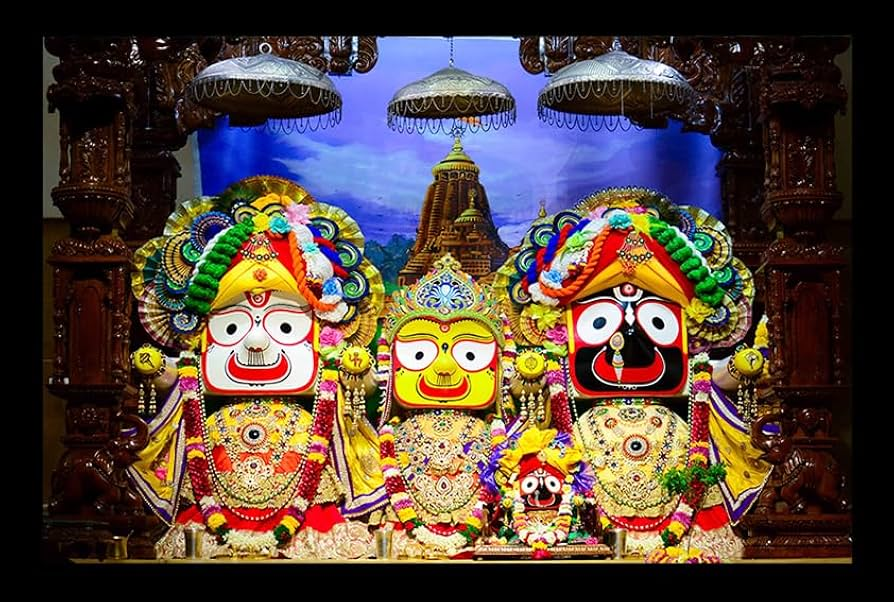
Jagannath Puri: The Eternal Abode of the Lord of the Universe (Latest 2025 Guide)
The Mystical Heart of Odisha: A Deep Dive into Jagannath Puri
The coastal city of Puri, nestled on the shores of the Bay of Bengal, is not just a geographical location; it is a spiritual nerve center for millions of Hindus worldwide. At its core stands the magnificent Shree Jagannath Temple, the eternal abode of Lord Jagannath, the ‘Lord of the Universe.’ As one of the most hallowed sites in the Hindu faith, this 12th-century marvel represents an unparalleled confluence of devotion, history, and architectural genius. From its unique wooden deities to the world-famous Rath Yatra, Puri offers a pilgrimage experience unlike any other, continually evolving while fiercely protecting its ancient traditions.
This ultimate guide explores the temple’s sacred significance, delves into its enigmatic history and architecture, provides a complete overview of the latest news and events, and offers practical tips for your spiritual journey to Puri.
Latest News & Updates: Post-Rath Yatra 2025
The Aftermath of a Challenging Rath Yatra
The annual Jagannath Rath Yatra (Chariot Festival), which commenced on Friday, June 27, 2025, drew millions of devotees, but the event was marked by significant challenges and unfortunate incidents, highlighting the need for improved crowd management strategies.
- Crowd Surge and Injuries: On the first day of the procession, a massive crowd surge during the pulling of Lord Balabhadra’s Taladhwaja chariot resulted in over 500 injuries to devotees.
- Stampede Tragedy: A few days later, a stampede near the Gundicha Temple, where the deities reside for a week, tragically claimed the lives of three people and injured more than 50.
- Official Response: The Odisha government swiftly acknowledged negligence and security lapses, ordering a high-level probe and suspending senior police officials to fix accountability and improve future administrative planning.
- Security Concerns: A security lapse was reported with four individuals illegally scaling the temple’s outer boundary wall (Meghanada Pacheri) to view the rituals, prompting a probe by the Shree Jagannath Temple Administration (SJTA).
Modernizing Pilgrimage: Heritage Corridor and AI Security
Despite the challenges, the administration is pushing forward with improvements to the pilgrim experience. The newly inaugurated Shree Jagannath Heritage Corridor, opened in January 2024, aims to enhance the ambiance and facilities around the temple complex. Additionally, AI-enabled CCTV cameras were deployed to monitor the festivities and traffic management during the Rath Yatra 2025, underscoring efforts to modernize crowd control and surveillance.
The Legend and History of Sri Mandira
The Shree Jagannath Temple, also known as ‘Sri Mandira,’ is one of the four sacred Char Dham pilgrimage sites (along with Badrinath, Dwarka, and Rameswaram), making a visit here a paramount spiritual duty for Hindus.
A 12th-Century Marvel
The current structure of the temple is a masterpiece of Kalinga architecture and was primarily constructed by King Anantavarman Chodaganga Deva of the Eastern Ganga dynasty in the 12th century.
Legend attributes the original construction to King Indradyumna, who received divine guidance to build a grand abode for Lord Jagannath. The temple complex is vast, enclosed by two concentric walls—the Kuruma Bheda and the Meghnad Pachira—and its towering spire, the ‘Shikhara,’ stands as a beacon of faith visible from miles away.
The Deities: Wooden Icons
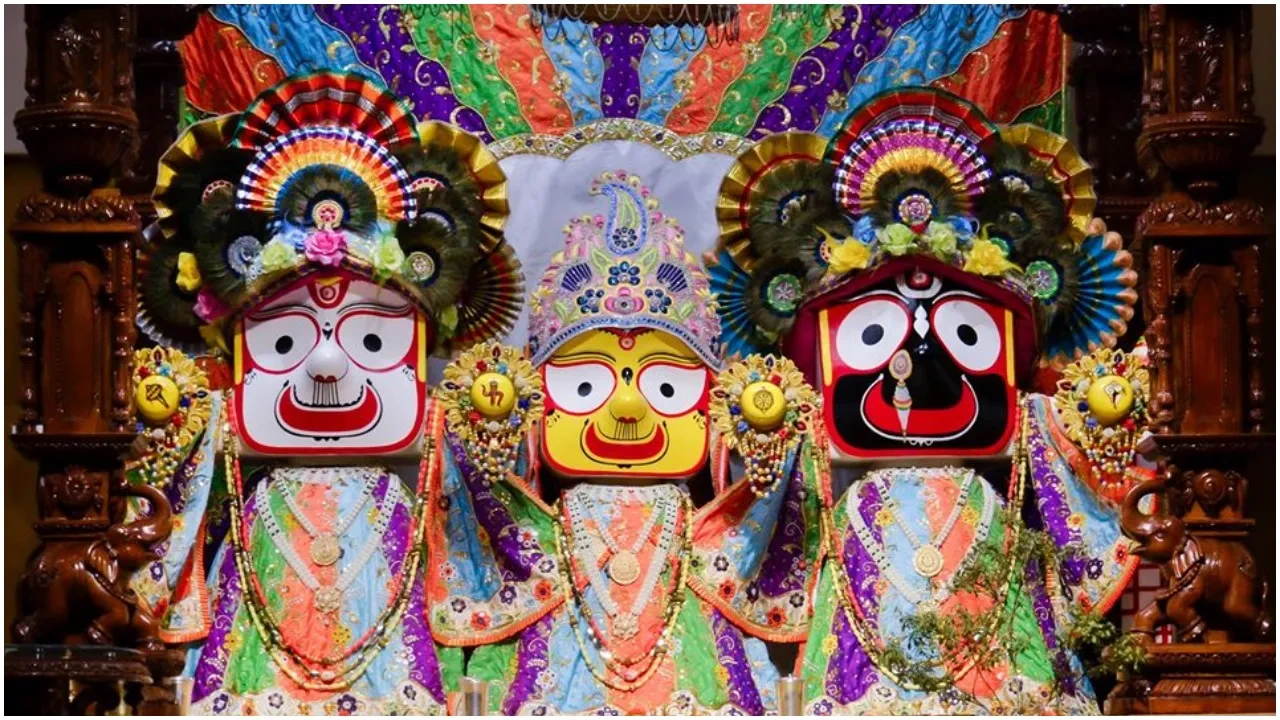
What makes the Jagannath Temple truly unique is its presiding deities, the ‘Triad’:
- Lord Jagannath (a form of Lord Vishnu/Krishna)
- Lord Balabhadra (his elder brother)
- Devi Subhadra (his sister)
Unlike the metallic or stone idols found in most Hindu temples, these deities are made of sacred Neem wood (Daru Brahma). They are ceremonially replaced every 8, 12, or 19 years in a deeply complex and highly secretive ritual called Nabakalebara, symbolizing the cyclical nature of life and rebirth.
Architectural Enigmas
The temple’s architecture is steeped in mystery and scientific precision:
- No Shadow: One of the most talked-about phenomena is the temple’s main dome, which is rumored to cast no shadow on the ground at any time of day, a remarkable feat of ancient engineering.
- The Chakra: The Nīlacakra (Blue Wheel) mounted atop the main spire is a discus with eight spokes, and it is a unique feature of the temple. The flag on the Chakra is changed daily, a ritual that involves a servitor scaling the 214-foot spire.
The Grand Festival: Puri Rath Yatra 2025
The Rath Yatra, or Chariot Festival, is the spectacular public excursion of the divine triad, celebrated annually in the month of Ashadha. It is one of the largest and oldest religious processions in the world, where Lord Jagannath, Balabhadra, and Subhadra leave their sanctum for a nine-day sojourn.
Key Rituals and Dates (June – July 2025)
| Ritual | Date (2025) | Significance |
|---|---|---|
| Snana Purnima | June 11 | Ceremonial bathing of the deities with 108 pots of water, after which they enter a period of isolation (Anavasara). |
| Anavasara | June 12 – 25 | The 15-day period when the deities are believed to be ‘unwell’ and are kept away from public view. |
| Rath Yatra (Start) | June 27 | The main day when the deities are escorted to their respective chariots and begin their journey to the Gundicha Temple. |
| Hera Panchami | July 1 | Goddess Lakshmi (Lord Jagannath’s consort) symbolically visits the Gundicha Temple in anger. |
| Bahuda Yatra | July 5 or 6 | The ‘return journey’ when the deities travel back to the main Jagannath Temple. |
| Suna Besha | July 6 | The deities are adorned in spectacular golden attire on their chariots outside the main temple. |
| Niladri Bije | July 8 | The final ritual where the deities re-enter the main temple, marking the end of the festival. |
The Chariots and the Route
Each deity travels on a uniquely constructed and decorated chariot:
- Lord Jagannath’s Chariot: Nandighosa (18 wheels)
- Lord Balabhadra’s Chariot: Taladhwaja (16 wheels)
- Goddess Subhadra’s Chariot: Darpadalana (14 wheels)
The 3-kilometer journey runs along the Bada Danda (Grand Road) from the main temple to the Gundicha Temple, believed to be their ‘aunt’s house’ (Mausi Maa Temple).
The Holy Kitchen: Mahaprasad
The Jagannath Temple is home to the world’s largest kitchen, capable of preparing vegetarian food (known as Mahaprasad) for up to 100,000 devotees daily. The food is cooked in traditional clay pots stacked one atop the other over a wood fire. Miraculously, the food in the top pot is cooked first, and the bottom one is cooked last—a spiritual mystery that defies conventional physics. The Mahaprasad is a core element of the pilgrimage and is served to all devotees at the Ananda Bazaar inside the complex.
A Pilgrim’s Paradise: Puri Travel Guide
How to Reach Puri
- By Air: The nearest airport is the Biju Patnaik International Airport (BBI) in Bhubaneswar, approximately 60 km away. From there, you can hire a taxi or take a train to Puri.
- By Rail: Puri Railway Station (PURI) is a major terminus with direct train services connecting it to all major cities across India.
- By Road: Puri is well-connected to Bhubaneswar, Konark, and Cuttack via National Highways.
Best Time to Visit
| Season | Months | Recommendation |
|---|---|---|
| Winter (Peak Season) | October to March | Ideal for sightseeing and comfortable temple visits due to pleasant, cool weather. |
| Rath Yatra | Late June/Early July | For the ultimate spiritual experience, but be prepared for extreme crowds and heat. |
| Summer | April to June | Extremely hot and humid; avoid peak midday hours. |
Key Tourist Attractions Near Puri
- Puri Beach: Famous for its golden sand and strong currents, and a hub for local life and evening strolls. It also hosts the annual Puri Beach Festival.
- Konark Sun Temple: A UNESCO World Heritage Site and an architectural marvel dedicated to the Sun God, located about 35 km away.
- Chilika Lake: Asia’s largest brackish water lagoon, a haven for migratory birds and home to the endangered Irrawaddy dolphins, approximately 90 km from Puri.
- Gundicha Temple: The destination of the Rath Yatra; a major site to visit, especially during the nine-day festival.
- Swargadwar: The traditional cremation ground and market area near the beach, considered holy.
Temple Visit Tips
- Entry Restriction: Only Hindus are permitted inside the main Shree Jagannath Temple complex. Non-Hindus can view the temple from the roof of the Raghunandan Library near the Lion Gate (Singhadwara).
- Dress Code: Visitors should dress modestly out of respect for the holy site.
- Photography: Photography is strictly prohibited inside the temple premises.
- Darshan: The best time for peaceful darshan (viewing of the deity) is usually early morning (around 5:00 AM) or during the late afternoon.
FAQs (Frequently Asked Questions)
Q1: Who is Lord Jagannath?
Lord Jagannath is a local manifestation of Lord Vishnu (or Lord Krishna) and is revered as the ‘Lord of the Universe.’ He is one of the presiding deities of the Char Dham pilgrimage sites.
Q2: Why are the deities in Puri made of wood?
The deities (Lord Jagannath, Balabhadra, and Subhadra) are made of sacred Neem wood (Daru Brahma), which symbolizes the universal form of Lord Vishnu. They undergo a ceremonial replacement in a ritual called Nabakalebara at long intervals, emphasizing the cycle of creation and dissolution.
Q3: What is the significance of the Rath Yatra?
The Rath Yatra, or Chariot Festival, is an annual festival celebrating the divine journey of the deities from the Jagannath Temple to the Gundicha Temple, which is considered their ‘aunt’s house.’ It is a symbolic act of the Lord giving public darshan (view) to all devotees, allowing them to pull the chariots as an act of immense devotion and spiritual merit.
Q4: Is the Jagannath Temple kitchen the largest in the world?
Yes, the kitchen at the Jagannath Temple is widely regarded as the largest community kitchen in the world, capable of preparing Mahaprasad (holy food) for thousands of devotees every day, cooked in a unique, traditional manner over a wood fire.
Q5: Can non-Hindus enter the Puri Jagannath Temple?
No, only followers of the Hindu faith are traditionally permitted inside the main temple premises. However, non-Hindus can witness the majestic structure and the daily rituals from outside and can find good viewing points, such as the rooftop of the Raghunandan Library near the Lion Gate.
Read More:

This Post Has 0 Comments