Christopher Nolan’s ‘Usable Sound’ Breakthrough: Next-Gen IMAX Cameras Revolutionize ‘The Odyssey’ Filming
The Sound Barrier is Broken: Christopher Nolan Promises Clarity for ‘The Odyssey’
For over two decades, Christopher Nolan has stood as one of cinema’s most visionary and uncompromising auteurs, yet his extraordinary filmography—from the soaring epics of Interstellar to the intricate paranoia of Oppenheimer—has been shadowed by a persistent, fan-driven critique: the muffled, often inaudible, dialogue. The director’s commitment to capturing sound live on set, a purist approach that avoids post-production re-recording (ADR), frequently clashed with the thunderous mechanics of his beloved large-format IMAX cameras, resulting in audio mixes where a whisper was drowned out by an engine or a booming Hans Zimmer score. Now, in a revelation that has sent shockwaves through the industry, Nolan has declared that this era is over.
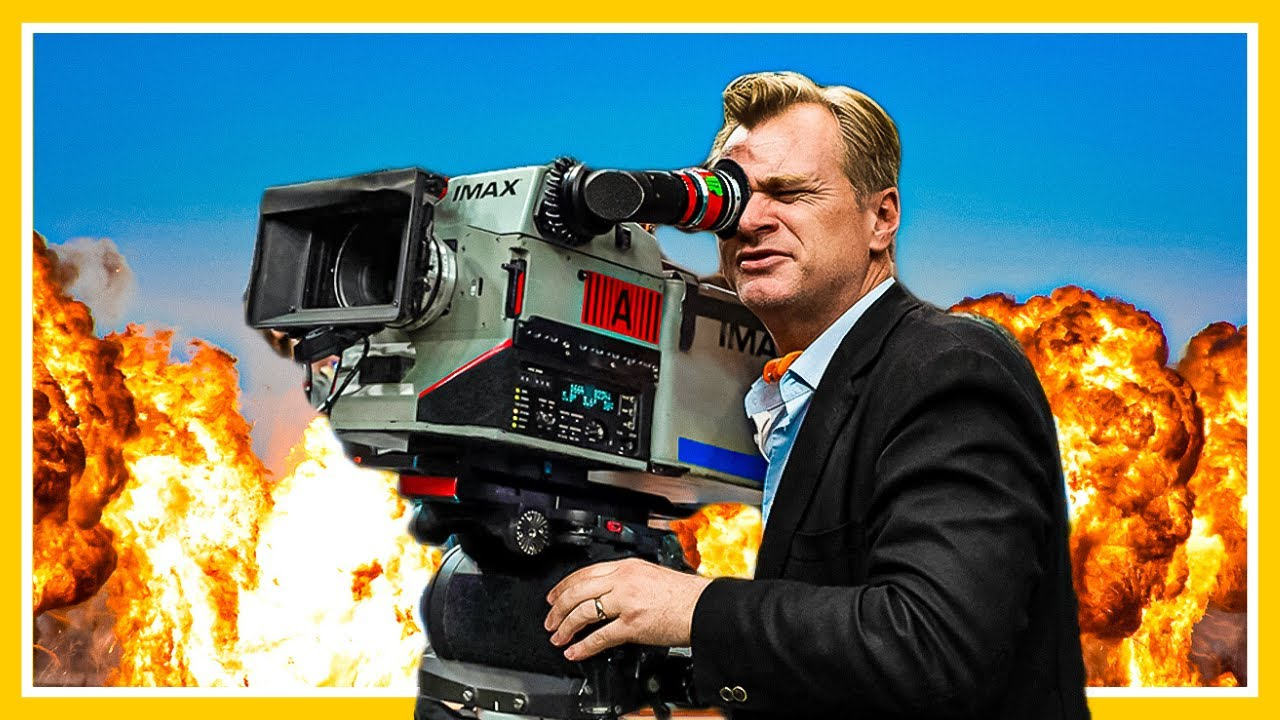
In a recent exclusive, the Oscar-winning filmmaker confirmed that his highly-anticipated adaptation of Homer’s epic, The Odyssey, features something his fans have long clamored for: “usable sound.” This dramatic shift is not a change in artistic philosophy, but the result of a revolutionary technological leap: the debut of IMAX’s next-generation film cameras, encased in a long-awaited noise-reducing housing nicknamed “the blimp.”
This breaking news confirms that The Odyssey, already poised to be a landmark fantasy action epic, will mark the beginning of a new chapter in Nolan’s career, one where the technical perfection of the image is finally matched by the clarity of the audio. The director, long a proponent of cinematic immersion, can now deliver intimate, whispering performances on the world’s largest, most demanding film format without sacrificing coherence—a true ‘game-changer’ for his signature style.
The Historical Hum: Why Nolan’s Dialogue Was Always a Challenge
To understand the significance of this development, one must first appreciate the director’s uncompromising methodology. Nolan’s film grammar is built on an absolute commitment to verisimilitude and practical effects. His preference for large-format film, specifically 65mm and 70mm IMAX, is central to this. These cameras capture an unparalleled level of detail, but the mechanical nature of the film moving through the noisy, cumbersome cameras often made clean, on-set audio capture nearly impossible.
The traditional Hollywood fix for noisy set conditions is Automated Dialogue Replacement (ADR), where actors re-record their lines in a studio during post-production. Nolan famously minimizes or entirely rejects ADR, believing that the vocal performance captured in the moment on set, complete with the ambient environmental echoes, is intrinsically tied to the performance and atmosphere. When the ambient noise was too high—be it the roar of a jet in Dunkirk or the ticking of a doomsday device in Oppenheimer—the sound mixers faced the difficult choice of raising the dialogue track into an unnatural register or burying it beneath the much louder, organically captured effects track. The latter often won, cementing the reputation for Nolan Mumble that became a ubiquitous cinematic meme.
This wasn’t a mistake; it was an artistic choice forced by a technical limitation. For a time, Nolan was willing to accept the audio trade-off for the visual majesty. But the debut of the new IMAX gear has effectively solved the director’s central dilemma.
IMAX’s ‘Blimp’ and the Promise of Intimacy on a Grand Scale
According to reports, the key innovation is the development of a highly effective sound-dampening casing, often referred to in the industry as a ‘blimp,’ specifically engineered for the notoriously loud IMAX cameras. While blimps have been used since the early days of ‘talkies’ to quiet 35mm cameras, creating one for the massive 65mm IMAX format was a much greater technical challenge.
Nolan’s comments suggest this new casing is revolutionary. “You can be shooting a foot from [an actor’s] face while they’re whispering and get usable sound,” the director revealed. “What that opens up are intimate moments of performance on the world’s most beautiful format.”
The ability to capture raw, clean, intimate audio alongside the highest fidelity images means Nolan can now direct nuanced, quiet exchanges without the fear of his camera’s mechanics destroying the take. For a film like The Odyssey, which chronicles the intensely personal and psychological journey of a war-weary hero trying to return home, this clarity will be paramount. The narrative balance requires both the overwhelming chaos of the sea and battle and the quiet, desperate longing of a man’s resolve. The new technology allows Nolan to capture both with equal, uncompromised fidelity.
A New Golden Age of Mythic Epic: The Production Scale of ‘The Odyssey’
Beyond the audio breakthrough, the production details for The Odyssey solidify its standing as one of the most ambitious films currently in development. Nolan has confirmed the suitably grand scale of the Homeric adventure, detailing a production commitment to realism that is vintage Nolan.
Next-Gen Camera Debut: The Odyssey marks the very first time the elusive next-generation 65mm IMAX film cameras have been used on an actual set. The cameras feature a carbon fiber design and a new digital display, pushing the boundaries of what is possible in large-format filmmaking.
Massive Film Stock: The director disclosed that his team shot an astounding over two million feet of film during the production, which translates to roughly 100 hours of raw footage. This massive stock underscores the colossal scale and detail captured, significantly more than a typical blockbuster.
Real-World Location Shooting: Nolan emphasized the practical nature of the shoot, which involved 91 days of location filming. He detailed putting the cast who play Odysseus’s crew “out there on the real waves, in the real places” to capture “how hard those journeys would have been for people.” His goal is to achieve an “A-budget, IMAX-ready Ray Harryhausen movie,” marrying classic mythological spectacle with the weight and credibility of a major Hollywood production.
Stellar Cast Roles Confirmed
Accompanying the technical news, first-look images have officially confirmed the major roles for the film’s star-studded ensemble, ensuring the human drama at the epic’s core will be delivered by top talent.
- Matt Damon reunites with Nolan to take on the lead role of the legendary hero, Odysseus, King of Ithaca.
- Anne Hathaway, a collaborator from The Dark Knight Rises and Interstellar, is set to play Odysseus’s devoted wife, Penelope.
- Spider-Man star Tom Holland will play their son, Telemachus, who anxiously waits for his father’s return.
- Mia Goth will portray Melantho, one of Penelope’s maids.
With a cast that also reportedly includes Zendaya, Robert Pattinson, and Lupita Nyong’o, and a newly guaranteed clarity in performance capture, The Odyssey is shaping up to be far more than just a visual feast.
Scheduled for release on July 17, 2026, this breaking news confirms that Christopher Nolan is not resting on his post-Oppenheimer laurels. He is actively engaging with and solving the technical challenges of his own uncompromising craft, promising a cinematic experience that is not only visually unseen but finally, audio-perfectly heard. The era of the “Nolan Mumble” is officially over, and the stage is set for a truly revolutionary mythic epic.
Frequently Asked Questions (FAQs)
What is the major breaking news about Christopher Nolan’s new film, ‘The Odyssey’?
The most significant breaking news is Christopher Nolan’s claim that his new film, The Odyssey, finally features “usable sound,” which addresses the long-running fan critique about muffled or inaudible dialogue in his films. This is due to the debut of new, noise-reducing ‘blimp’ technology for the next-generation 65mm IMAX cameras.
Why did Christopher Nolan’s previous films often have unclear dialogue?
The dialogue issues stemmed from Nolan’s staunch commitment to capturing all sound live on the noisy sets, especially with the loud mechanics of large-format IMAX film cameras. He prefers to avoid post-production dialogue replacement (ADR), believing on-set audio is more authentic. The camera noise, combined with his preference for bold, loud sound mixing of music and effects, often buried the naturally-captured dialogue track.
What specific new technology is solving the sound problem for ‘The Odyssey’?
The solution is a new, specialized sound-dampening casing, or ‘blimp,’ designed for the massive next-generation IMAX 65mm film cameras. This casing significantly reduces the camera’s mechanical noise, allowing clean, ‘usable sound’ to be recorded even during intimate scenes shot on the large format.
Which major actors are confirmed to be in the cast of ‘The Odyssey’ and who are they playing?
The main cast roles that have been recently confirmed are Matt Damon as the hero Odysseus, Anne Hathaway as his wife Penelope, and Tom Holland as their son Telemachus. The film also features Mia Goth as Melantho.
When is ‘The Odyssey’ scheduled to be released?
Christopher Nolan’s The Odyssey is scheduled for an IMAX release on July 17, 2026.
Read More:

This Post Has 0 Comments