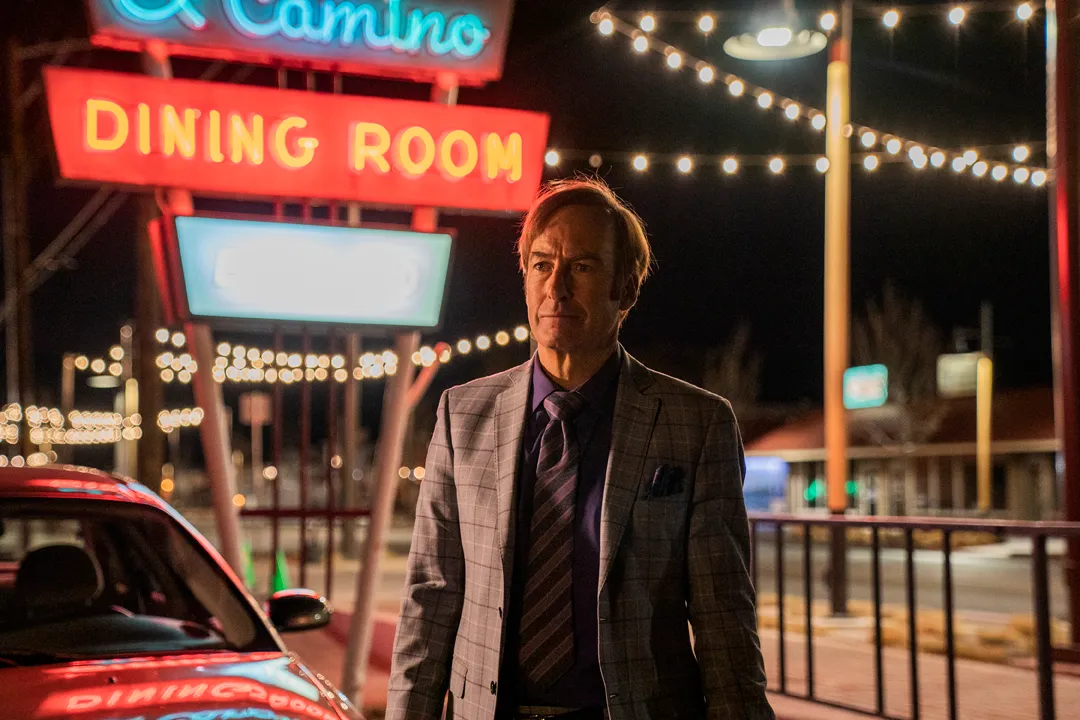
Better Call Saul’s Last Stand: How ‘Saul Gone’ Cemented a Legendary TV Legacy
Better Call Saul’s Last Stand: How ‘Saul Gone’ Cemented a Legendary TV Legacy
Over its six-season run, Better Call Saul did what many considered impossible: it emerged from the shadow of one of the greatest television dramas of all time (Breaking Bad) to stake its own claim as a masterpiece of the medium. The journey of James Morgan McGill, the earnest but crooked lawyer, into the morally bankrupt criminal attorney Saul Goodman, and finally, into the defeated but redeemed Gene Takavic, culminated in one of the most fulfilling and emotionally devastating series finales in recent memory. The final episode, “Saul Gone,” didn’t just wrap up a spin-off; it masterfully completed a fourteen-year epic of crime, consequence, and character transformation within the Albuquerque universe.
The Verdict is In: A Prequel That Surpassed Expectations
Co-created by Vince Gilligan and Peter Gould, Better Call Saul premiered in 2015 to widespread skepticism. How could a show built around a comedic relief side character—the strip-mall lawyer known for his cheesy commercials and shady connections—sustain the high-stakes tension and character depth of its predecessor? The answer lay in its deliberate pace, visual artistry, and the profound tragedy of its protagonist’s moral decay. The series became a meticulously crafted character study, focusing on ‘Slippin’ Jimmy’ McGill and his relationship with the two anchors of his life: his accomplished, condescending brother, Chuck McGill, and his morally complex soulmate, Kim Wexler.
The final season, and particularly the finale, received almost universal praise, with many critics and fans placing the show on the same tier, if not higher, than Breaking Bad. The series finale of Better Call Saul delivered a season-high audience with 2.7 million viewers tuning in on AMC (Nielsen live+3 ratings), making it the most-watched episode since the Season 3 finale in 2017. The season also became the number one acquisition driver in the history of the AMC+ streaming service, demonstrating the massive fan engagement and social media buzz that accompanied the final episodes.
Emmy Acclaim and Critical Consensus
While the final season was airing, the series garnered seven Emmy nominations, including Outstanding Drama Series, and acting nods for Bob Odenkirk (Lead Actor) and Rhea Seehorn (Supporting Actress), solidifying its status as a critical darling right up to its conclusion. The show’s excellence wasn’t just in acting; it was lauded for its exceptional writing, directing, and unique visual language, which often used color and cinematography to mirror Jimmy’s psychological state.
‘Saul Gone’: The Path to Redemption
The final arc of the series saw James McGill fully embrace his post-Breaking Bad identity as ‘Gene Takavic,’ the fugitive Cinnabon manager in Omaha, Nebraska, living a monochromatic, paranoid life. After being identified by the elderly Marion (Carol Burnett), Gene is apprehended. His subsequent capture forces a reckoning with his past, marking the beginning of the end for the ‘Saul Goodman’ persona.
The Art of the Deal and the Confession
In his final act of criminal-attorney brilliance, Saul Goodman manages to talk his way out of a life sentence and down to a shockingly lenient seven-and-a-half years in a cushy prison. He spins a masterful tale of manipulation and coercion, convincing prosecutors (and even a returned Marie Schrader) that he was a victim of Walter White’s menace. He even offers information about the death of Howard Hamlin to sweeten the deal, only to learn that Kim Wexler has already made her own confession regarding the scam, opening herself up to civil suits.
This news—the confirmation of Kim’s guilt and vulnerability—is the catalyst for Jimmy’s final, pivotal decision. He realizes that getting away with a minor sentence would be his final, biggest con, one that would cement his legacy as a self-serving monster in the eyes of the one person whose opinion still mattered.
In a dramatic courtroom moment, with Kim Wexler in attendance, he scraps the plea deal. Against the frantic advice of his lawyer, Bill Oakley, Jimmy makes a full, unprompted confession, taking responsibility not just for his role with Walter White, but for the moral crimes that led to the death of his brother, Chuck. He admits to maliciously destroying Chuck’s law career, leading to his suicide. This act is a definitive rejection of the Saul Goodman mask, and a profound, public return to his real self: James McGill.
“The reason why Saul Goodman went all-in on an 86-year sentence was simple: it was the one thing Walter White could never do. It was a selfless act of accountability for the sake of his true love.“
The ‘Time Machine’ and Regret
The motif of a ‘time machine’ serves as the emotional backbone of the finale, first appearing in flashbacks with Mike Ehrmantraut, then with Walter White, and finally with Chuck McGill. When asked what he would change with a time machine (a metaphor for regret), Walter White, ever the narcissist, focuses on his bitterness about being pushed out of Gray Matter. Saul, true to his shallow lawyer persona, mentions a minor slip-and-fall con from his youth that injured his knee.
It is only in his full confession, delivered as James McGill, that his true regret is revealed: his toxic relationship with Chuck and the consequential death he orchestrated. His 86-year sentence—nicknamed ‘The Alcatraz of the Rockies’—is not just a legal punishment but a self-imposed act of penance for his life’s long list of moral failures. This confession is Jimmy’s way of finally building a metaphorical time machine—not to undo the past, but to live honestly with the present consequences.
The Final Cigarette: Jimmy and Kim
The heart of Better Call Saul always beat strongest in the complex, intoxicatingly destructive relationship between Jimmy and Kim. After the courtroom confession, Kim, now a shell of her former self working a monotonous job in Florida, visits James McGill in prison under the pretense of a lawyer-client meeting. The scene is shot in black and white—the visual representation of the ‘Gene’ timeline—until the moment the two share a final, intimate cigarette in the prison visiting room, reminiscent of their early, carefree days in the HHM parking garage.
This final, wordless moment, where a hint of the old chemistry and deep-seated love flickers back, is the true payoff of the series. For Jimmy, the massive sentence is worth it because it restores his identity and earns back Kim’s respect and love, even if it’s from behind bars. His decision to finally be ‘Jimmy’ again—a moral choice that embraces a punishing reality—is the ultimate love letter to Kim and the purest form of redemption the Breaking Bad universe has ever offered.
The Legacy of the Spin-Off
Better Call Saul concluded its run not as a mere extension of a popular franchise but as a compelling, character-driven tragedy that stands entirely on its own merits. It successfully blended the high-tension crime thriller elements of Breaking Bad (led by the fantastic performances of Jonathan Banks as Mike Ehrmantraut and Giancarlo Esposito as Gus Fring) with a profound, often hilarious, and deeply sad story of a man’s fight against his own worst impulses.
Unlike Walter White’s finale, which was a violent, vengeful victory that offered him a ‘pseudo victory,’ Jimmy McGill’s ending is quiet, painful, and ultimately, profoundly redemptive. It is a story about the impossibility of escaping one’s true nature, but also the enduring power of choice and the love that can finally force a crooked man to walk a straight line, even if that path leads to an 86-year prison sentence. As the show ends with the two former partners gazing at each other through prison wire, the audience is left with the heartbreaking realization that James McGill, having paid the ultimate price, is finally at peace.
Key Facts and Figures from the Final Season
- Finale Title: “Saul Gone” (Season 6, Episode 13)
- US Air Date: August 15, 2022
- Finale Viewership: 2.7 million viewers (Nielsen Live+3), the most-watched episode since Season 3.
- Awards Recognition: Seven Emmy nominations for the final season, including Outstanding Drama Series.
- Redemption Arc: James McGill’s court confession reversed a seven-year plea deal to an 86-year prison sentence, a sacrifice made for Kim Wexler.
- Cameos: The final season featured appearances by Bryan Cranston (Walter White), Aaron Paul (Jesse Pinkman), and Betsy Brandt (Marie Schrader).
Read More:

This Post Has 0 Comments