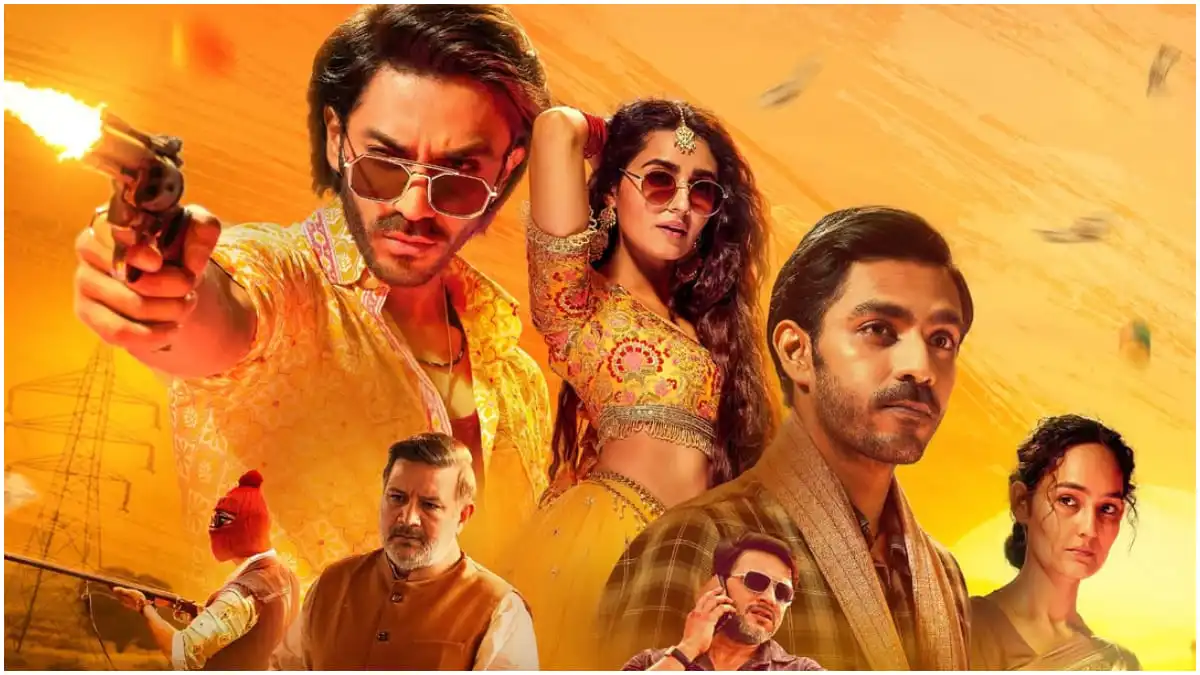
Anurag Kashyap Shocker: ‘It Was My Suggestion’ to Drop *Nishaanchi 2* Directly on OTT, Blames Theatrical System
The landscape of Indian cinema just witnessed another seismic shift, not with a blockbuster opening, but with a highly unconventional and quietly powerful direct-to-OTT premiere. In a move that has sent shockwaves through the industry, filmmaker Anurag Kashyap’s highly anticipated sequel, Nishaanchi 2, was unexpectedly dropped directly onto Amazon Prime Video, streaming alongside the first part which had a lacklustre theatrical run in September.
While the industry buzzed with speculation about the sequel skipping theatres—a rarity for an established director’s film—Kashyap himself has broken the silence, confirming the decision was not forced upon him, but was, in fact, his suggestion and a collective strategic call. In an exclusive interview, the director launched a scathing critique of the current theatrical distribution system, shedding light on the harsh realities faced by non-tentpole films in India and revealing the true reason why he pushed for the digital debut of Nishaanchi 2.
The Director’s Ultimatum: Why Nishaanchi 2 Skipped Cinemas
Anurag Kashyap, known for his raw, unflinching filmmaking and equally candid public comments, laid the blame for the sequel’s direct-to-OTT release squarely at the feet of the audience and the restrictive practices of exhibitors.
Nishaanchi Part 1, a crime saga introducing debutant Aaishvary Thackeray, had its theatrical release in September. Despite the director’s signature style and a story that ended on a definite cliffhanger, promising a second instalment, the film failed to draw crowds, bombing at the box office. Kashyap’s comments reveal a sense of disappointment and pragmatic surrender to the market reality.
“It was my suggestion, and our collective decision between Amazon (producers) and us,” Kashyap stated regarding the decision to drop Part 2 on the streaming platform. He elaborated, making it clear that the ultimate power lies with the viewer’s pocket: “Had the audience turned up for part 1, there is no way the second part wouldn’t have been released in cinemas.”
Furthermore, the director pointed to a crucial narrative necessity. Many viewers of Part 1 felt the story was incomplete—an expected reaction given it was structured as a two-part saga. To address this, the decision was made to release both Nishaanchi Part 1 and Part 2 simultaneously on Prime Video, ensuring the audience could experience the full, uninterrupted narrative arc of the twin brothers, Babloo and Dabloo. “And since most of the reaction was that the film felt incomplete to everyone, it was decided to let them have the complete experience,” he explained.
This decision is significant because it highlights a filmmaker prioritizing the viewer’s complete experience over a traditional, but commercially unviable, theatrical window for the sequel.
The Scathing Critique: ‘I’ve Seen My Films Being Discarded’
While the box office numbers provided the initial push for the digital switch, Kashyap’s comments delved deeper into the fundamental problems he sees with the Bollywood exhibition system, a critique he has carried throughout his career.
He argued that the ecosystem is stacked against films that are not mega-budget ‘tent-poles’. He accused exhibitors of cancelling shows and prematurely pulling films out of theatres if they don’t open with big numbers, effectively killing any chance for positive word-of-mouth to build an audience. “That’s how they treat non tent-pole films,” he observed.
Kashyap’s personal history with the system added a layer of emotional intensity to his statement. He revealed his long-standing frustration, stating, “It’s pretty one sided, and I have seen my films being discarded my whole career by exhibitors themselves.”
The Irony of the 8-Week Window
A surprising revelation in the director’s statement concerned the mandatory eight-week window between a theatrical release and an OTT premiere—a rule set by the Multiplex Association of India (MAI). This rule created a promotional roadblock for Nishaanchi 2.
“No marketing could be done because of theatre-OTT rule… theatres don’t allow to even promote the film or drop it anywhere for 8 weeks,” Kashyap explained. This rule essentially handcuffs the marketing team. Since Part 1 was still technically in its theatrical window or waiting for the stipulated gap, promoting the existence and imminent release of Part 2, even on OTT, became a logistical nightmare.
In essence, the very system designed to protect the theatrical run made it impossible to announce or market a sequential digital release, leading to the highly-criticized “silent drop” of Nishaanchi 2 on Prime Video.
The Significance of the ‘Silent Drop’
The simultaneous release of Nishaanchi 1 and Nishaanchi 2 without a massive promotional blitz for the sequel marks a pivotal moment. The producer, Amazon MGM Studios, which also owns the streaming platform Prime Video, was in a unique position to take this risk and honour the director’s vision.
“We were lucky that we had a studio, who also has a streaming platform, producing our film and backing us,” Kashyap acknowledged. This points to a new model in Indian filmmaking: when the box office fails a niche or complex project, the integrated studio-streamer model offers an escape hatch, ensuring the complete artistic work reaches its intended audience, regardless of theatrical success.
Nishaanchi, a crime drama set in Kanpur, Uttar Pradesh, is a two-part saga about twin brothers, Babloo and Dabloo (played by Aaishvary Thackeray), who are drawn into a world of crime and retribution. The story explores themes of brotherhood, betrayal, and redemption, a perfect canvas for Kashyap’s signature style.
By dropping both parts at once, Prime Video has transformed a box office dud into a potential binge-watching event. This is a clear indicator that for films designed as multi-part sagas or those with non-linear storytelling, the OTT format provides an arguably superior viewing experience, allowing audiences to absorb the entire story in one sitting, as the director intended. This bold move—driven by the director’s desire for completeness and fuelled by frustration with the multiplex system—may set a new precedent for how independent or niche sequels are handled in the future. It turns a commercial failure into a creative victory for the streaming age.
Frequently Asked Questions (FAQs)
Q1: What is the breaking news regarding Nishaanchi 2?
A: The breaking news is that Nishaanchi 2, the sequel to Anurag Kashyap’s film Nishaanchi, was released directly on Amazon Prime Video without a theatrical release. Anurag Kashyap confirmed this was his suggestion and a collective decision made with Amazon MGM Studios, citing the lacklustre box office performance of Part 1 and the need to give the audience the ‘complete experience’ of the two-part story.
Q2: Why did Anurag Kashyap choose to skip the theatrical release for the sequel?
A: Kashyap cited two main reasons: 1) The first part, Nishaanchi, bombed at the box office, indicating the audience did not show up in cinemas. 2) The audience feedback on Part 1 was that it felt incomplete. He wanted to ensure viewers could watch the full, two-part saga immediately on Prime Video. He also used the opportunity to criticize the exhibitor system for ‘discarding’ non-tentpole films prematurely, which was an added factor in his decision.
Q3: Where can I watch Nishaanchi Part 1 and Part 2?
A: Both Nishaanchi Part 1 and Nishaanchi 2 are currently streaming on Amazon Prime Video. The simultaneous drop allows viewers to binge-watch the entire story in one go.
Q4: What is the significance of the ‘eight-week rule’ in this controversy?
A: The eight-week rule is the mandatory minimum gap between a film’s theatrical release and its OTT premiere, as per the Multiplex Association of India. Kashyap pointed out that this rule prevented the makers from promoting or marketing Nishaanchi 2‘s digital release, as Part 1 was either still in this window or had just exited it, leading to the sequel’s ‘silent drop’ on the platform.
Q5: Who are the main stars in the Nishaanchi saga?
A: The film stars Aaishvary Thackeray in a double role as twin brothers Babloo and Dabloo, marking his acting debut. The cast also includes Vedika Pinto, Monika Panwar, Mohammed Zeeshan Ayyub, and Kumud Mishra in pivotal roles.
Read More:

This Post Has 0 Comments