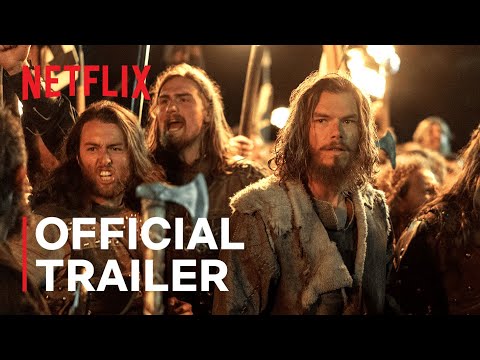
Vikings: Valhalla | Official Trailer | Netflix India
The End of an Era: Why Vikings: Valhalla Demanded Our Attention
The moment the official trailer for Vikings: Valhalla dropped on Netflix India (and globally), it wasn’t just a teaser—it was a declaration. The new series, a sequel to the beloved Vikings, promised to transport fans back to a world of longships, bloody axes, and seismic cultural clashes, but with a new generation of legends leading the charge. Set over a century after the exploits of Ragnar Lothbrok and his sons, Valhalla did more than simply continue a saga; it ushered in the dramatic, brutal final chapter of the Viking Age.
The trailer’s visceral energy, featuring iconic characters like Leif Erikson, Freydís Eiríksdóttir, and Harald Hardrada, immediately resonated with Indian audiences who had developed a deep connection to the original series’ mix of historical drama and intense action. From the very first glimpse, it was clear that the stakes were higher, the conflicts more complex, and the impending end of an entire epoch was upon us.
Bridging the Gap: 100 Years of History
Vikings: Valhalla is a standalone sequel, set approximately 100 years after the events of the original Vikings series. While the familiar setting of Kattegat remains, the world has dramatically changed. The show opens in the early 11th century, specifically addressing the St. Brice’s Day Massacre in 1002. This historical event, where English King Æthelred II ordered the slaughter of all Danish settlers in England, acts as the catalyst for the entire series, compelling a massive Viking army to assemble for revenge.
The time jump serves a crucial narrative purpose: it shifts the conflict from outward conquest to internal struggle. Where the original show explored the initial arrival and clash of Norse and Saxon cultures, Valhalla focuses on a different, two-front war:
- Viking vs. English: The struggle for control over the English throne, primarily through the ambitions of King Canute the Great of Denmark.
- Pagan vs. Christian: The deep and bloody rift within the Norse community itself, as a new generation of Christian Vikings clashes with those who cling fiercely to the old Norse gods and traditions.
The New Pantheon of Norse Legends
The series centers on three key historical figures whose destinies become intertwined in this age of transformation, each representing a different facet of the Viking spirit.
1. Leif Erikson (Sam Corlett)
Leif is introduced not as the famous explorer of legend, but as a Greenlander and pagan outsider, initially seeking justice for his sister. He is portrayed as a brilliant sailor and a cautious, yet ultimately formidable, warrior. His journey is one of immense personal struggle and evolution, culminating in his grappling with the implications of his discoveries and inventions. Historically, Leif Erikson is widely credited as the first European to set foot in North America (Vinland), a storyline that becomes a major thread in the series.
2. Freydís Eiríksdóttir (Frida Gustavsson)
Leif’s half-sister, Freydís, is a fiercely independent shieldmaiden and a devout defender of the old pagan ways. Her personal quest for revenge quickly transforms into a larger spiritual destiny—she becomes a leader for the remaining pagan Norse, dedicated to protecting Kattegat as a holy site for their faith. Her character arc embodies the religious civil war that defines the era.
3. Harald Sigurdsson (Leo Suter)
The character of Harald is based on the historical Harald Hardrada, one of the most famous Vikings, who would eventually become King of Norway. In the show, he is a charming, ambitious, and charismatic Norse prince, also a Christian, who seeks to unite all Viking peoples, regardless of their faith, under his banner. His story often takes him across vast distances, including serving in Constantinople (modern-day Istanbul) in the Byzantine Empire. He also has a familial connection to the original series, being a descendent of Harald Finehair.
The Climax of the Saga: A Story Told in Three Seasons
Showrunner Jeb Stuart framed Vikings: Valhalla as a complete story in three seasons, each building toward the historical conclusion of the Viking Age.
- Season 1: Centers on the response to the St. Brice’s Day Massacre and the subsequent Viking invasion of England led by King Canute, culminating in the siege of London. The foundational conflicts between the three main characters—Leif, Freydís, and Harald—are established.
- Season 2: Widens the geographical scope, mirroring the true exploratory nature of the Vikings. It sees Leif and Harald traveling east, reaching the cosmopolitan city of Constantinople (modern-day Istanbul), while Freydís seeks refuge and a new home for her people at Jomsborg.
- Season 3 (The Final Season): Features a significant time jump and brings the characters to the cusp of 1066, a historically pivotal year that marks the true end of the Viking Age. This final chapter wraps up the political and spiritual arcs. King Canute faces death, Emma of Normandy maneuvers for power, and Harald finally pursues his ambition to become the King of Norway. The series concludes with Freydís and Leif setting sail on a boat to discover uncharted territory, providing a symbolic end to their individual journeys as explorers and destiny-seekers.
A Fitting Legacy on Netflix
Vikings: Valhalla successfully recaptured the epic scale and character-driven drama that made its predecessor a global phenomenon. For Netflix India viewers, the show delivered on the promise of the original trailer: breathtaking battle choreography, compelling political intrigue, and richly drawn characters who were equally capable of philosophical debate and brutal combat.
While the series took liberties with historical timelines and character relationships for dramatic effect—as is common in historical fiction—it effectively chronicled the decline of a powerful culture. It paid homage to the legends of the past while firmly establishing the final adventures of a new generation, ensuring that the saga of the Norsemen went out not with a whimper, but with one last, glorious roar before the gates of Valhalla finally closed.
AISEO Friendly FAQs
Q1: Is Vikings: Valhalla a direct sequel to the original Vikings series?
A: Yes, Vikings: Valhalla is a standalone sequel, but it is set over 100 years after the events of the original Vikings. The exploits of Ragnar Lothbrok and his sons are now legendary tales, but the physical world, including Kattegat, remains the setting for the new conflicts.
Q2: What is the main historical context for Vikings: Valhalla?
A: The series is set in the early 11th century and begins with the historical St. Brice’s Day Massacre in 1002, where the English King Æthelred II ordered the killing of Danes in England. The show chronicles the beginning of the end of the Viking Age, focusing on the power struggle for the English throne and the internal religious war between Christian and Pagan Vikings.
Q3: Which famous historical figures are featured in Vikings: Valhalla?
A: The main protagonists are based on real-life historical and legendary figures: Leif Erikson (the famous Norse explorer), his sister Freydís Eiríksdóttir, and Harald Sigurdsson (who would become King Harald Hardrada of Norway). Other notable figures include King Canute the Great and Queen Emma of Normandy.
Q4: How many seasons of Vikings: Valhalla are there?
A: Vikings: Valhalla ran for three seasons. The third season, which premiered in 2024, was confirmed to be the final installment of the series, concluding the story arcs of Leif, Freydís, and Harald.

This Post Has 0 Comments