
Precognition 2025 Movie Cast, OTT, Budget, Box Office, And More
Release Date: 2025-07-18
Plot
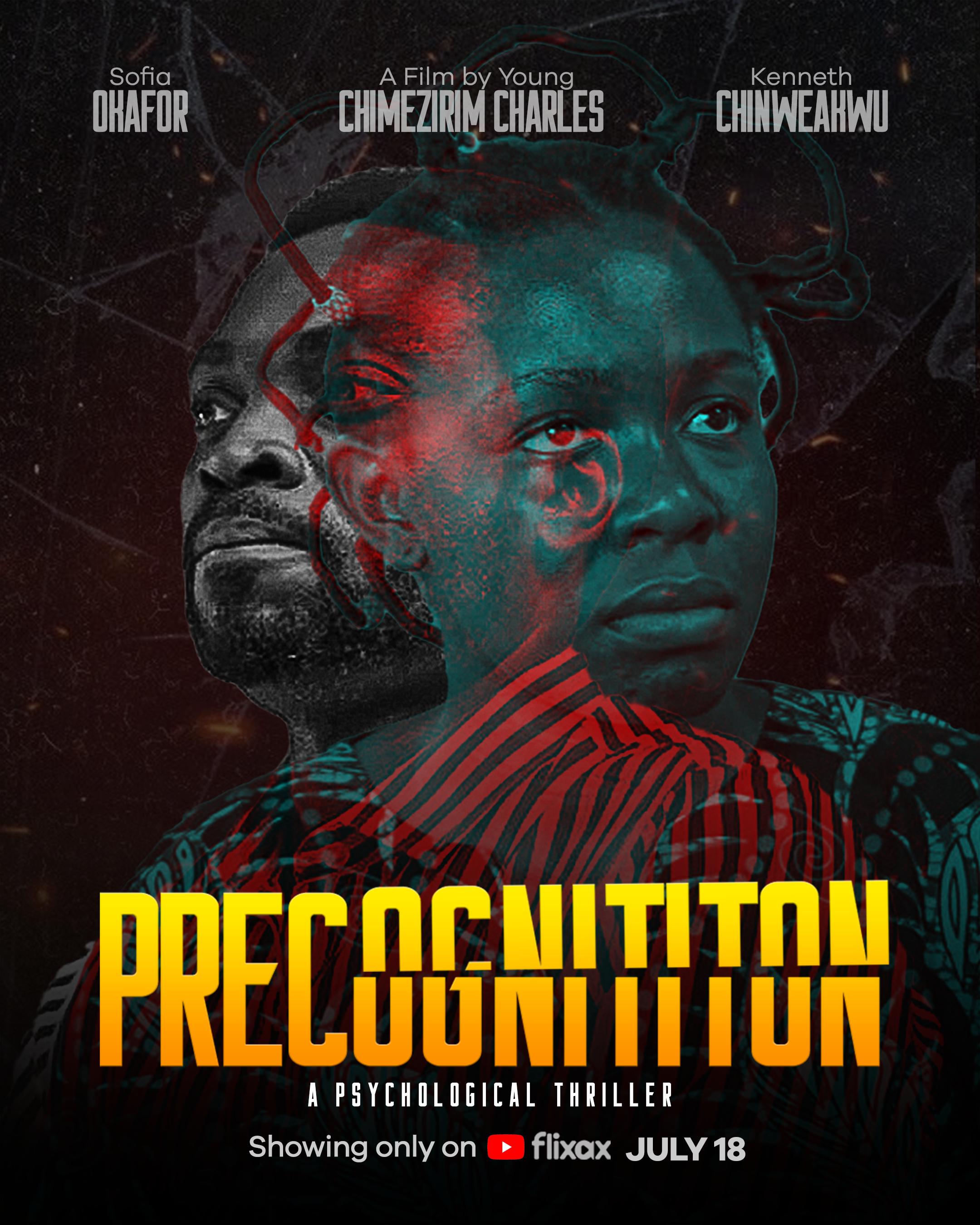
Precognition is a 2025 film, Thriller movie, starring Kenneth Chinweaku, Ebube Ekeh, Sophia Okafor, directed by Charles Chimezirim Young from Nigeria.
After dreaming of her husband's death, Anuri becomes trapped in a chilling race against time, desperate to change a future only she has seen.
Watch on: will update soon
Continue Reading
To explore more of the cinema world, make sure to check out our detailed features on Illusions for Sale: The Rise and Fall of Generation Zoe Cast, OTT, Budget, Box Office, And More, Penjagal Iblis: Dosa Turunan 2025 Movie Cast, OTT, Budget, Box Office, And More and My Cold-Blooded Alpha King Cast, OTT, Budget, Box Office, And More. We recommend these to all film lovers.
Stay updated about movies with Bollywooddadi.com
Details
Cast
Crew
Directors: Charles Chimezirim Young
Writers: Chux Edoga
Precognition 2025: Examining Prophecy, Psychology, and the Future of Prediction
The arrival of a new year often sparks a global fascination with the unknown. For millennia, humanity has sought glimpses of the future, a phenomenon traditionally defined as precognition—the purported ability to gain knowledge of an event before it happens, often through dreams, visions, or spiritual insight. Now, as the calendar turns to 2025, the concept of foreknowledge sits at a fascinating crossroads, caught between the ancient claims of seers and the cutting-edge predictive power of Artificial Intelligence (AI).
What does 2025 hold, and can we truly “see” it coming? The answer depends entirely on whether you consult a psychic medium or a macroeconomic analyst.
The Nature of Precognition: A Scientific Perspective
In parapsychology, precognition is classified as a form of extrasensory perception (ESP) where an individual allegedly perceives or predicts future events without using the known human senses. Despite its widespread belief throughout history and numerous anecdotal accounts, precognition is widely considered pseudoscience by the mainstream scientific community.
The primary scientific challenge is that precognition seems to violate the principle of causality—the idea that an effect cannot occur before its cause.
Skeptics and psychologists offer several alternative explanations for what people interpret as a precognitive experience:
- Selective Memory and Confirmation Bias: People tend to vividly recall the few accurate predictions while forgetting the far more numerous predictions that did not come true.
- The Law of Truly Large Numbers: Given the billions of dreams and predictions made globally every night, it is statistically inevitable that some will coincidentally match a future major event.
- The Desire for Control: Research suggests that a belief in precognition, especially during times of high societal volatility, can be a psychological coping mechanism, giving people a temporary sense of control over an unpredictable future.
The psychological allure of foreseeing an event, such as a major celebrity event or a health crisis like actor Mark Ruffalo’s claimed dream that predicted his brain tumour diagnosis, ensures the topic remains a powerful cultural touchstone.
The Speculative Forecast: What Seers Predict for 2025
As is tradition, many modern psychics and interpreters of historical prophecies, such as Nostradamus and Baba Vanga, have offered highly dramatic and transformative predictions for the year 2025. These speculative forecasts often paint a picture of dramatic societal and global upheaval.
Common themes among these “precognitive” claims for 2025 include:
- Health and Crisis: One of the most severe predictions involves the potential for a new global pandemic, one which is occasionally claimed to be potentially worse than the COVID-19 outbreak.
- Geopolitical Volatility: The year is frequently described as a time of significant upheaval and transformation. Predictions include major leadership shifts across Europe, economic instability in global powers like China, and ongoing proxy wars.
- Space and Technology: Conversely, many psychics also foresee an acceleration of technological breakthroughs, particularly in AI and a new era of space exploration, including advancements in reusable rocket technology.
- Cosmic Events: Claims are often made regarding severe natural disasters, strange weather patterns, and solar maximum activities leading to massive solar storms that could disrupt the Internet and communication systems globally.
The Expert Consensus: Prediction Grounded in Data
In contrast to the speculative world of precognition, global think tanks, economists, and technology analysts use data, trend analysis, and predictive modeling to forecast the future. Their outlook for 2025 is less apocalyptic, but equally focused on fundamental transformation.
Technology: The Rise of Agentic AI
The most consensus-driven prediction for 2025 is the pivot in Artificial Intelligence. Experts from firms like Gartner and McKinsey highlight a shift from large-scale Generative AI (like chatbots) to Agentic AI.
- Agentic AI: This refers to autonomous AI programs that can plan and take action independently to achieve goals set by a user. These “virtual coworkers” or “autonomous agents” are expected to revolutionize enterprise workflows and become one of the top strategic technology trends.
- Next-Gen Computing: Advancements in areas like Neuromorphic Computing (systems mimicking the human brain) and the need for Post-Quantum Cryptography to secure data against future threats are set to accelerate.
- A Focus on Reality: The focus will shift from the initial “hype” of AI to achieving tangible results and addressing the environmental impact of high-energy computing, leading to increased interest in nuclear power infrastructure for AI.
Geopolitics and Economics
Experts predict a continuation of high volatility in global affairs, driven by the complex fallout from major global elections and ongoing conflicts.
- Geoeconomic Confrontation: Geopolitical uncertainty, particularly around U.S.-China trade relations, is expected to escalate, with new tariffs and protectionist policies leading to an increase in Geoeconomic confrontation.
- Climate Risks: Extreme weather events and ongoing climate threats (fires, floods) are consistently ranked among the top business risks, forcing a strategic shift towards the future of energy and sustainability technologies.
- Economic Stability: On a more positive note, the global economic outlook for 2025 suggests a stable, though modest, global GDP growth rate and an anticipated easing of inflation in many developed economies, which may pave the way for further interest rate cuts.
The New Precognition: AI as Our Oracle
In a modern twist, the most powerful predictive force in 2025 may not be a person, but the technology we created. AI algorithms already predict market shifts, consumer behaviour, and even the news you will click on with uncanny accuracy.
This trend culminates in the rise of AI-driven personalization and autonomous decision-making. AI-powered media analytics, recommendation engines, and even “AI twins” of celebrities that can engage in real-time dialogue are already redefining content consumption and interaction.
While a psychic claims a glimpse of the future through a dream, the modern, data-driven “precognition” of 2025 suggests that the future is less a vision and more a complex, constantly evolving probability curve—one that we are increasingly attempting to model and influence with logic, data, and powerful algorithms. The year will therefore be defined by the tension between these two approaches: the ancient human urge to divine the future, and the technological imperative to calculate and engineer it.
AISEO Friendly FAQs
Q1: What is the main difference between precognition and expert prediction for 2025?
A: Precognition is the purported psychic ability to perceive future events without sensory input and is considered a pseudoscience due to lack of accepted scientific evidence. Expert prediction, on the other hand, is a scientific discipline that uses measurable data, macroeconomic models, and analysis of current trends (such as AI adoption and geopolitical shifts) to forecast likely outcomes.
Q2: What are the most significant technological trends predicted for 2025 by experts?
A: The most significant trends include the rise of Agentic AI (autonomous virtual agents), a greater focus on achieving tangible business results from AI rather than just hype, and the advancement of next-generation computing like Neuromorphic Computing and Post-Quantum Cryptography.
Q3: Why do psychologists study precognition if it is considered pseudoscience?
A: Psychologists study the belief and experience of precognition to understand cognitive biases and psychological coping mechanisms. Apparent instances of precognition are often explained by factors like selective recall, confirmation bias, and the psychological need for a sense of control over life’s uncertainties.
Q4: Are there any specific global threats predicted by both psychics and experts for 2025?
A: A common area of overlap is global instability and crisis, though the nature differs. Psychics predict major geopolitical upheaval and a severe new pandemic. Experts, while not predicting a pandemic, consistently rank geopolitical uncertainty, geoeconomic confrontation, and extreme weather events as top risks to the global business and social environment.
Loading recommendations...