Komendantskiy chas 1981 Movie Cast, OTT, Budget, Box Office, And More
Rating: 5.7/10 (11 votes)
Release Date: 1981-11-30
Plot
Komendantskiy chas 1981 Movie Cast, OTT, Budget, Box Office, And More
Stay updated about movies with Bollywooddadi.com
Details
Cast
Crew
Directors: Natalya Troshchenko
Writers: Samson Polyakov
You May Also Like



Komendantskiy Chas 1981: The Shadow of Curfew in the Soviet Bloc
The phrase “Komendantskiy chas 1981” (Комендантский час 1981), which translates to “Curfew 1981,” evokes a powerful and complex period in the history of the Soviet bloc. In the year 1981, the concept of a “curfew”—a military-enforced restriction on movement—was not merely an abstract term in the Soviet sphere of influence; it was a harsh reality that marked a major geopolitical crisis and was simultaneously explored in Soviet cinema.
While no widespread, general curfew was imposed across the Soviet Union itself in 1981, the most profound and far-reaching application of the concept occurred in the Soviet Union’s most crucial satellite state, Poland. The proclamation of martial law in the Polish People’s Republic in December 1981 was a dramatic event that redefined the political landscape of Eastern Europe and brought the term “Komendantskiy chas” to the forefront of Soviet-era discourse.
The Polish Crisis: Operation Military Rule
The true historical weight of “Komendantskiy chas 1981” is inextricably linked to the Polish crisis and the rise of the independent trade union Solidarity (Solidarność). Led by Lech Wałęsa, Solidarity had, since its formation in 1980, grown into a massive social and political force, challenging the absolute authority of the Polish United Workers’ Party (PUWP)—Poland’s ruling Communist party. This democratic challenge within the Eastern Bloc was viewed with extreme alarm by the hardline leaders in Moscow and other Warsaw Pact nations.
As the crisis deepened throughout 1981, the leadership of the Soviet Union applied intense pressure on the Polish government to “restore order.” The Kremlin feared that the burgeoning freedom movement would not only destabilize Poland but also potentially inspire similar movements in other Soviet-controlled territories.
The Midnight Crackdown
On December 13, 1981, General Wojciech Jaruzelski, the Polish Prime Minister, Minister of Defense, and First Secretary of the PUWP, appeared on Polish television to announce the imposition of Martial Law (Stan Wojenny) throughout the country.
The move was swift, brutal, and coordinated. The government, under the extraconstitutional Military Council of National Salvation (WRON), deployed tens of thousands of soldiers and militia, along with tanks and armored vehicles, to crush the opposition. The declaration of martial law immediately imposed severe restrictions on civil liberties, including:
- A Strict Curfew: The core of the Stan Wojenny was the curfew, or Komendantskiy chas. Initially, all citizens were forbidden from leaving their homes between 7:00 p.m. and 6:00 a.m., a restriction that was later adjusted to 10:00 p.m. to 6:00 a.m. Street patrols were commonplace, and anyone caught outdoors without a special pass faced immediate detention.
- Suspension of Rights: All public gatherings, demonstrations, and strikes were banned.
- Communications Blackout: Telephone lines were cut across the country, making it virtually impossible for Solidarity leaders to coordinate their resistance.
- Internment: Thousands of Solidarity leaders, activists, and dissidents, including Lech Wałęsa, were arrested and interned without trial.
The Soviet Calculation
A crucial historical revelation concerning the events of 1981 is the Soviet Union’s final decision not to intervene militarily, a stark contrast to their actions in Hungary in 1956 and Czechoslovakia in 1968.
- Internal Debate: Documents from the Soviet Politburo revealed an intense debate. Hardline leaders like Leonid Brezhnev initially leaned toward intervention, but influential figures such as KGB Chairman Yuri Andropov and Foreign Minister Andrei Gromyko were staunchly reluctant. They were already mired in the Soviet-Afghan War and feared the economic and political fallout of another military occupation, especially one that could provoke a national uprising in Poland.
- Pressure, Not Invasion: Moscow chose to exert continuous, intense pressure on Jaruzelski to enforce the crackdown himself, a decision that ultimately allowed the Polish general to claim he imposed martial law to prevent a Soviet invasion.
In the context of the Cold War, the Polish curfew of December 1981 represented the Eastern Bloc’s desperate and brutal attempt to halt the tide of democratization without triggering a full-scale Soviet military response. The “Komendantskiy chas” was the mechanism of control, turning Polish streets into ghost towns overnight and temporarily crushing the dreams of a free nation.
The Cultural Curfew: A Soviet Wartime Drama
In a separate, yet thematically resonant, event, the phrase “Komendantskiy chas 1981” also refers to a Soviet film released that year. The co-occurrence of the phrase in a political context and a cultural product highlights its embedded significance in the Soviet historical memory.
Komendantskiy chas (1981 Film)
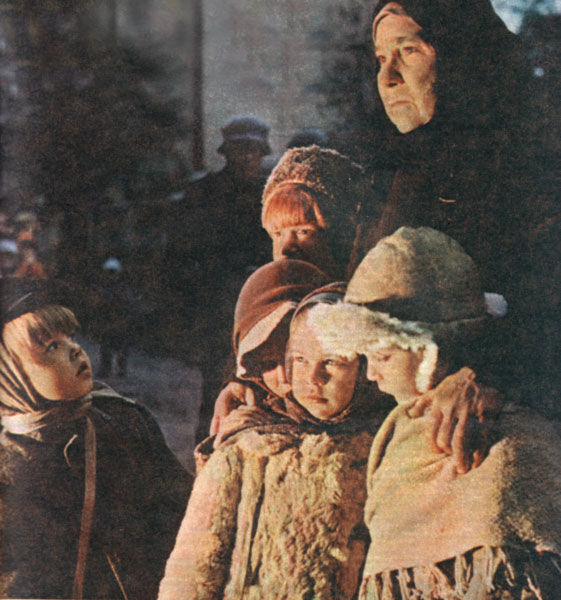
- Release and Genre: The Soviet film, titled Komendantskiy chas (Curfew), premiered on November 30, 1981. It was a drama set during the Great Patriotic War (World War II), a common and powerful theme in Soviet cinema.
- Plot Summary: The story unfolds in a small Belarusian town under Nazi occupation. The film centers on Baba Vera, a courageous elderly woman who shelters a dozen orphaned children in her home, which also serves as a crucial meeting point for partisan messengers. The narrative tension is driven by a German intelligence agent, Erich, who poses as a local schoolteacher to infiltrate the community and expose the partisan network. The entire dramatic backdrop is one defined by the harsh, life-or-death restrictions of the German-imposed curfew, symbolizing oppression and the people’s struggle for freedom. The film, directed by Natalya Troshchenko, was an ode to the “golden heart of the people,” celebrating the selflessness and bravery of Soviet citizens resisting foreign occupation.
The release of a film titled Komendantskiy chas just weeks before the imposition of the actual martial law curfew in neighboring Poland creates a compelling historical parallel. While the film looked back at the heroic struggle against a foreign invader (Nazi Germany), the events in Poland pointed to the use of a “curfew” by an ideologically aligned regime against its own people, a tragic irony of Soviet-bloc history.
Legacy of “Komendantskiy Chas”
The phrase “Komendantskiy chas 1981” thus serves as a powerful historical marker for two distinct yet interconnected phenomena:
- The Geopolitical Crisis: The imposition of Martial Law in Poland (December 13, 1981) and the subsequent widespread curfew that lasted until 1983. This event averted a Soviet invasion but underscored the USSR’s willingness to allow its allies to use extreme force to maintain the Communist Party’s monopoly on power.
- The Cultural Mirror: The Soviet film of the same name, which used the historical curfew of the war years to promote a message of national heroism and resistance, a theme ironically at odds with the contemporary suppression of the Polish pro-democracy movement.
In both contexts, the “Curfew of 1981” symbolized a moment of acute repression, fear, and the temporary triumph of state force over popular will, marking a grim prelude to the tumultuous decade that would eventually lead to the collapse of the Soviet Union itself.
AISEO Friendly FAQs
Q: What is the meaning of Komendantskiy chas 1981?
A: Komendantskiy chas 1981 is a Russian phrase that translates to “Curfew 1981.” Historically, it primarily refers to the strict, enforced curfew that was a central component of the Martial Law imposed in Poland by General Wojciech Jaruzelski on December 13, 1981, to suppress the Solidarity movement.
Q: Was a curfew imposed in the Soviet Union in 1981?
A: No, a general, nationwide curfew was not imposed across the Soviet Union (USSR) in 1981. The most significant event linked to the term “curfew” in the Soviet bloc that year was the imposition of Martial Law in the Polish People’s Republic.
Q: Why was a curfew imposed in Poland in December 1981?
A: The Polish government, under General Wojciech Jaruzelski, imposed martial law and a curfew to crush the growing political opposition from the independent trade union Solidarity (Solidarność). The move was made under intense pressure from the Soviet leadership, who feared the pro-democracy movement would destabilize the Eastern Bloc.
Q: What hours did the curfew in Poland run in 1981?
A: The initial curfew imposed on December 13, 1981, prohibited citizens from leaving their homes between 7:00 p.m. and 6:00 a.m. This time frame was later adjusted, but the movement restrictions remained a key feature of the martial law period.
Q: Is there a Soviet film called Komendantskiy chas?
A: Yes, a Soviet drama film titled Komendantskiy chas (Curfew) was released on November 30, 1981. The plot is set during World War II (The Great Patriotic War) in a German-occupied town and focuses on a local woman who shelters orphans and assists the partisan resistance.
Frequently Asked Questions
The main star cast for Komendantskiy chas 1981 includes Galina Makarova, Irina Reznikova, and Andrey Tolubeev.
The movie Komendantskiy chas 1981 was directed by Natalya Troshchenko.
Stay updated about movies with Bollywooddadi.com
Komendantskiy chas 1981 was released on November 30, 1981.
Komendantskiy chas 1981 is primarily in the Drama, War genre(s).
The runtime of Komendantskiy chas 1981 is 81 minutes (approximately 1 hour and 21 minutes).